Service
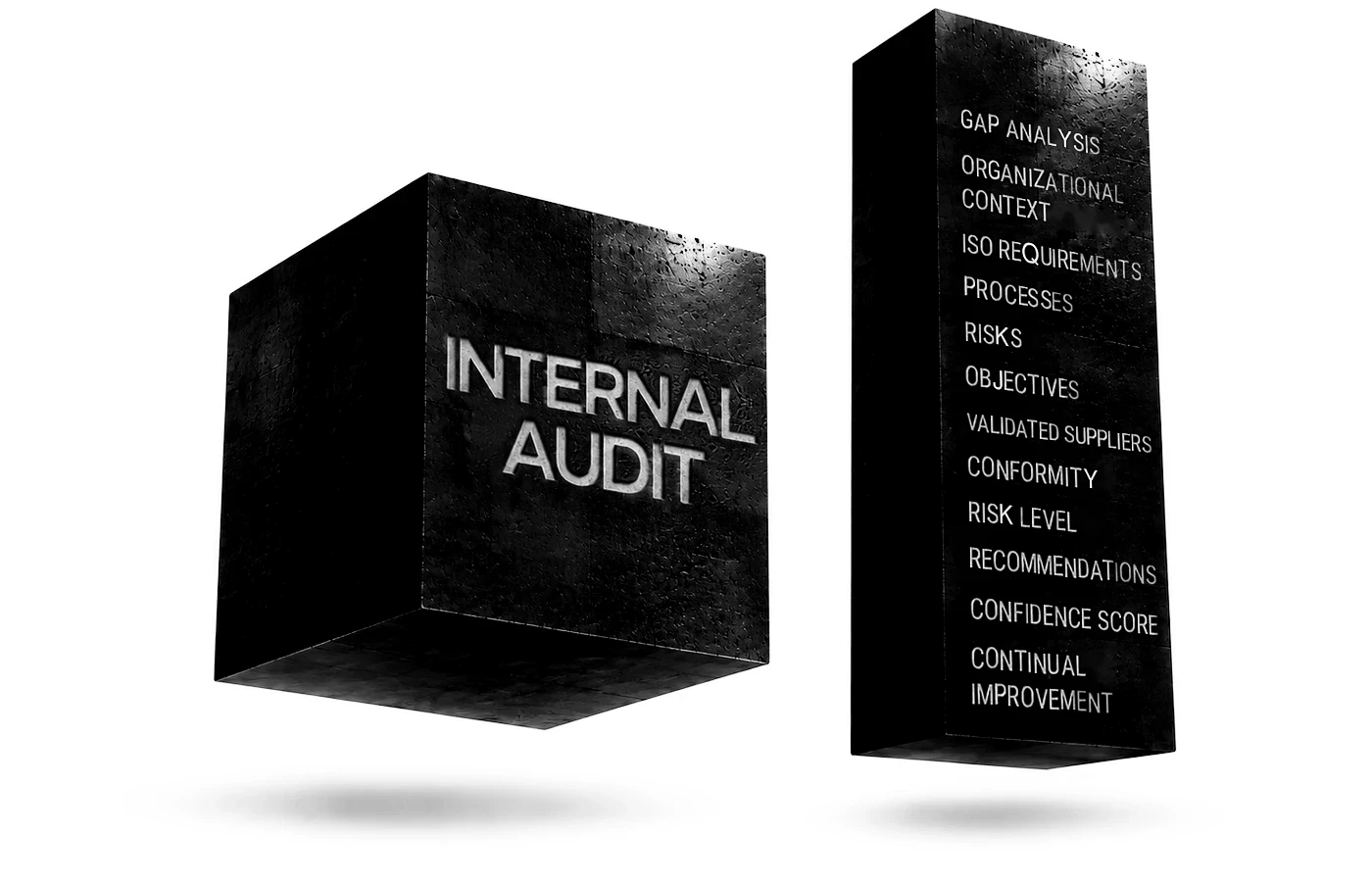
ISO Internal Audit
Independent internal audit to verify the requirements of the standard, process conformity, application of documentation and effectiveness of actions.
Learn more →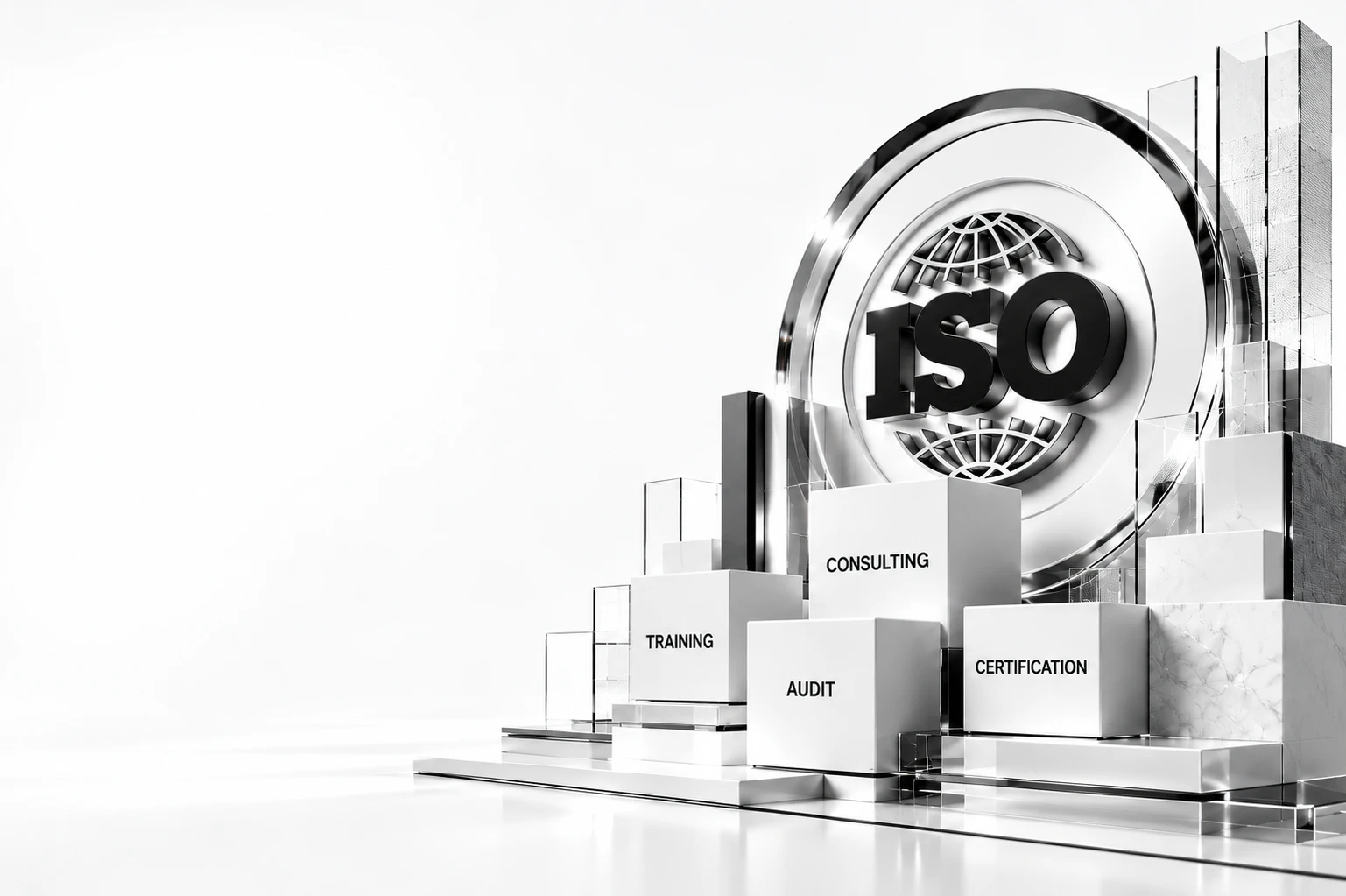
QMS Consulting helps organizations in Romania implement ISO management systems that are clear, documented and useful in real work: ISO 9001:2026, ISO 14001:2026, ISO 27001:2022, ISO 45001:2018, ISO 50001:2018, ISO 22000:2018, ISO 13485:2016 and other relevant standards. We provide GAP analysis, documentation adapted to your processes, internal audit, second-party audit, auditor training and certification preparation, and the system can be kept running with the E-QMS platform; the certificate is issued by an independent body.
A mature ISO system is not a collection of formal documents. It clarifies responsibilities, controls risks, supports compliance, defines indicators and gives management useful information for decisions and improvement.
QMS Consulting provides ISO consulting, internal audit, second-party audit, Internal Auditor training, Lead Auditor training and preparation for the certification audit. We work with the requirements of the standard, the organization's real processes, the applicable obligations and the evidence that must be presented at the audit. The system is designed to be used by management and maintained by the internal team.
Organizations request ISO consulting when there is a concrete goal: initial certification, taking part in tenders, qualifying as a supplier, responding to a customer's requirements, preparing for an audit, extending the scope or integrating several standards into one coherent system.
We build the management system step by step: GAP analysis, defining the scope, processes and documentation, implementation, internal audit and preparing the team for certification.
We support organizations that need ISO 9001:2026, ISO 14001:2026, ISO 45001:2018, ISO 27001:2022 or other standards for customers, projects, suppliers, procurement procedures and eligibility conditions.
We align the common requirements of several standards to avoid duplicate policies, procedures and registers, while keeping the controls specific to each area and an architecture that is easy to audit.
We review the documentation, records, responsibilities, corrective actions, internal audit and management review before certification, surveillance or recertification.
We cover the entire journey of a management system, from GAP analysis and implementation to internal audit, second-party audit, team training and certification preparation.
Independent internal audit to verify the requirements of the standard, process conformity, application of documentation and effectiveness of actions.
Learn more →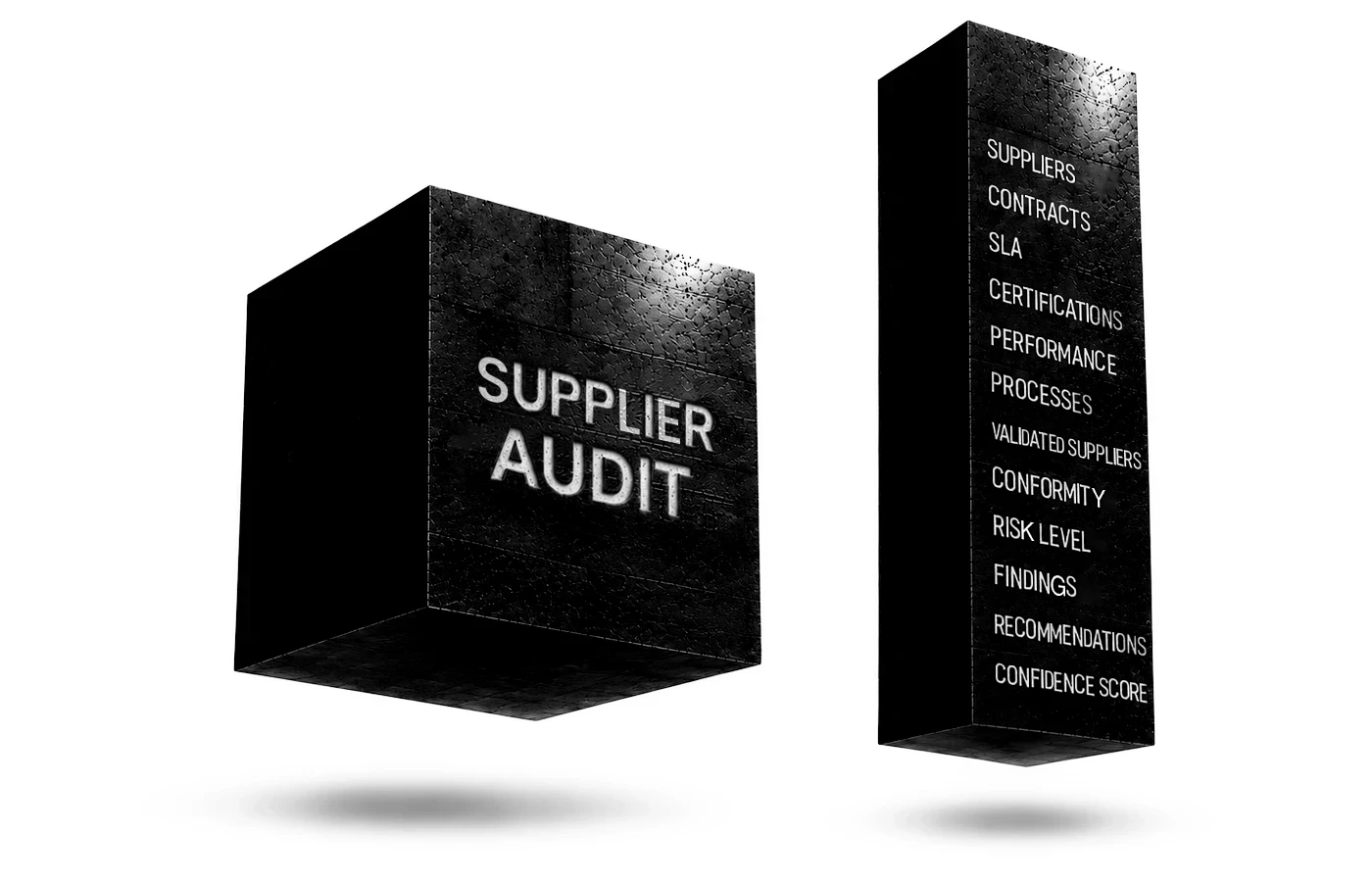
Evaluating suppliers, subcontractors and partners through second-party audits, clear criteria, evidence, reporting and recommendations.
Learn more →
Implementing ISO management systems: GAP analysis, scope, process mapping, risks, objectives, indicators and the necessary documentation.
Learn more →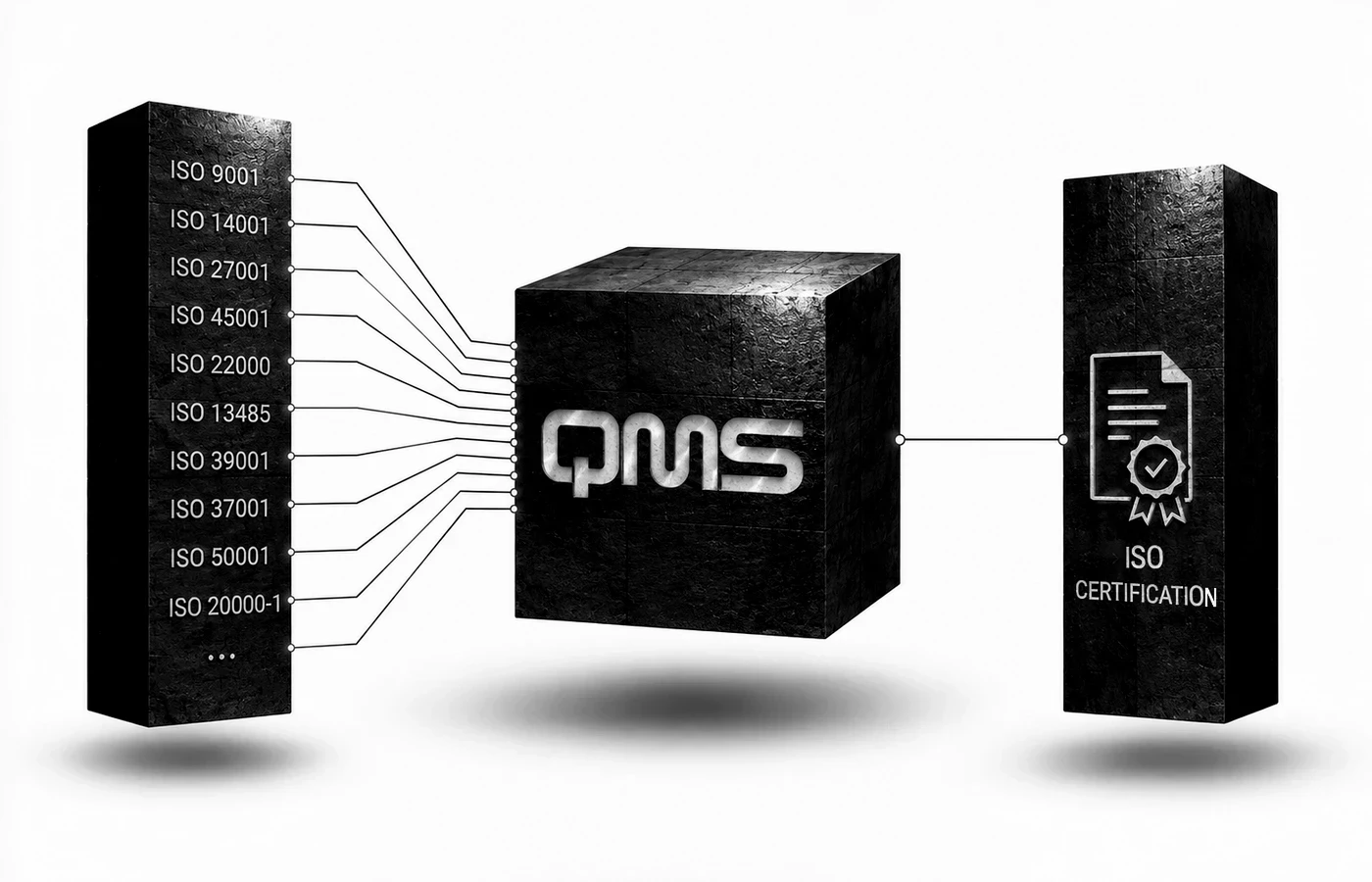
Preparation before the certification audit: checking the documentation, the evidence of implementation and the corrective actions.
Learn more →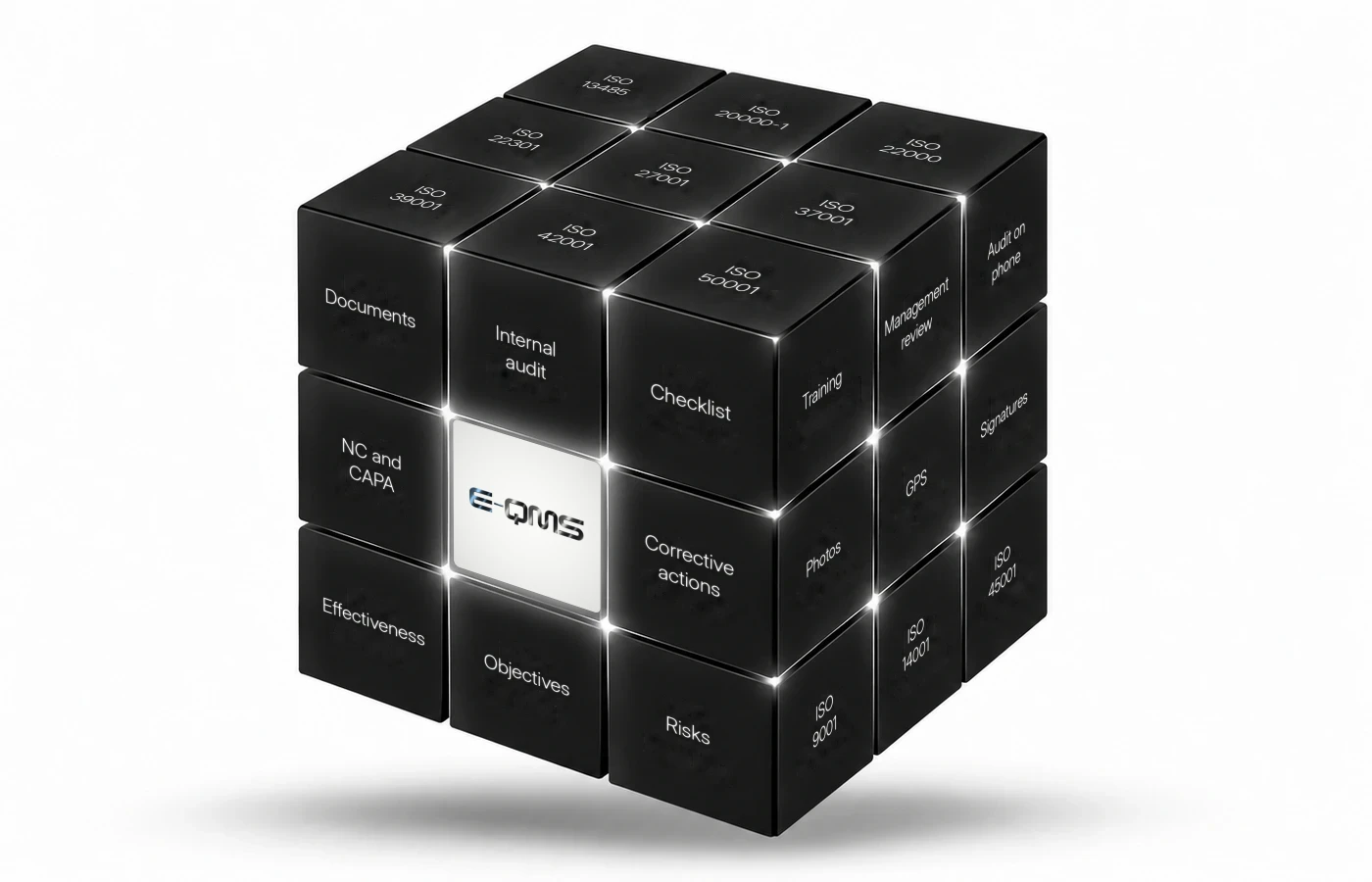
Documents, internal audit, nonconformities, corrective actions and management review, with alerts and reports generated automatically.
Learn more →
Practical training for ISO internal auditors: audit plan, interview techniques, sampling, findings, nonconformities and reporting.
Learn more →
Developing Lead Auditor competences for complex audits, team coordination, communication and reporting to management.
Learn more →E-QMS is our platform for managing the ISO management system: documents, audits, nonconformities, corrective actions, objectives, risks and management review in one place, for 12 standards, with alerts, checklists and reports generated automatically.
Evidence is recorded as the organization works, not reconstructed before the audit. The platform is implemented together with consulting services, so that documentation, internal audit and the team all work on the same system.
Certification is important, but the real value appears when the ISO system helps the organization control processes, manage risks, track objectives and indicators, reduce nonconformities and demonstrate conformity to customers, authorities, certification bodies and management. Documented information is only valuable if it is used, kept up to date and linked to decisions and day-to-day work.
Request a callQMS Consulting provides consulting, audit and training for standards used in regulated organizations, manufacturing, professional services, IT, healthcare, logistics, energy and supply chains. The configuration is set according to processes, obligations, customers, risks and objectives.
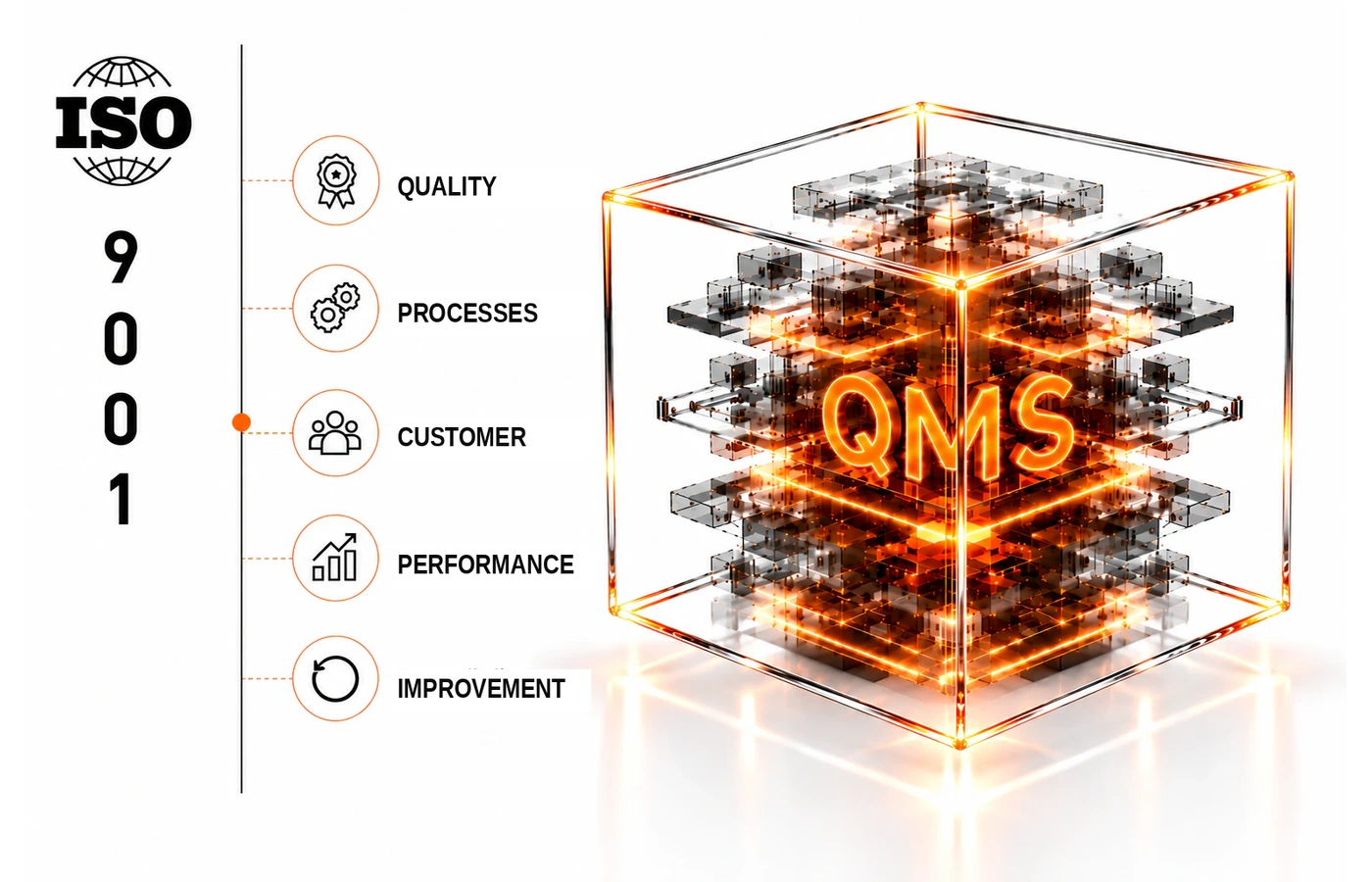
Quality management for controlled processes, measurable objectives, indicators, suppliers, customer satisfaction and improvement.
Learn more →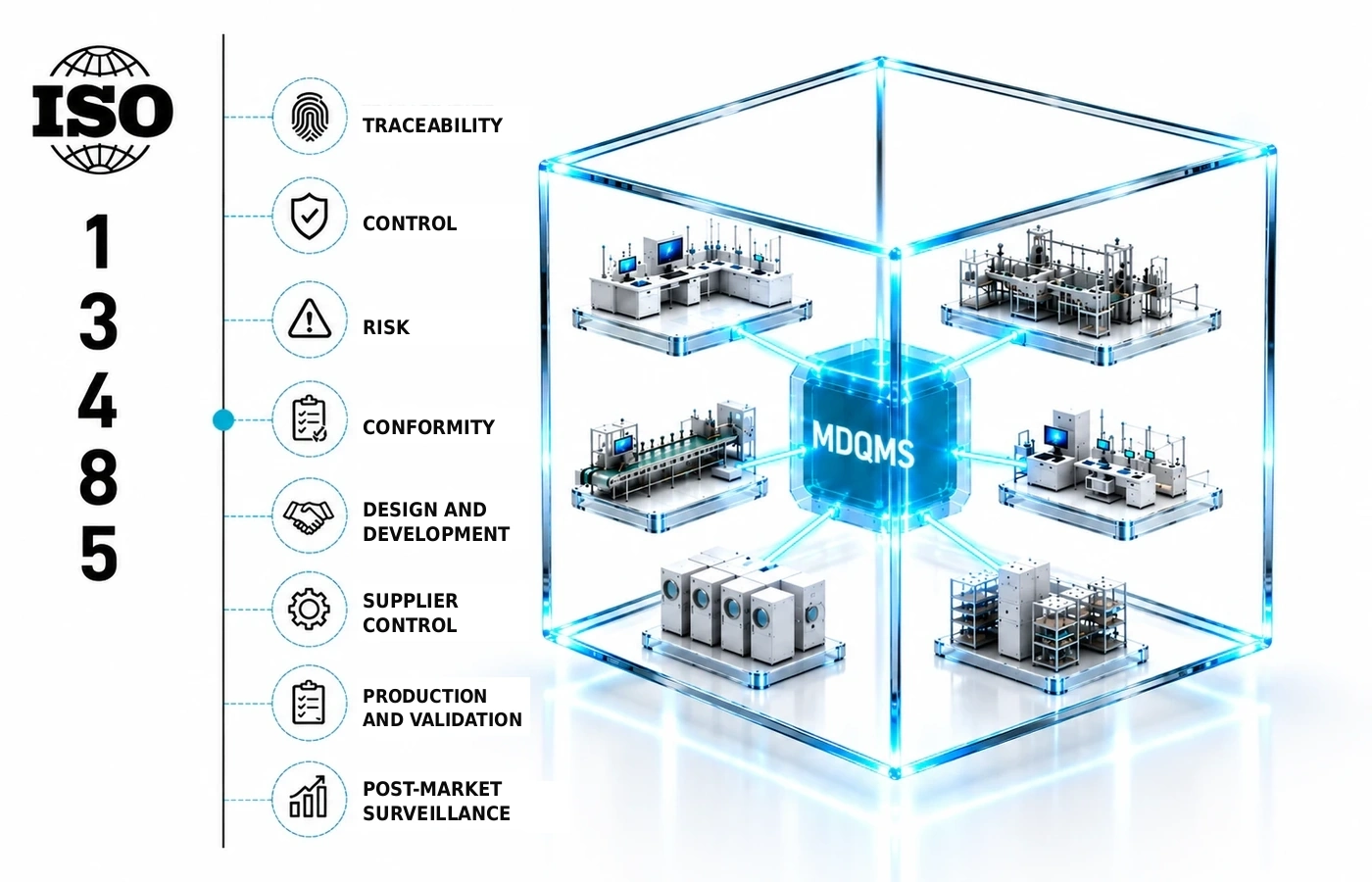
Management system for medical devices, with a focus on traceability, documentation, suppliers, risk management and regulated processes.
Learn more →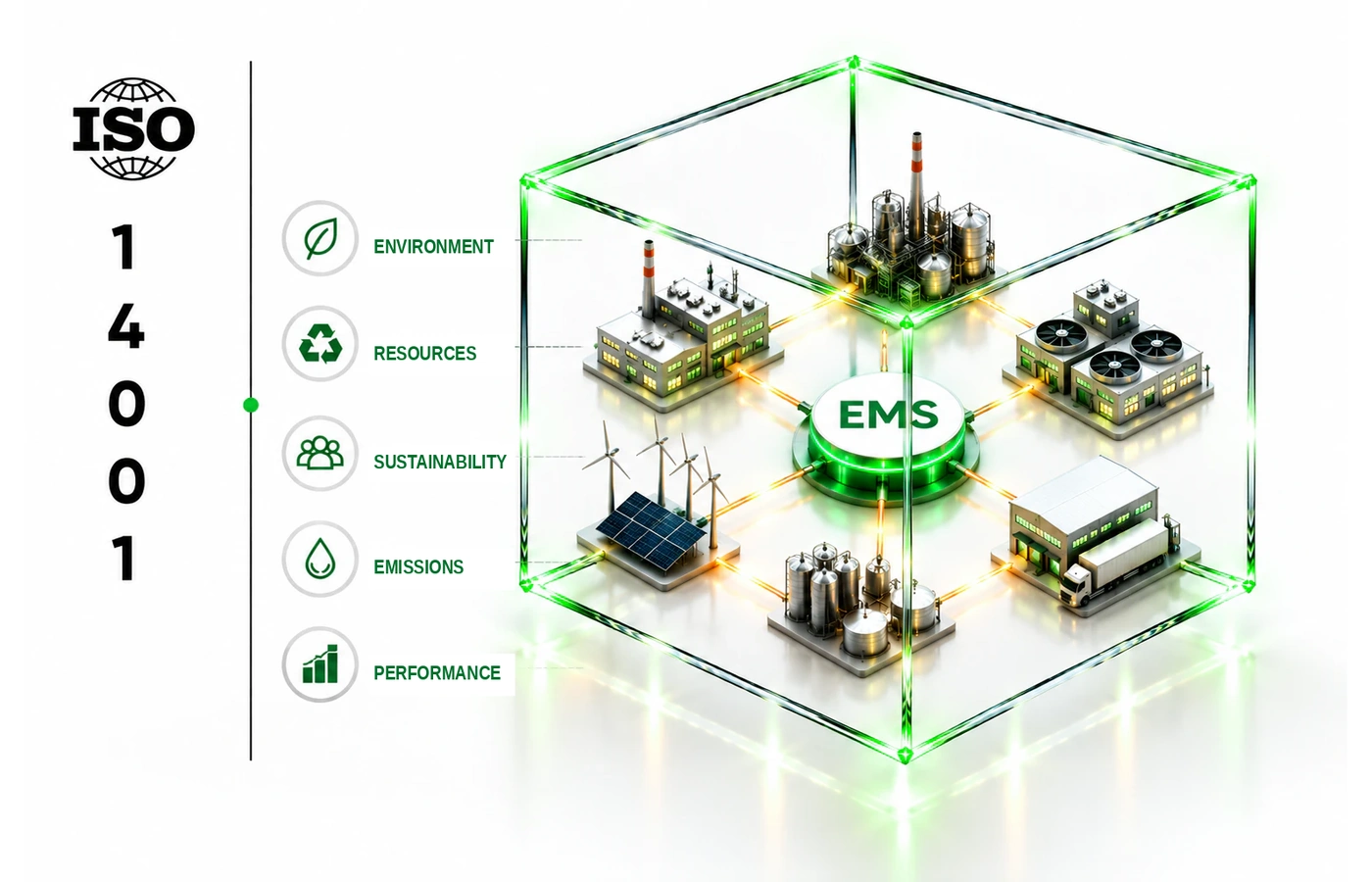
Environmental management for aspects and impacts, compliance obligations, operational control, emergency situations and performance.
Learn more →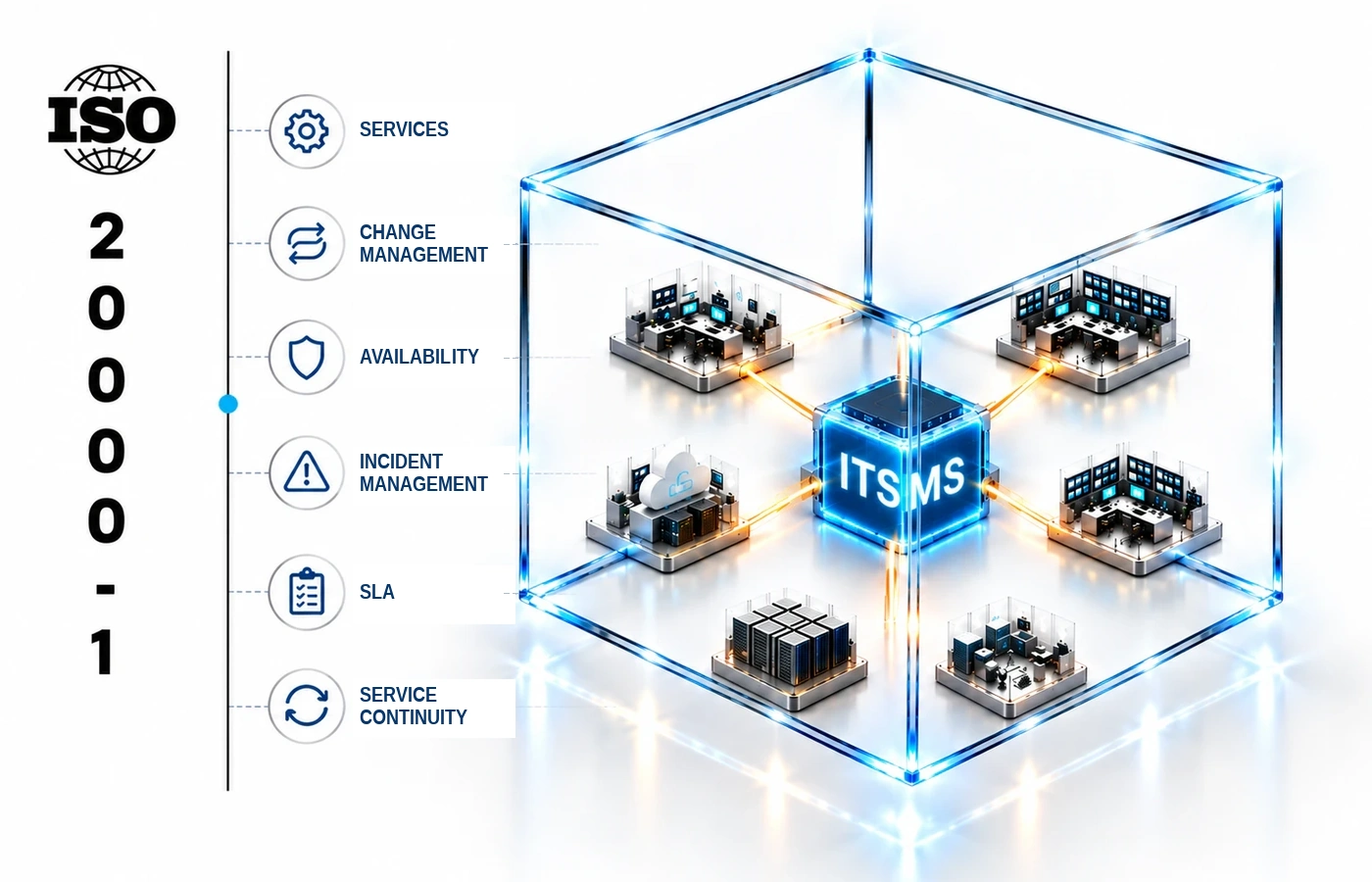
IT service management for SLAs, incidents, changes, availability, capacity, continuity and suppliers.
Learn more →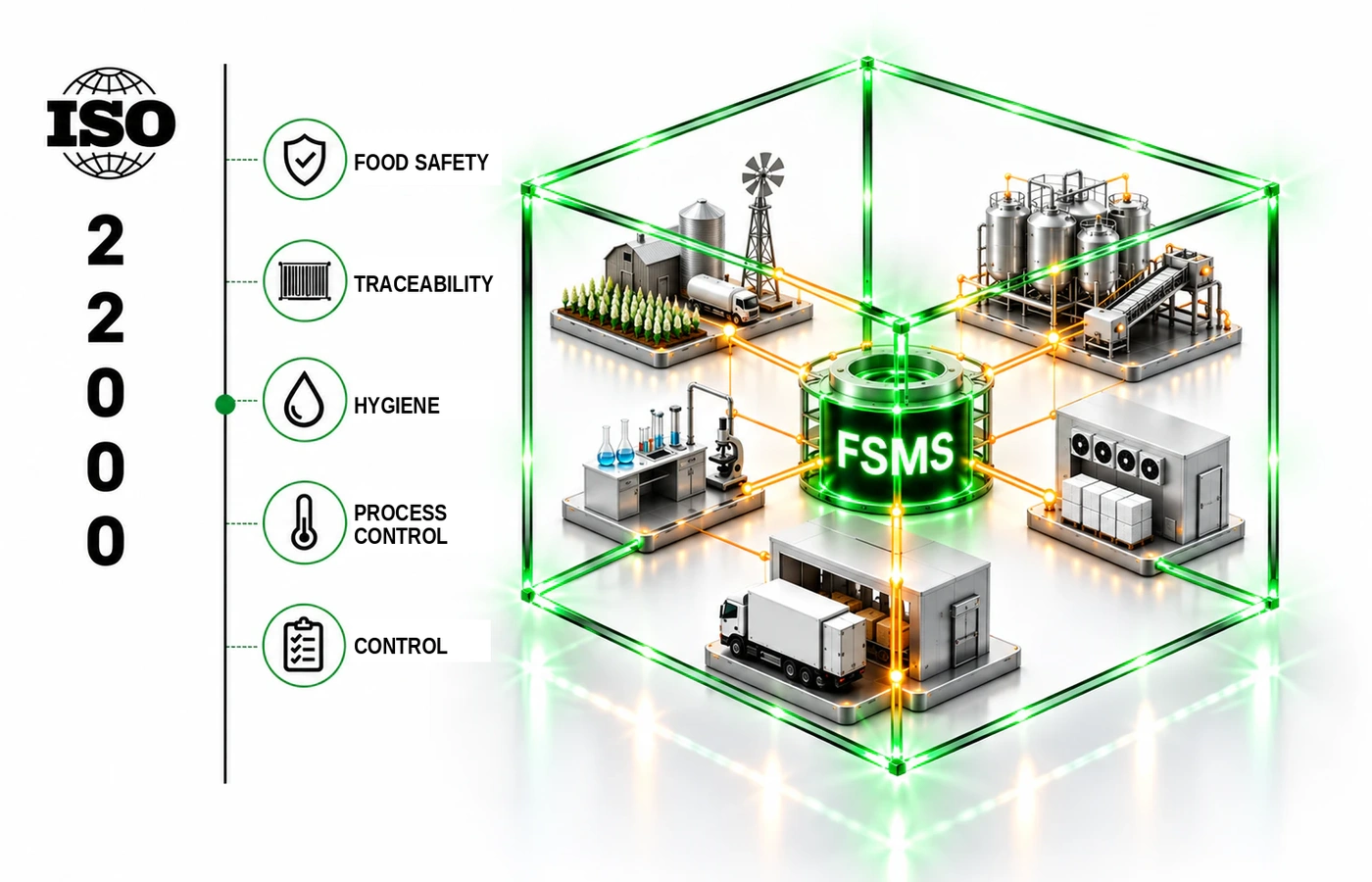
Food safety for PRPs, HACCP, hazard identification, control measures, traceability and communication in the food chain.
Learn more →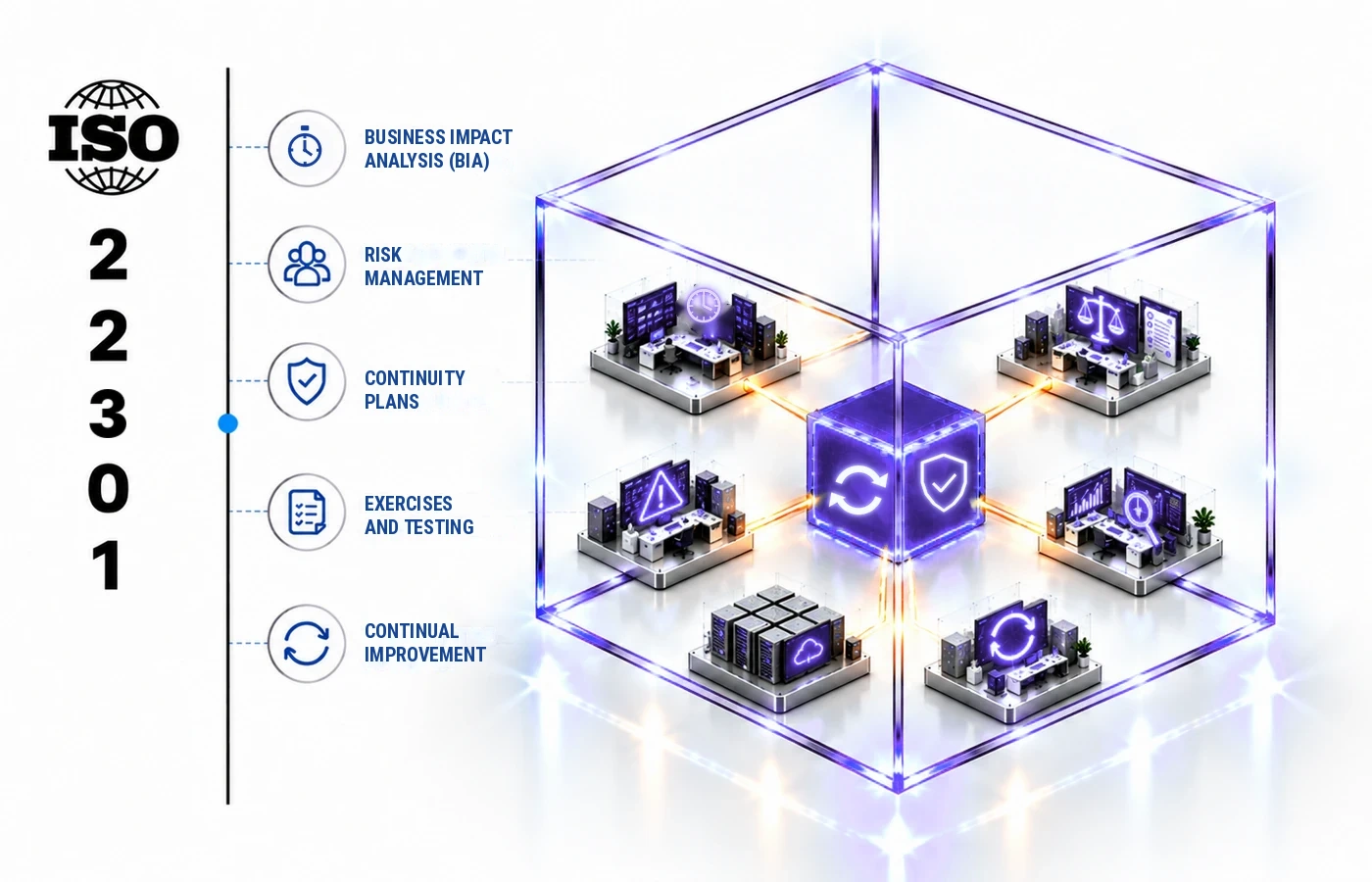
Business continuity: impact analysis, continuity plans, exercises and recovery of critical activities.
Learn more →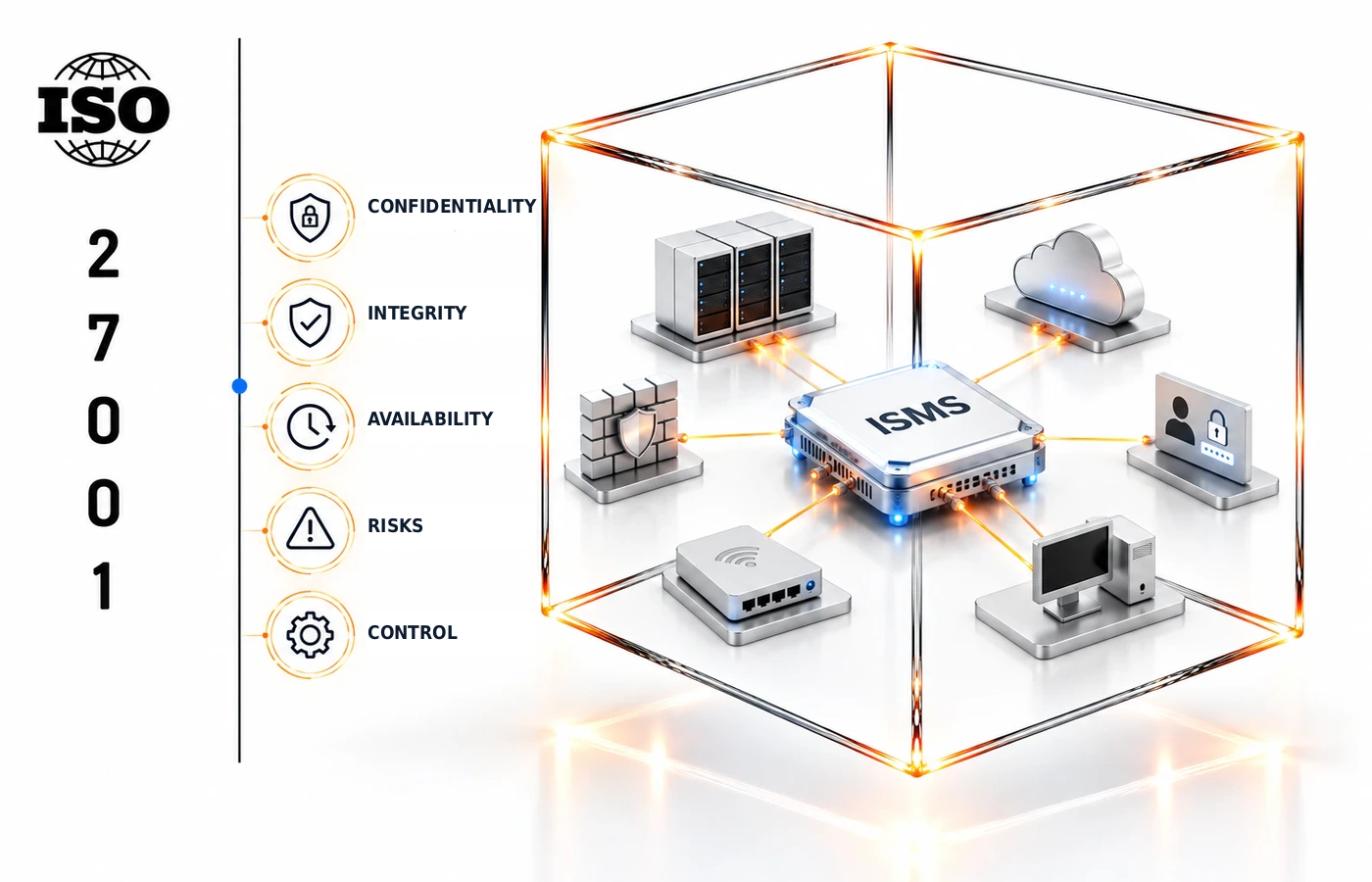
Information security for information assets, risk assessment and treatment, access, incidents, suppliers and continuity.
Learn more →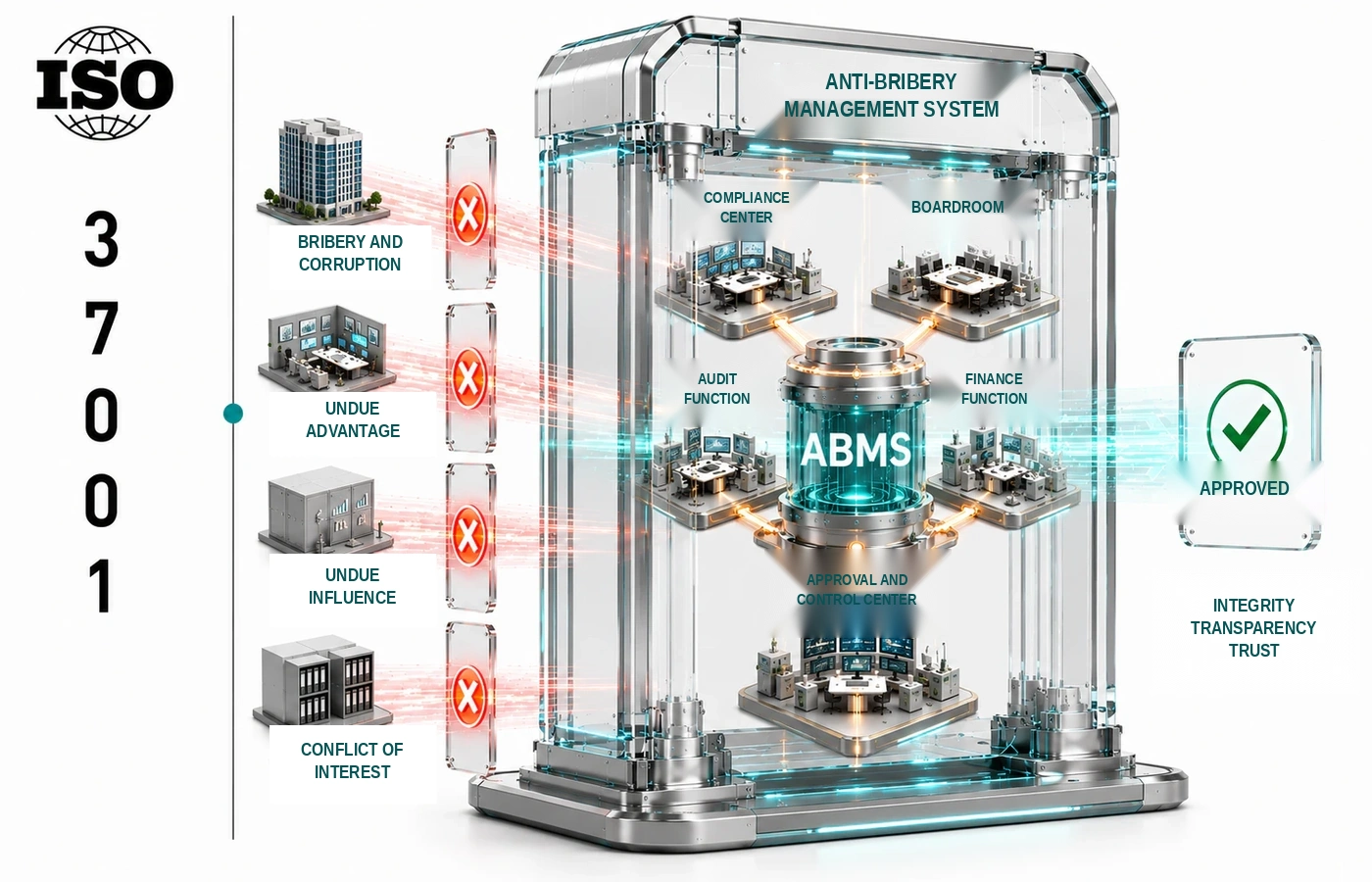
Anti-bribery system for risk assessment, due diligence, financial and non-financial controls, reporting and integrity.
Learn more →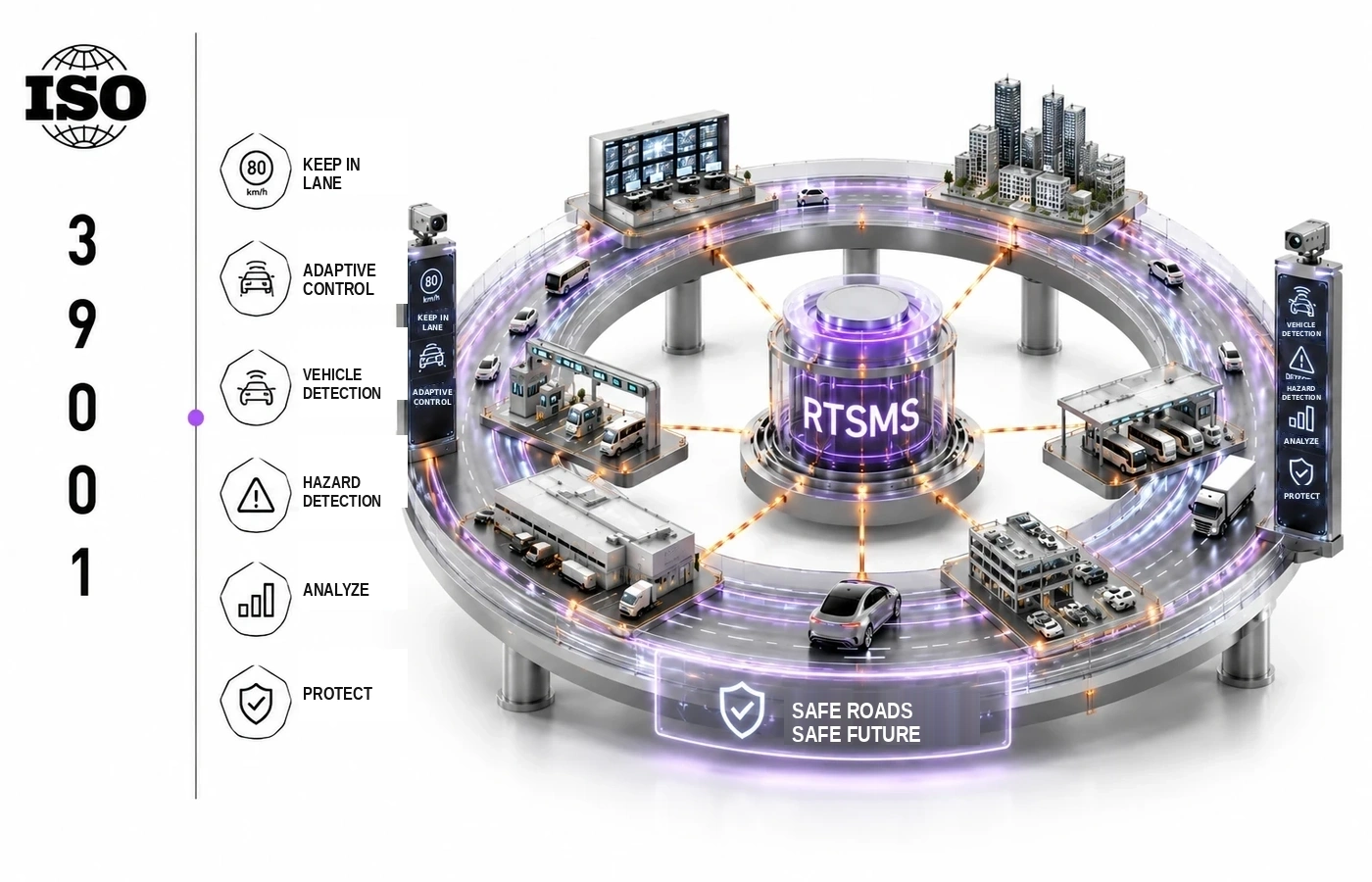
Road traffic safety management for transport, logistics, fleets, risk factors, objectives, indicators and operational control.
Learn more →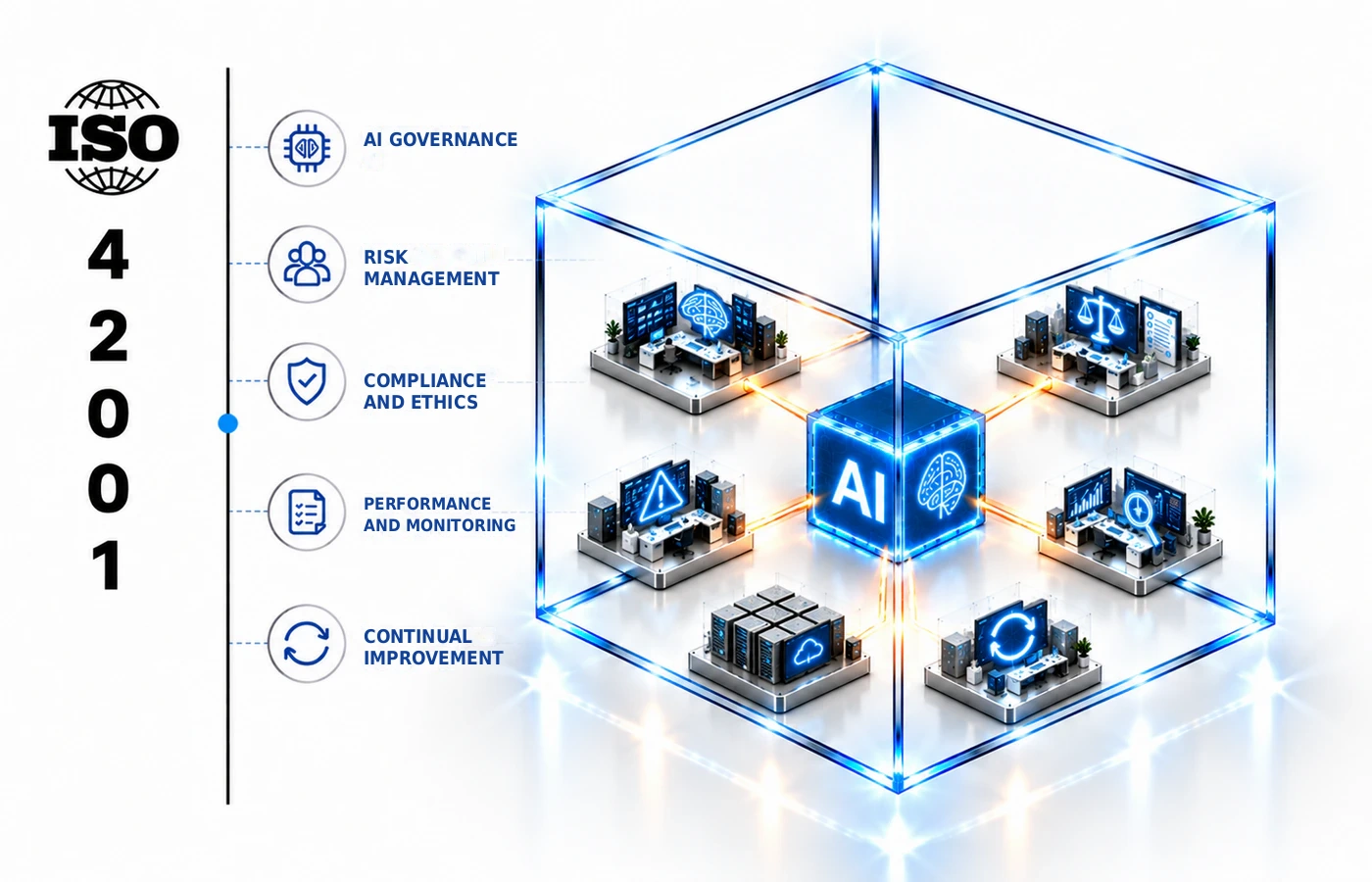
Artificial intelligence management: governance, AI risk assessment, transparency and responsible use.
Learn more →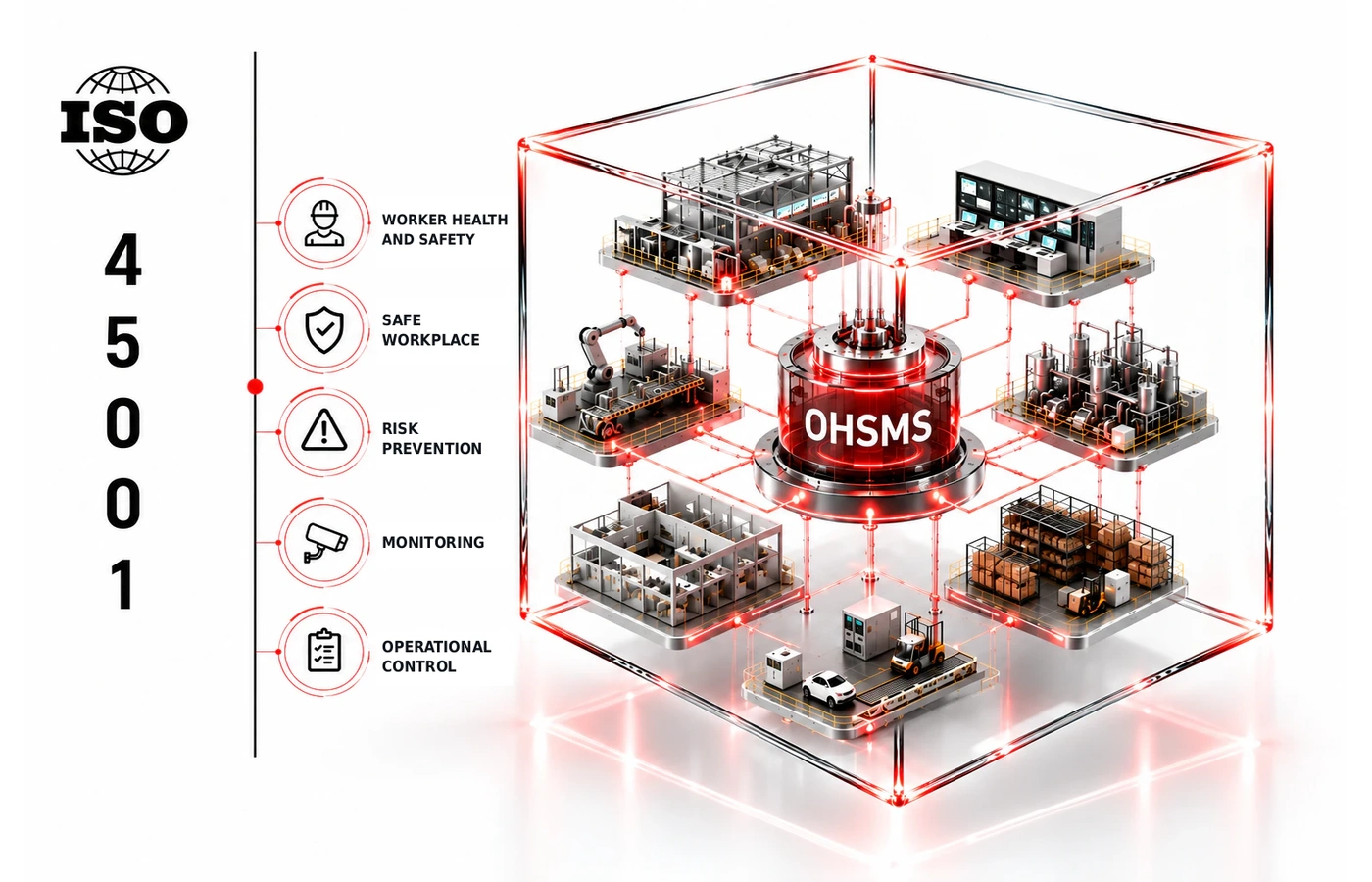
Occupational health and safety for hazard identification, risk assessment, worker consultation and incident prevention.
Learn more →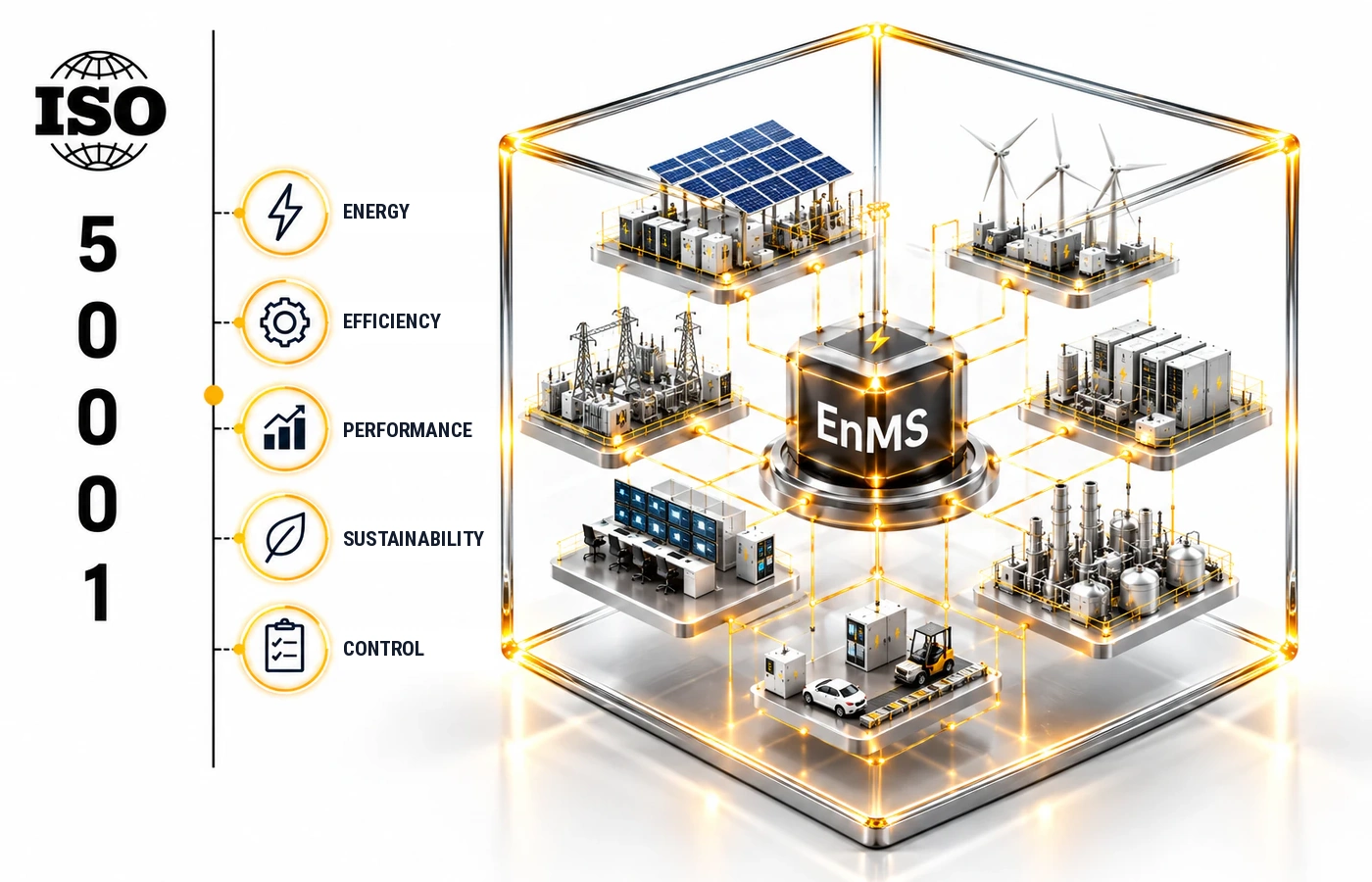
Energy management for energy review, significant energy uses, energy performance indicators, baselines, monitoring and improvement.
Learn more →ISO requirements are generic, but correct implementation differs by industry, legal obligations, products, services, suppliers, customers, outsourced processes and level of operational risk.
We analyze the context of the organization, interested parties, risks, competences, outsourced processes, infrastructure and objectives before defining the management system, the documentation and the audit programme.

Traceability, seasonal processes, suppliers, environment, OH&S, food safety and sustainability for organizations in the agricultural chain.
Learn more →
Process stability, changes, traceability, suppliers, complaints and risk control in complex supply chains.
Learn more →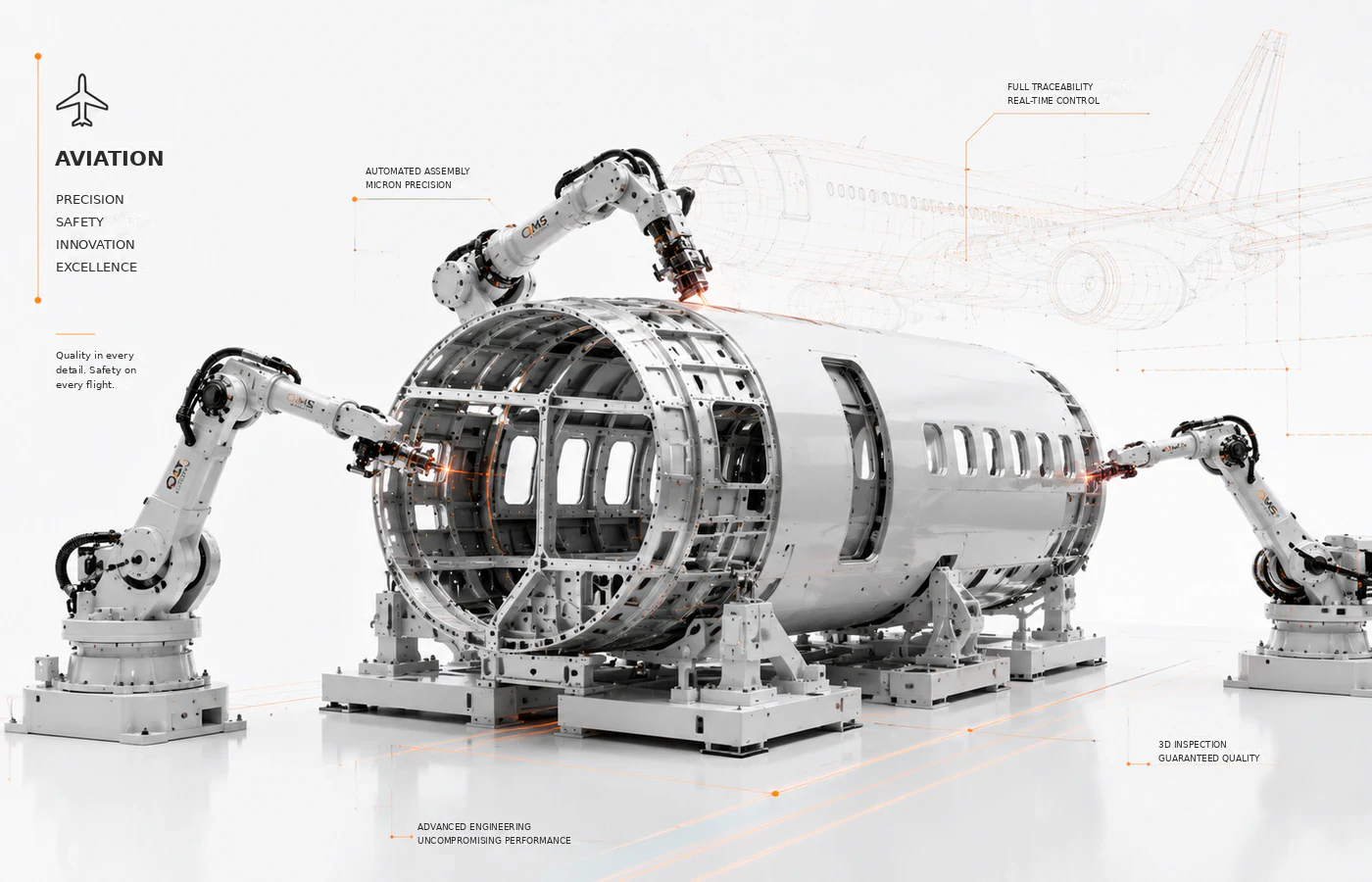
Critical processes, competence, configuration, documentation, traceability, suppliers and risk management.
Learn more →
Information security, IT services, operational continuity, suppliers and compliance for financial institutions.
Learn more →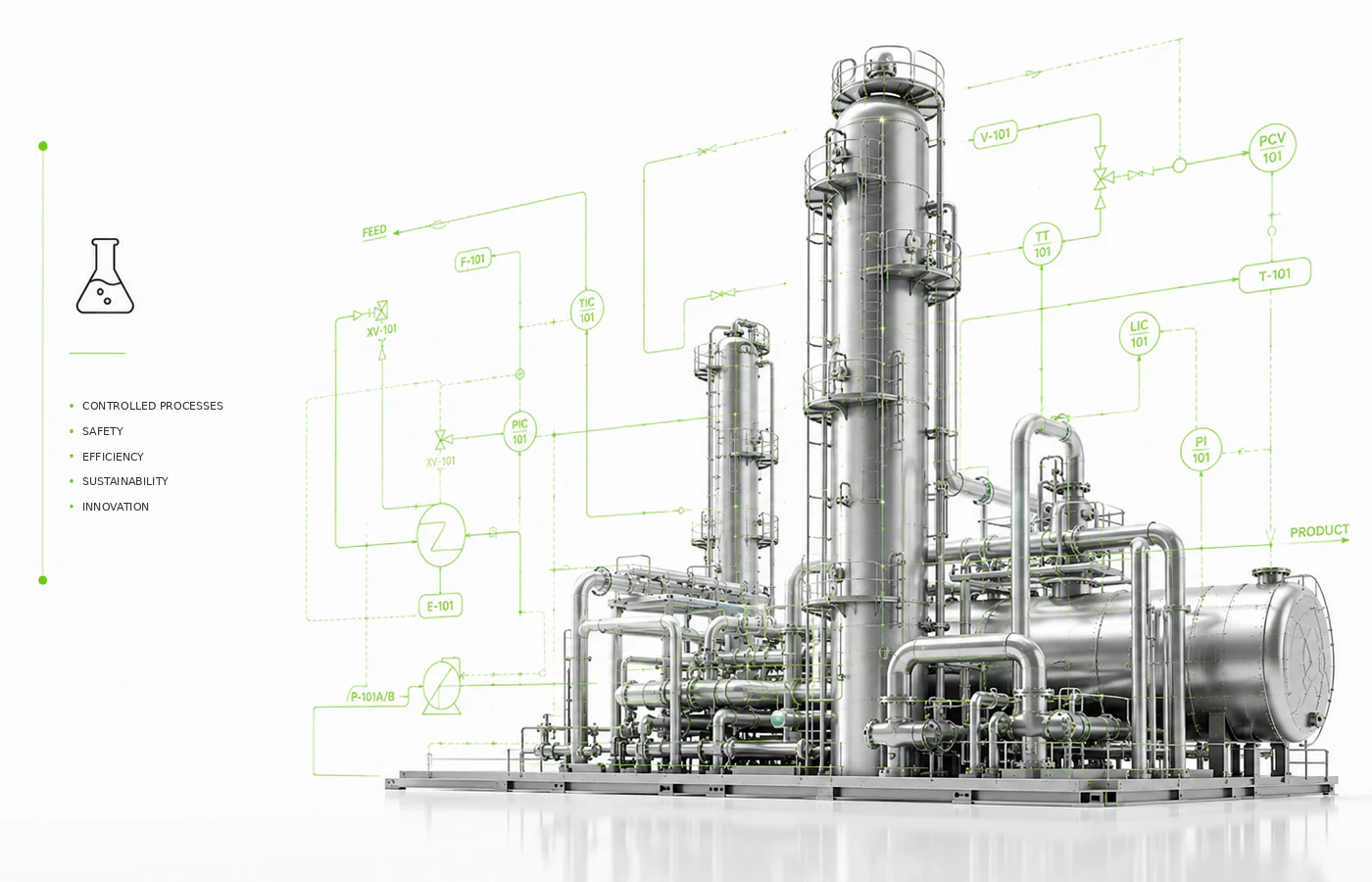
Operational control, substances, environment, occupational health and safety, changes and emergency situations.
Learn more →
Projects, construction sites, subcontractors, technical documentation, quality, environment and occupational health and safety.
Learn more →
PRPs, HACCP, allergens, traceability, hygiene, suppliers and hazard control in the food chain.
Learn more →
Information security, IT services, SLAs, cloud, incidents, changes, availability and continuity.
Learn more →
Technical competence, methods, equipment, sample traceability, validity of results and internal audit.
Learn more →
Transport, warehousing, fleets, traceability, subcontractors, road safety and performance indicators.
Learn more →
Maritime operations, terminals, maintenance, environment, OH&S, suppliers and business continuity.
Learn more →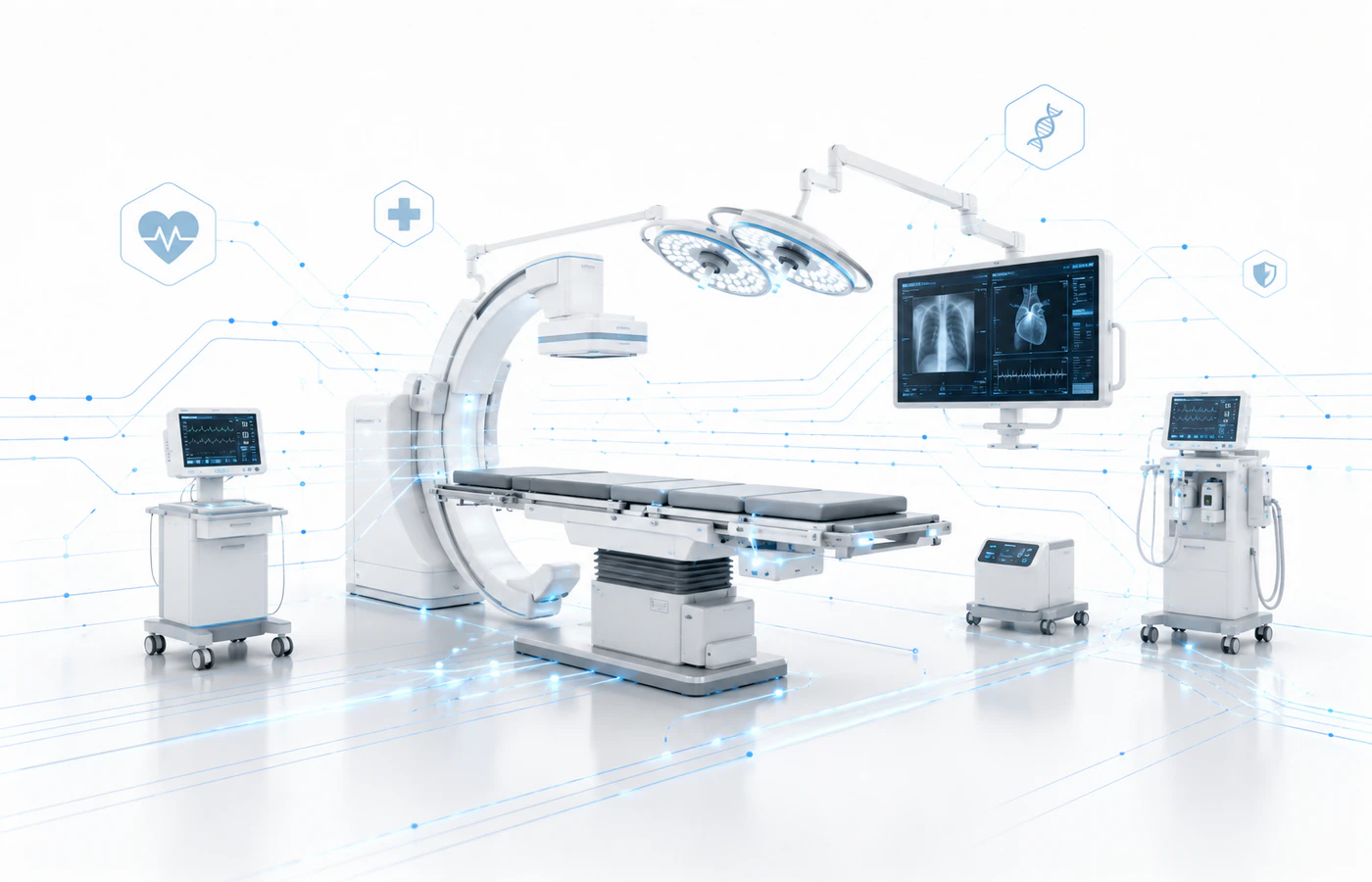
ISO 13485:2016, risk management, traceability, technical documentation, suppliers and regulated processes.
Learn more →
Critical infrastructure, operational control, environment, energy, occupational health, contractors and emergencies.
Learn more →
Service quality, customer experience, food safety, environment, energy, OH&S and suppliers.
Learn more →
Energy management, assets, maintenance, performance indicators, environment, OH&S and suppliers.
Learn more →An effective ISO project has clear stages, verifiable deliverables, defined responsibilities and acceptance criteria. The aim is for the organization to be able to sustain the system before, during and after the certification audit.
We assess the current situation: processes, existing documentation, risks and the level of conformity with the standard.
We set priorities, responsibilities, deadlines, resources, the necessary documents and the areas that must be corrected before the audit.
We build policies, procedures, instructions, registers, forms and control tools adapted to real processes and responsibilities.
We check the conformity and effectiveness of the system through interviews, documents, samples, records and observations, and we formulate findings.
We prepare teams for the requirements of the standard, the use of documentation, their roles, the internal audit and handling the external audit.
We review the documentation, the evidence of implementation, the corrective actions and the organization's readiness for the audit.
ISO consulting helps the organization understand the requirements of the standard, define the scope and processes, set responsibilities, risks, indicators and controls, and create the documentation and evidence needed to implement and audit the system.
No. ISO certificates are issued by independent certification bodies. QMS Consulting provides consulting, GAP analysis, internal audit, second-party audit, training and preparation for the certification audit.
The duration depends on the standard, the size of the organization, the number of sites, process maturity, existing documentation and the availability of the team. The GAP analysis makes it possible to define the stages and a realistic timeframe.
The choice depends on objectives, processes and risks. ISO 9001:2026 covers quality, ISO 14001:2026 the environment, ISO 27001:2022 information security, ISO 45001:2018 OH&S, ISO 50001:2018 energy, ISO 22000:2018 food safety, and ISO 13485:2016 quality management for medical devices.
The internal audit includes planning, the audit criteria and scope, interviews, review of documents and records, sampling, observations, findings and reporting.
The second-party audit evaluates critical suppliers, subcontractors and partners against requirements, processes, risks, documentation and performance, helping to control the supply chain.
Consulting helps the organization implement and check the system. Certification is the independent assessment carried out by the certification body, which decides whether to grant and maintain the certificate.
The documents depend on the standard and the processes. They may include the policy, objectives, procedures, instructions, process sheets, registers, forms, risk assessments, evidence of competence, the internal audit, the management review and corrective actions.
Yes. Document review, interviews, training and checking some evidence can be done remotely. For operational processes, sites, audits or high-risk activities, an on-site assessment may be necessary.
A system becomes bureaucratic when documents are copied or created without a user and a purpose. Documentation must be sized according to processes, risks, responsibilities and the evidence needed.
Consulting is useful for initial certification, extending the scope, integrating standards, preparing for an audit, tenders, customer requirements, major nonconformities or reorganizing processes.
A complete project may include GAP analysis, an implementation plan, process mapping, system documentation, training, internal audit, corrective actions, management review and certification preparation.
Send us the target standard, your field of activity, processes, sites, current level of documentation and the deadline you are aiming for. Based on this information, we can define the stages for GAP analysis, implementation, internal audit, supplier audit, training or certification preparation.
Phone: +40 722 773 446
Email: contact@qms.ro
Address: 12 Petru Rareș Street, Bucharest
Send the requestChoose whether to allow visitor statistics. You can change your choice at any time from the site footer.