Standard
ISO 9001:2026
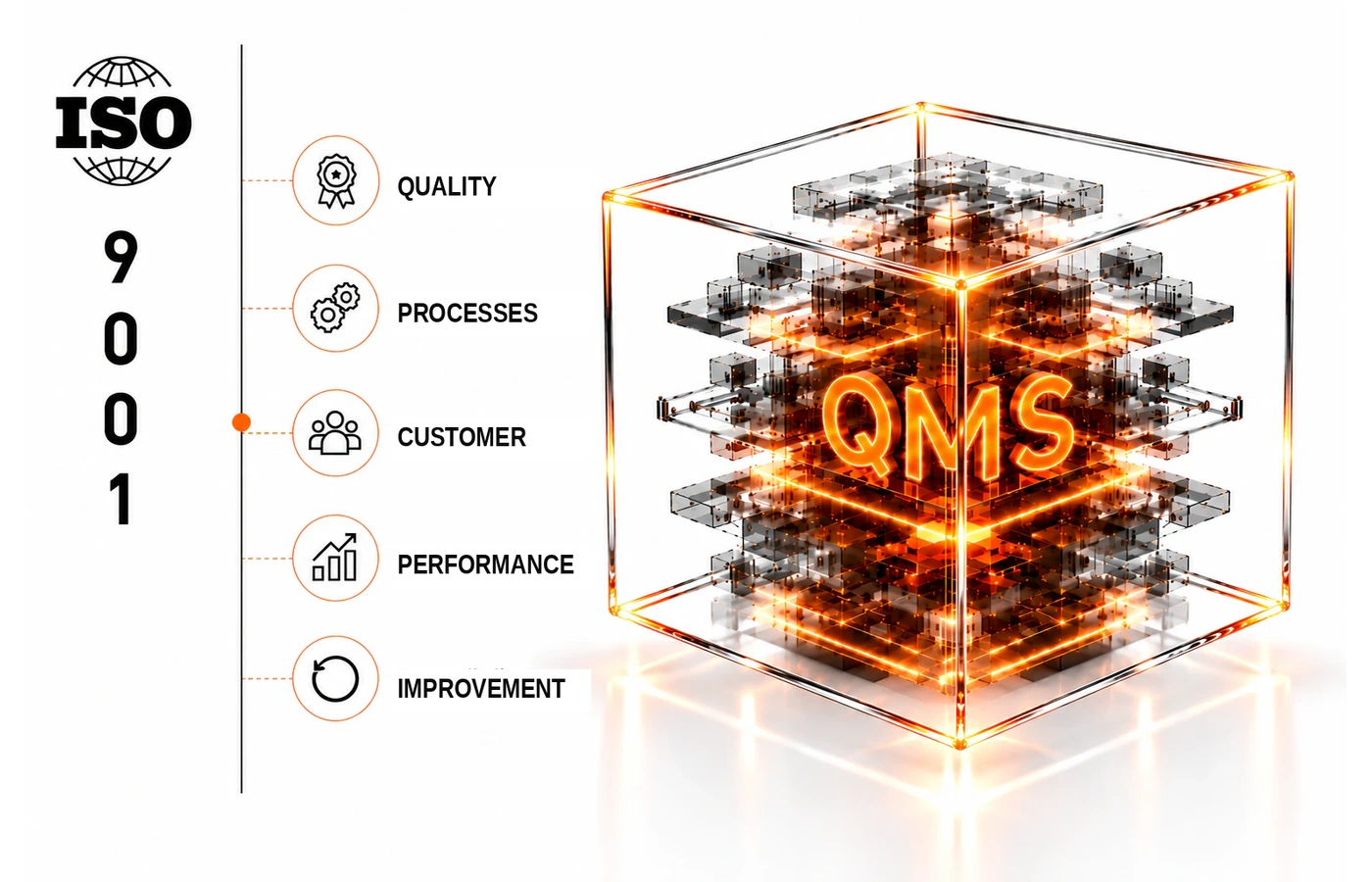
Quality management for processes, responsibilities, indicators, customers and continual improvement.
Learn more →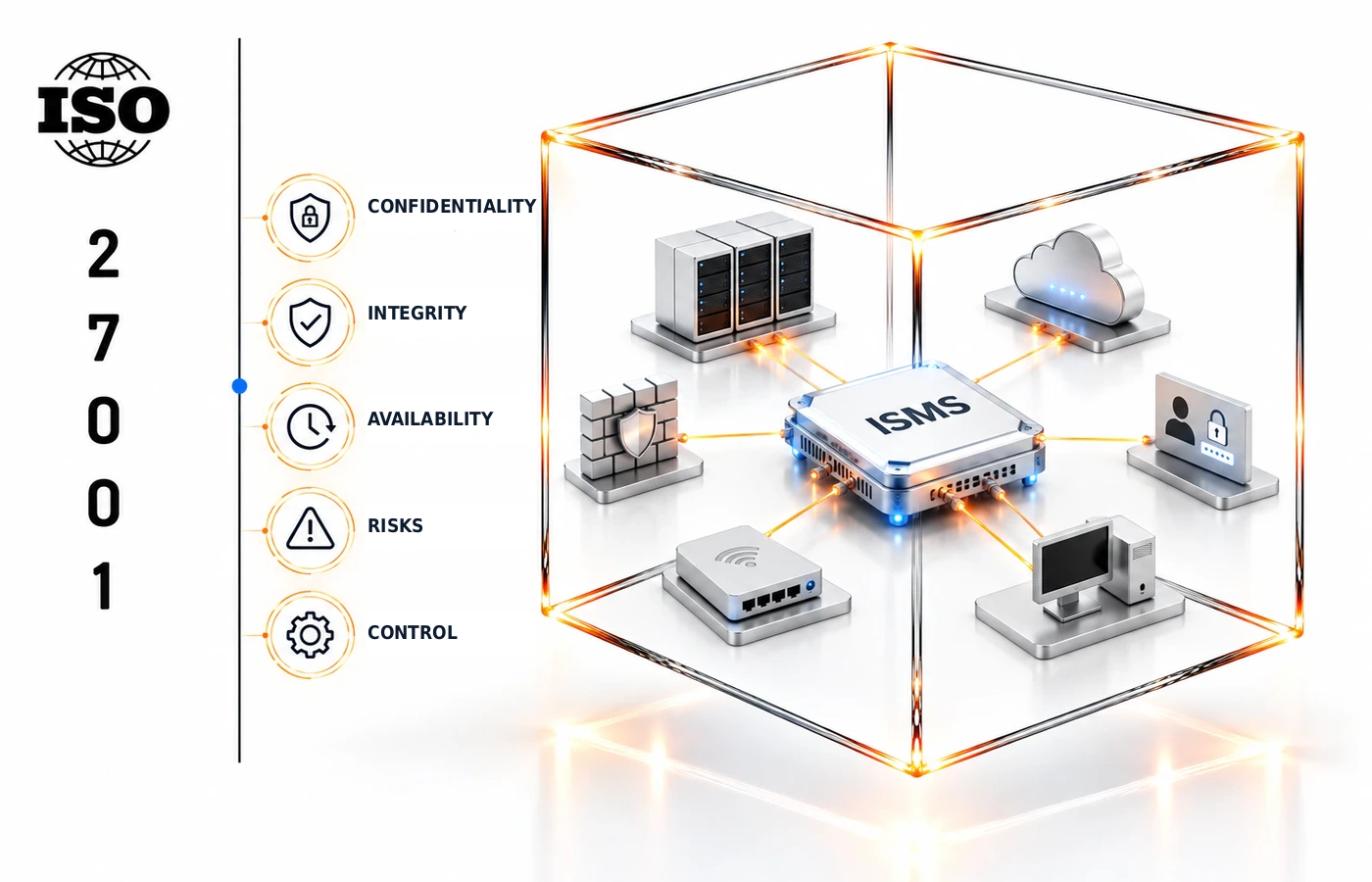
ISMS implementation, GAP analysis, information risk management, the Statement of Applicability, internal audit, costs and ISO 27001:2022 certification preparation.
ISO/IEC 27001:2022 helps organizations systematically manage information security risks. The standard is not limited to documents or formal policies; it creates a framework through which critical information is identified, protected, monitored and continually improved.
Official title of the standard: ISO/IEC 27001:2022 — Information security, cybersecurity and privacy protection — Information security management systems — Requirements.
QMS Consulting provides consulting for implementing ISO 27001:2022 in companies that want to build an information security management system that works in practice: with clear responsibilities, a realistic risk assessment, relevant controls and evidence ready for the certification audit.
We work with organizations that need compliance in their relationships with large customers, international partners, tenders, customer audits, security requirements, data protection or supplier management.
ISO 27001:2022 is relevant for any organization that handles sensitive information, customer data, IT infrastructure, digital services, outsourced processes or contractual security requirements.
For organizations that deliver applications, platforms, cloud services, technical support or digital processes to customers who require clear evidence of security and control.
For companies that take part in tenders, customer audits or due diligence and must demonstrate that they manage information risks in a structured way.
For companies that handle personal data, commercial information, contractual documents, know-how, financial data or strategic information.
For companies moving from informal ways of working to controlled processes, clear responsibilities, documented policies and mature risk management.
ISO 27001:2022 implementation must produce a system that can be used by management, the IT team, process owners and auditors. It is not enough for documents to exist; they must reflect how work is really done.
A well-run ISO 27001:2022 project does not start with copied documents. It starts with understanding the organization: what information must be protected, who uses it, what risks exist, which controls are already in place and what needs to be improved.
The implementation process is staged, so that the organization understands what it has to do, what evidence must be prepared and how the system will be assessed in the certification audit.
We assess the current situation, the available documents, relevant processes, contractual requirements and the maturity of the security controls.
We determine which processes, sites, systems, teams, services and assets fall within the scope of the information security management system.
We build a risk methodology and identify the risks relevant to the confidentiality, integrity and availability of information.
We set the necessary controls, responsibilities, deadlines and the justifications for including or excluding controls in the Statement of Applicability.
We prepare the policies, procedures, forms, registers and evidence needed, so that the system can be applied in day-to-day work.
We check the system before certification, identify nonconformities or weak areas and prepare clear corrective actions.
We review the evidence, prepare the team for the audit and provide support in clarifying requirements with the certification body.
ISO 27001 certification is obtained through an audit carried out by an independent certification body chosen by the organization. Consulting does not replace the audit: it prepares the system and the team for it.
The organization selects a certification body with valid accreditation for this standard, where accreditation exists, and agrees the audit dates with it.
The body reviews the documentation, the scope of the system and the organization’s readiness for stage 2. Points to fix before continuing may be raised.
The body verifies on site that the system is implemented and effective, through interviews, observation and evidence. Nonconformities found are closed through corrective actions.
After nonconformities are closed, the body takes the certification decision and issues the certificate. The system is then checked through surveillance and recertification audits, according to the body’s rules.
At every stage, a consultant dedicated to the project and consultants experienced in certification audits prepare the evidence, the team and the responses to nonconformities. The certificate is issued only by the certification body. See ISO certification preparation.
The cost of ISO 27001:2022 cannot be set correctly without understanding the scope of the ISMS, the number of processes, the IT infrastructure, the current level of documentation and the organization's goal.
The budget for an ISO 27001:2022 project usually has three components: consulting for implementation, the time allocated by the internal team and the audit carried out by the certification body. In some cases there may be additional costs for training, technical solutions, testing, supplier audits or improvements to existing controls.
An initial analysis allows a realistic estimate of costs, duration and level of effort. For organizations that work with enterprise customers, tenders or strict contractual requirements, the cost must be weighed against the value of access to larger contracts and reduced security risks.
The organization identifies critical risks, sets proportionate controls and can demonstrate that information security is managed systematically.
ISO 27001:2022 certification can support participation in tenders, customer audits, supplier assessments and due diligence processes.
The system helps clarify responsibilities, access rules, incident management, supplier monitoring and asset protection.
ISO 27001:2022 does not replace the GDPR, but it can support governance, access control, risk management and the protection of personal information.
Documents, evidence and responsibilities are organized before the audit, reducing the risk of major nonconformities.
Information security becomes part of how the organization is managed, not just a technical responsibility isolated in IT.
Many organizations treat ISO 27001:2022 as a documentation project. In reality, the audit checks whether the system is applied, understood and supported by evidence.
If the scope is set without analysis, the organization may end up including processes, systems or activities that needlessly increase the complexity of the project.
A risk register made just for the audit does not help management and does not reflect the organization's real risks.
The SoA must clearly justify the applicable controls, the exclusions and the link with risks. A generic statement is easy to challenge at the audit.
Policies are not enough. The auditor will look for evidence: training, reviews, controlled access, incidents, the internal audit, corrective actions and monitoring.
The duration of implementation depends on the size of the organization, the scope of the ISMS, the IT infrastructure, the number of processes, the current level of documentation and the availability of the internal team.
For small and medium-sized organizations, the project can take from a few months. For complex organizations with several sites, IT systems, critical suppliers or strict contractual requirements, it may take longer.
In the initial stage, QMS Consulting can carry out a GAP analysis to estimate the level of readiness, the main gaps and the steps needed up to the certification audit.
ISO 27001:2022 can support information security governance, access control, risk management and the protection of sensitive information. The standard can be useful in projects where the organization must demonstrate a mature level of control.
With regard to the GDPR, ISO 27001:2022 can help by organizing controls relevant to data security, but it does not replace legal analysis and specific data protection obligations. With regard to NIS2, ISO 27001:2022 can support risk and control management, but compliance must be analyzed separately.
ISO 27001:2022 is especially useful for organizations that must demonstrate to customers, partners or authorities that information is protected through controlled processes.
ISO 27001:2022 is often integrated with other standards by organizations that want to control quality, IT services, operational continuity and compliance risks at the same time.
Quality management for processes, responsibilities, indicators, customers and continual improvement.
Learn more →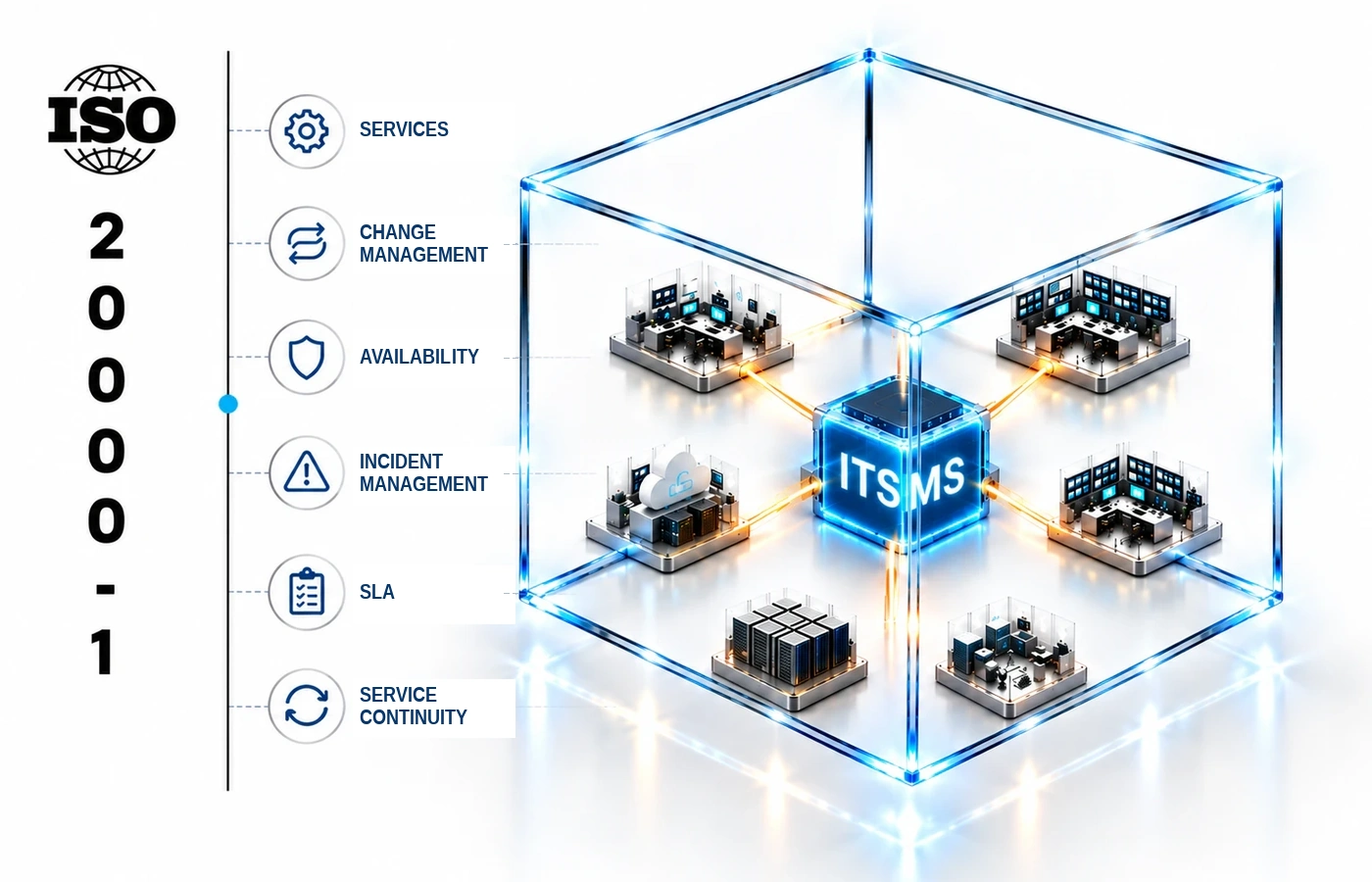
IT service management for digital services, support, IT operations and outsourcing.
Learn more →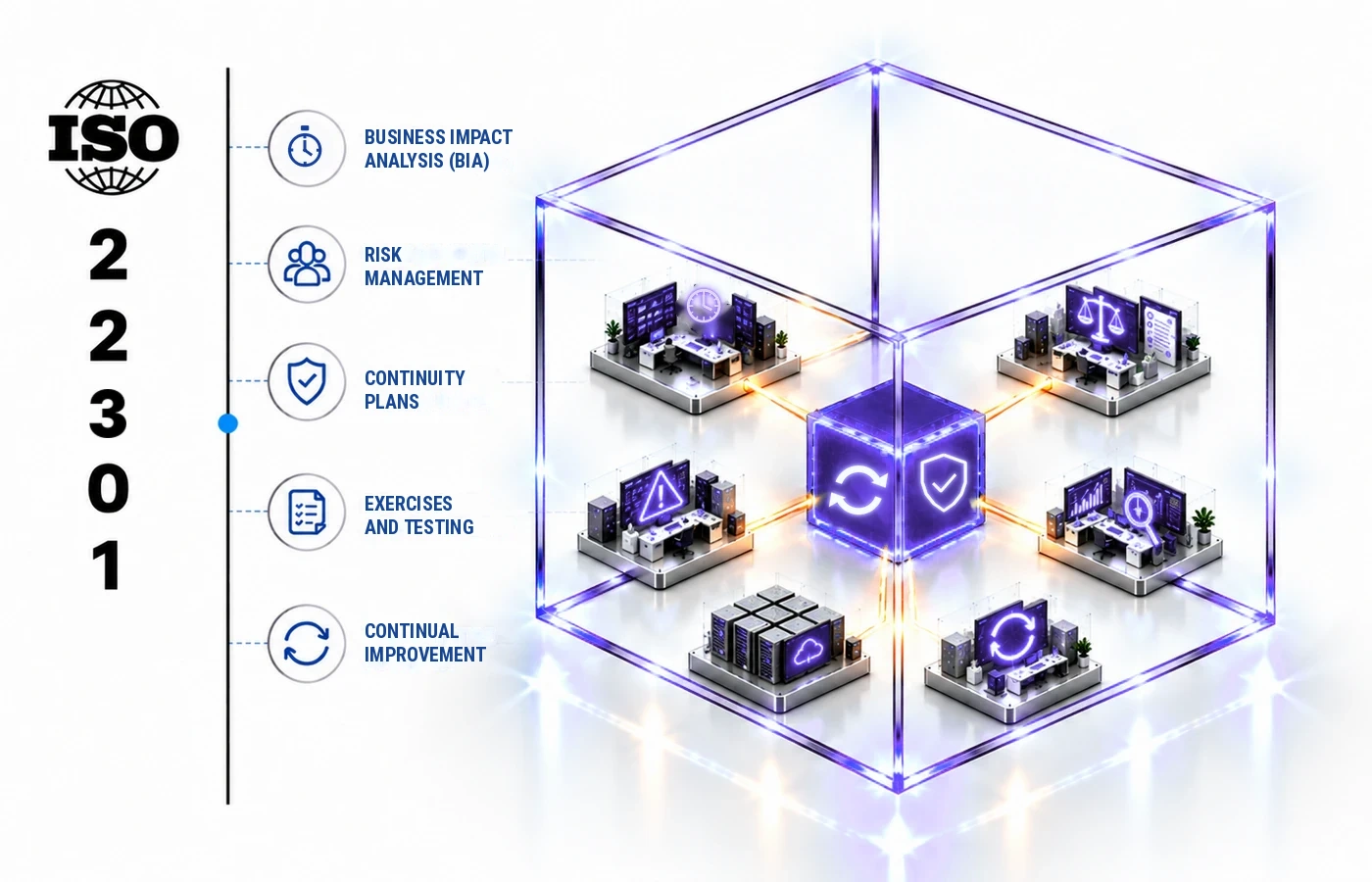
Business continuity, complementary to the ISO 27001 controls for ICT readiness and information security during disruptions.
Learn more →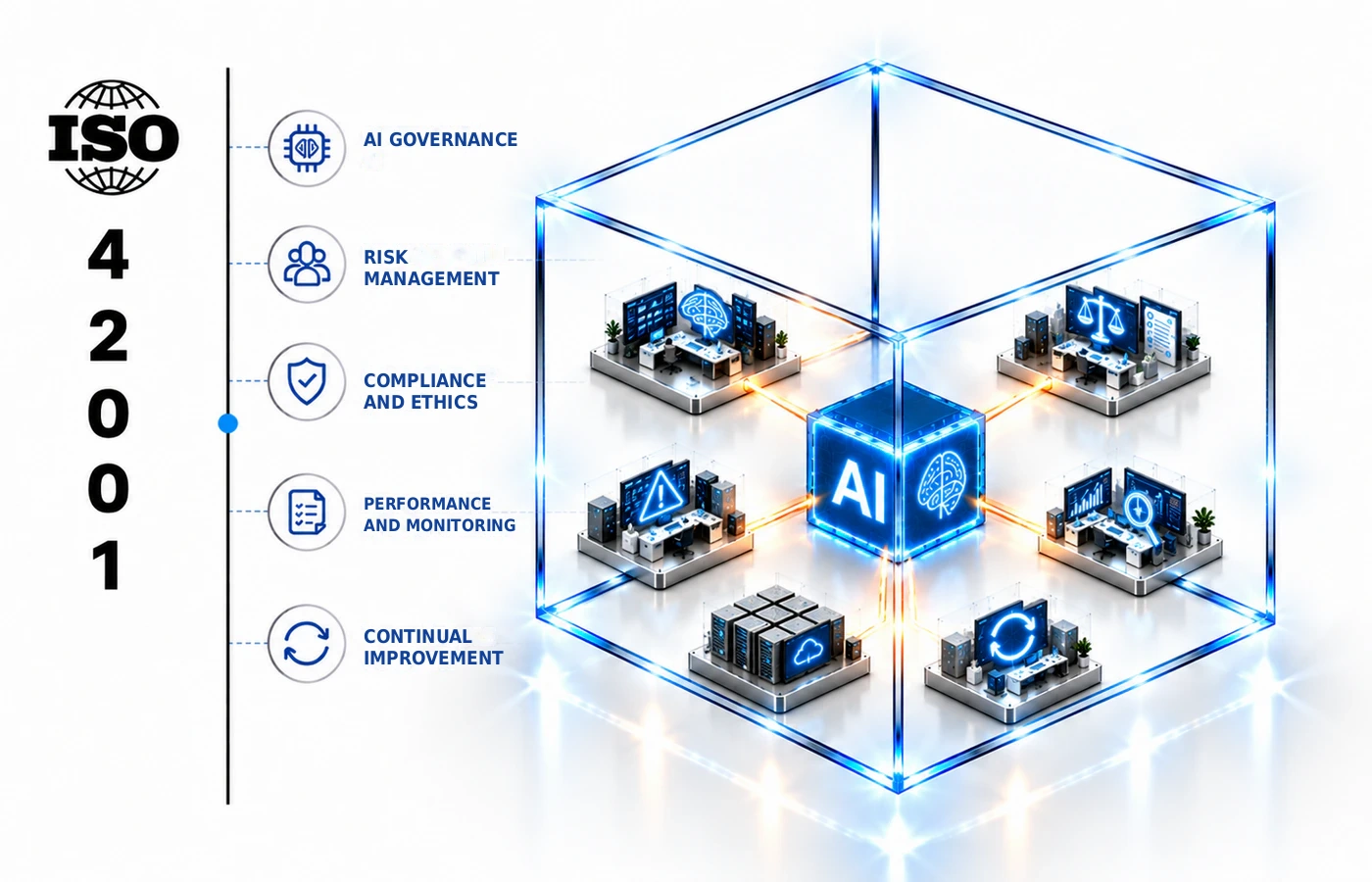
AI system management, with risk assessment and controls that can be integrated into the ISMS.
Learn more →Business continuity for resilience, disruption scenarios and operational recovery.
Privacy information management, a useful extension for data protection.
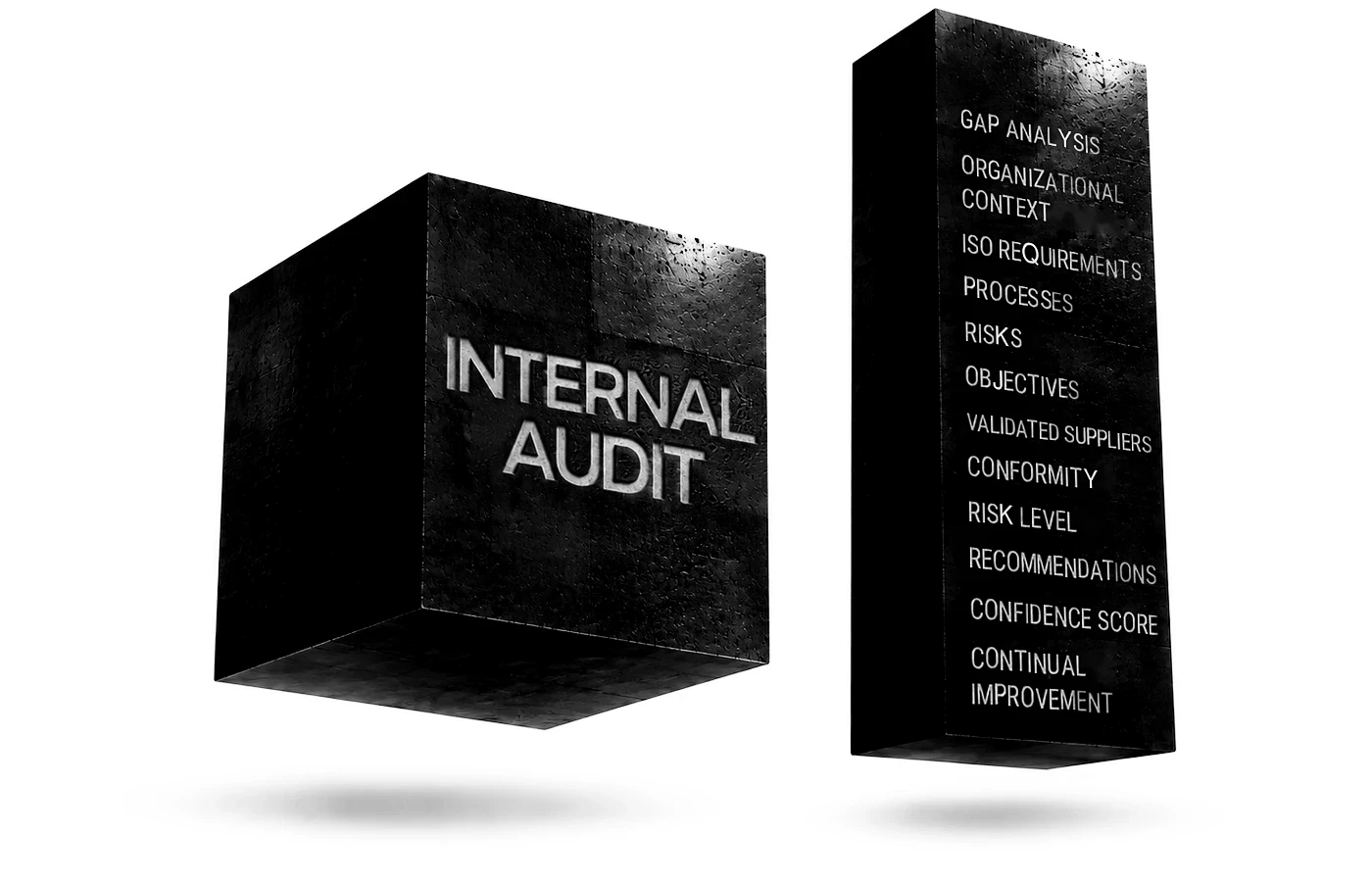
Checking the conformity and effectiveness of the system before certification, surveillance or recertification.
Learn more →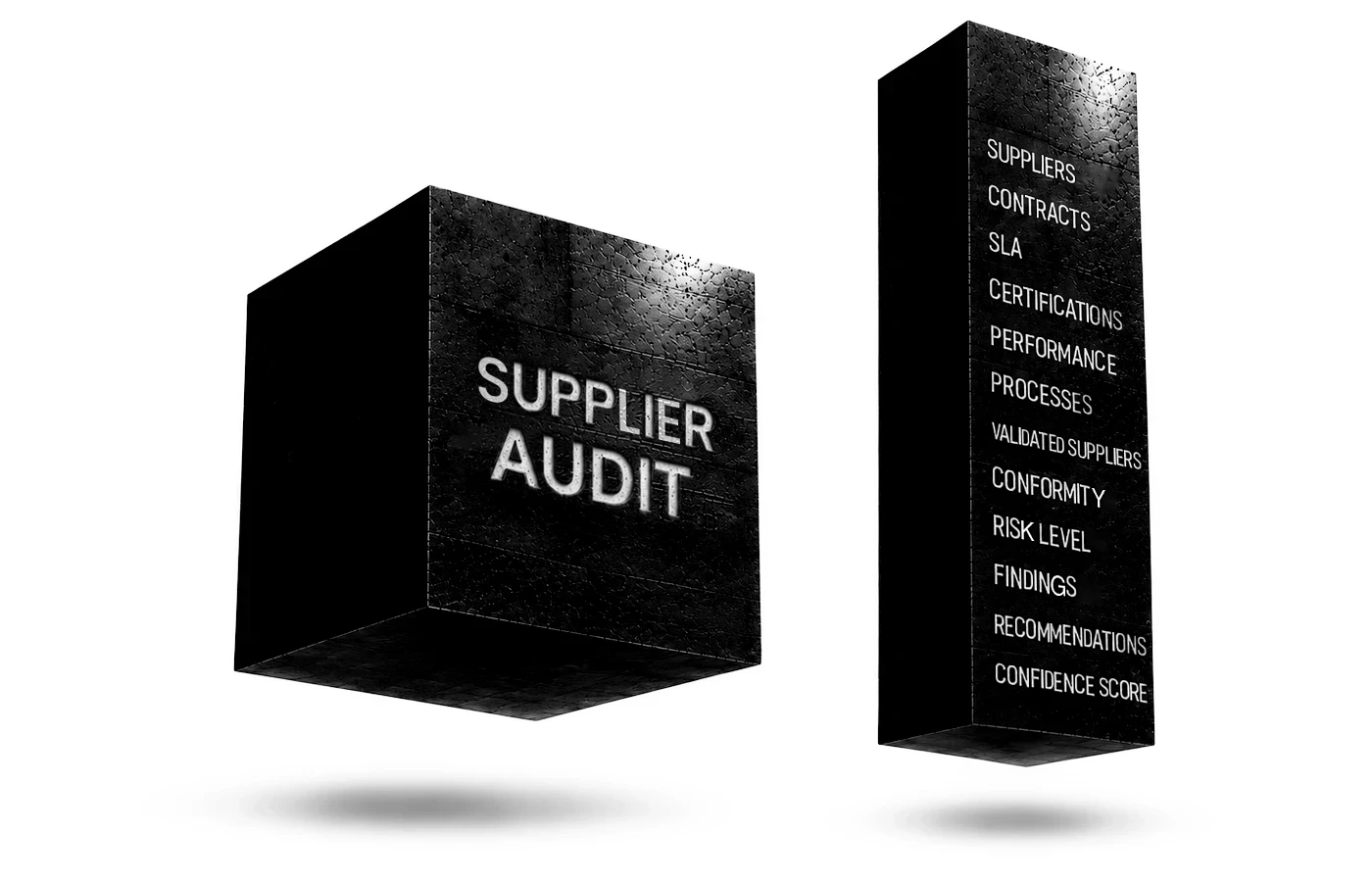
Evaluating suppliers, subcontractors and outsourced processes against the relevant requirements.
Learn more →
GAP analysis, implementation plan, documentation, training, operational support and audit preparation.
Learn more →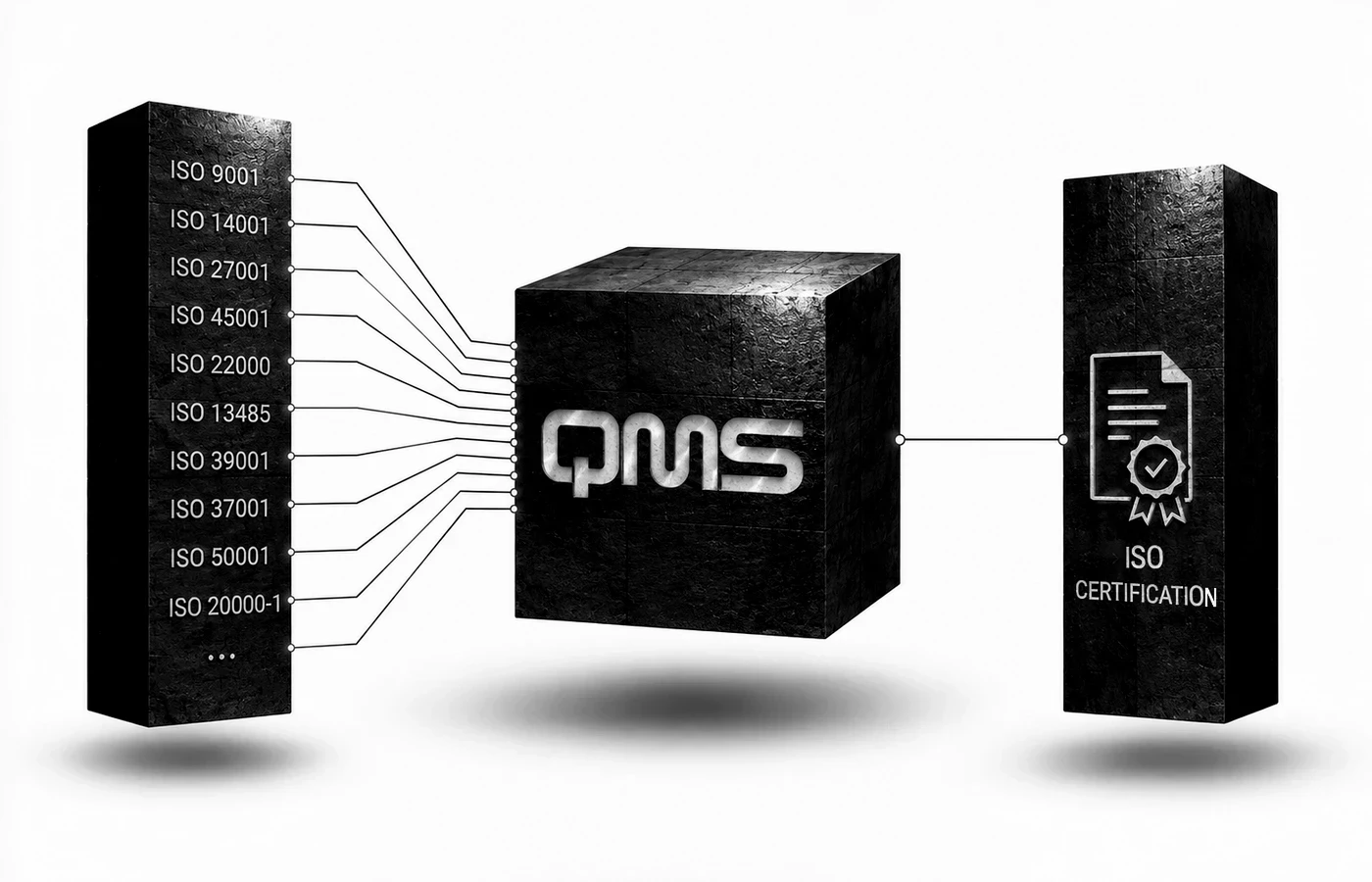
Reviewing evidence and corrective actions, and preparing the team for the certification body's audit.
Learn more →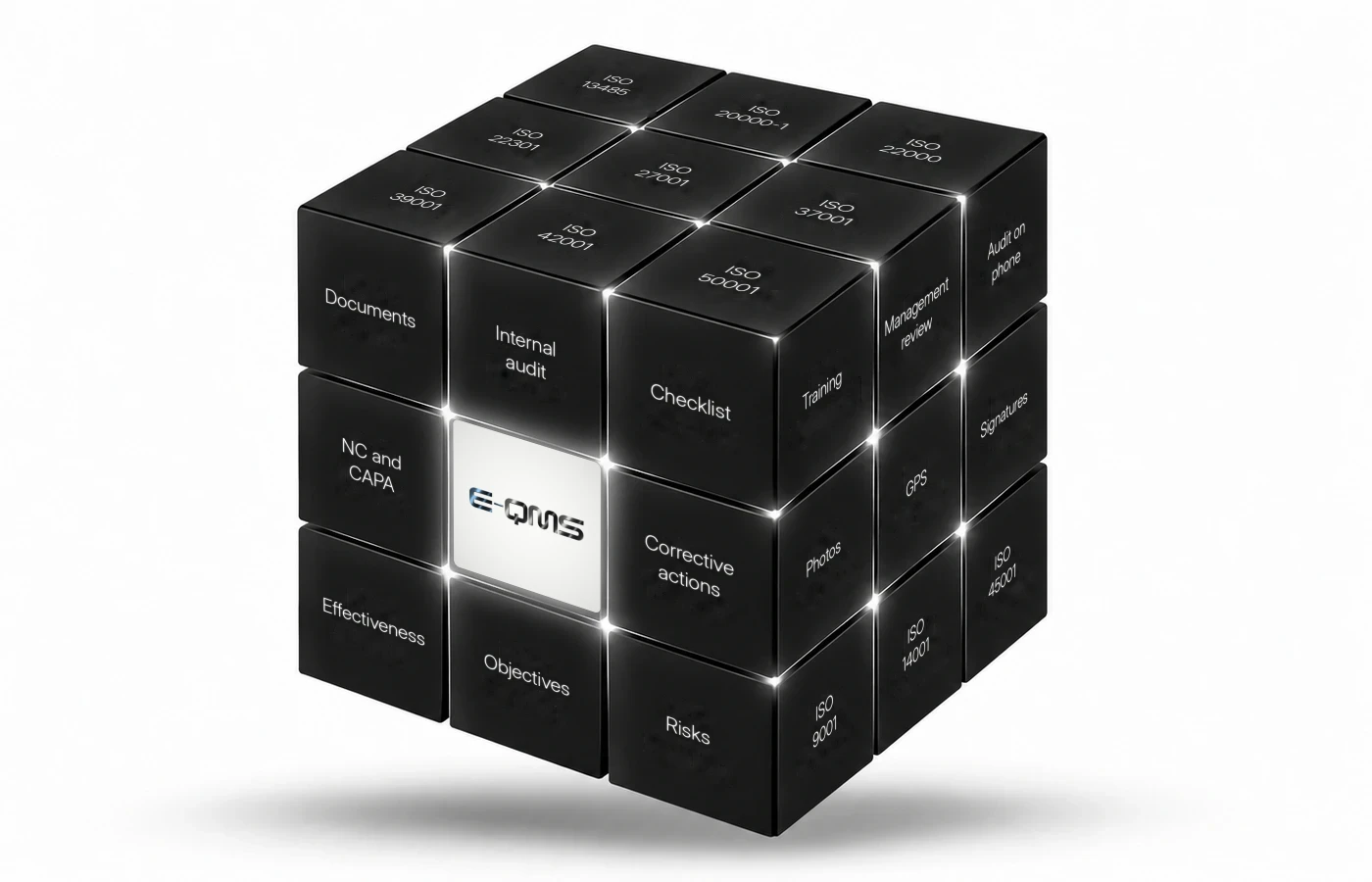
Documents, internal audit, nonconformities, corrective actions and management review, with alerts and reports generated automatically.
Learn more →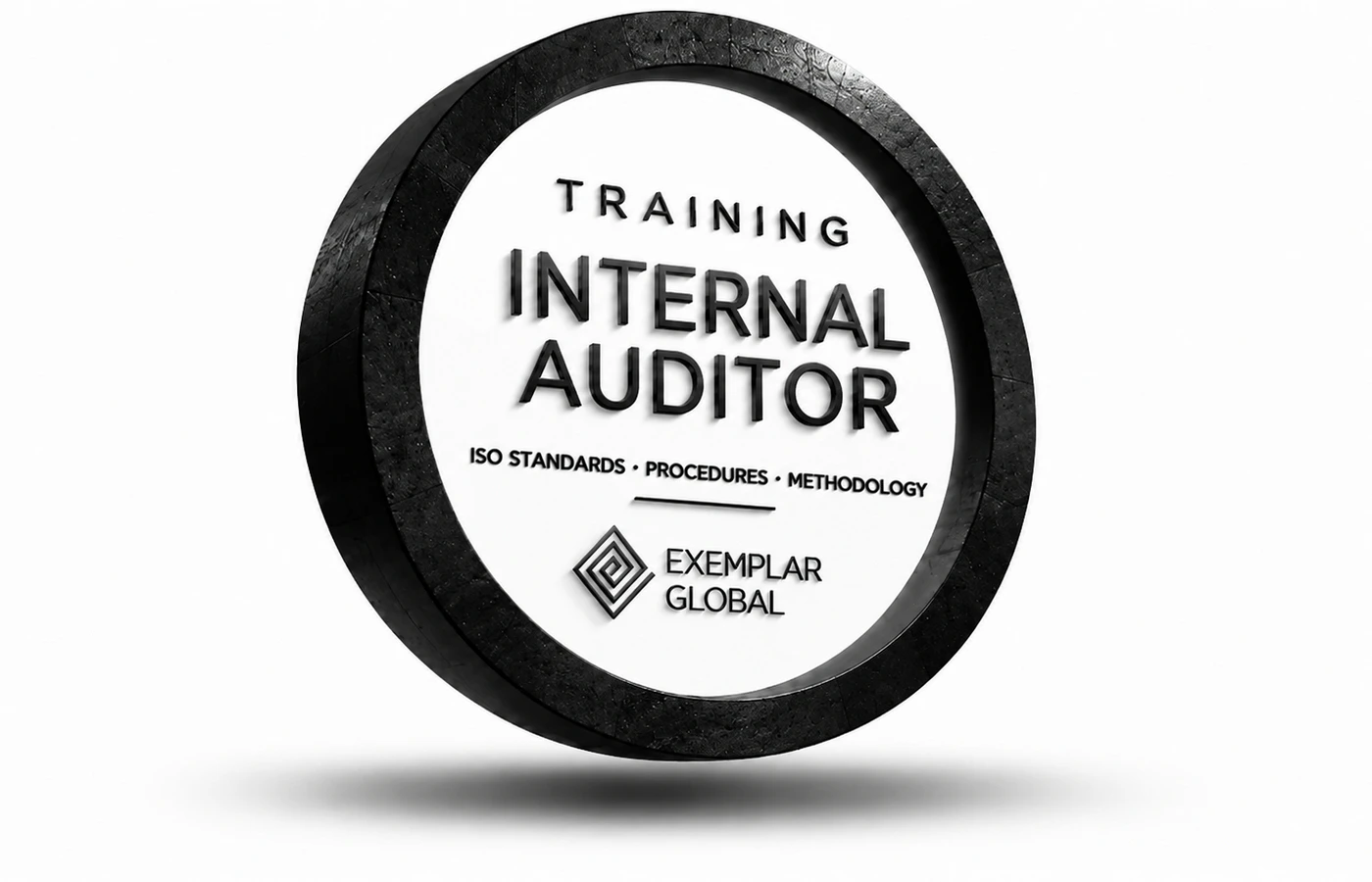
Developing internal competences for auditing management systems.
Learn more →
Advanced preparation for auditing management systems and coordinating audits.
Learn more →ISO/IEC 27001:2022 is the international standard for information security management systems. It sets requirements for identifying information risks, treating them, selecting controls and continually improving the system.
The cost depends on the size of the organization, the scope of the ISMS, the number of processes, the IT infrastructure, the current level of documentation and the desired certification date. The budget usually includes implementation consulting, the internal team's effort and the certification body's audit.
The duration depends on the size of the organization, the scope of the ISMS, the IT infrastructure, the processes involved and the current level of maturity. A GAP analysis can clarify the effort needed and the steps up to certification.
ISMS stands for Information Security Management System. It is the framework through which the organization sets policies, responsibilities, processes, controls and evidence for protecting information.
The standard is not mandatory in itself, but it may become necessary through contracts, tenders, customer audits or partner requirements. For many companies, certification becomes a condition for access to larger customers.
The Statement of Applicability shows which controls are applicable, which controls are excluded and why. It is one of the central documents of the ISO 27001:2022 system and must be linked to the risk assessment.
Typical documents include the ISMS policy, the risk methodology, the risk register, the treatment plan, the Statement of Applicability, operational procedures, evidence of training, the internal audit, the management review and corrective actions.
The auditor checks the scope of the ISMS, the risk assessment, the applicable controls, documents, evidence of implementation, the internal audit, the management review and how the organization handles nonconformities and continual improvement.
ISO 27001:2022 can support information security governance and help organize controls relevant to data protection. However, ISO 27001:2022 certification does not replace the legal obligations under the GDPR.
ISO 27001:2022 can support information security governance, risk assessment and control of the relevant processes for organizations that must address cybersecurity requirements. However, NIS2 compliance must be analyzed separately from ISO 27001:2022 certification.
The certificate is issued by an independent certification body. The consultant helps the organization build and prepare the system, but certification is carried out by a third party.
Implementation means building and applying the information security management system. Certification is the independent assessment carried out by a certification body to confirm conformity with the requirements of ISO/IEC 27001.
Yes, if the SME handles sensitive data, delivers digital services, takes part in tenders or works with large organizations that require evidence of security. Implementation must be adapted to the size and real risks of the organization.
An ISO 27001:2022 consultant must be able to explain the scope of the ISMS, the risk analysis, the Statement of Applicability, the internal audit and how the system will work in the organization. Choosing on price alone can lead to generic documentation and difficulties at the audit.
The system must be maintained through internal audits, updating risks, monitoring controls, management review and surveillance audits. ISO 27001:2022 is a living system, not a project closed once the certificate is obtained.
Duration depends on the certification body, the size of the organization and the time needed to close any nonconformities. The stage 1 and stage 2 audits are scheduled together with the chosen body.
Choose a body with valid accreditation for the standard and your field of activity, where accreditation exists, and compare offers and audit conditions. The consultant does not certify and does not influence the body’s decision.
If your organization is aiming for ISO/IEC 27001 certification, the services below turn the requirements of the standard into a working system: GAP analysis, useful documentation, training, internal audit and preparation for the certification body's audit.
We check whether the system is applied before certification, surveillance or recertification, and we prioritize corrective actions.
ISO internal audit →We build the system on real processes, risks, responsibilities, objective evidence and indicators relevant to information risks, controls, policies and continuity.
ISO consulting →We prepare the team, the documents and the evidence for the certification audit, with a focus on effectiveness and conformity.
ISO certification preparation →Documents, internal audit, nonconformities, corrective actions and management review, with alerts and reports generated automatically.
Learn more →Services are available for organizations in Romania and the Republic of Moldova, including online work where the nature of the processes allows it.
If your organization needs ISO 27001:2022 implementation, an internal audit, a GAP analysis or certification preparation, we can agree together on the right steps based on the scope of the ISMS, your current level of maturity and the desired audit date.
Phone: +40 722 773 446
Email: contact@qms.ro
Address: 12 Petru Rareș Street, Bucharest
Send an emailChoose whether to allow visitor statistics. You can change your choice at any time from the site footer.