Professional ISO internal audit for management systems
ISO Internal Audit Romania • Report • Nonconformities • Certification preparation

ISO internal audit for management systems

ISO internal audit services for organizations that need to verify conformity, effectiveness and objective evidence before certification, surveillance, recertification or management review.

ISO internal audit services

An independent internal audit based on risk, evidence and conclusions useful to management

A premium ISO internal audit does not mean formally filling in a checklist. It means a professional assessment of how the management system really works: which requirements are met, what evidence exists, where risks arise, which processes are not sufficiently controlled and what actions must be defined before the external audit.

QMS Consulting provides ISO internal audit services for organizations preparing for certification, companies that are already certified, organizations with integrated systems, critical suppliers and management teams that need an objective picture of the system's conformity and effectiveness. The audit is built on the requirements of the applicable standard, the organization's real processes and verifiable objective evidence.

The result is not a generic report but a clear map of conformity: what works, what must be corrected, what evidence is missing, which nonconformities could affect certification and which improvements can support operational performance.

ISO internal audit report, objective evidence and corrective actions
What an ISO internal audit is

The ISO internal audit checks whether the system is conforming, applied and effective

The ISO internal audit is a systematic, independent and documented process for obtaining and evaluating objective evidence to determine the extent to which the audit criteria are fulfilled.

Conformity

We check whether the requirements of the ISO standard, legal requirements, contractual requirements and internal procedures are correctly reflected in the system and applied in day-to-day work. Conformity is not demonstrated through statements but through verifiable evidence.

Effectiveness

We analyze whether the system produces the expected results: controlled processes, risks addressed, objectives monitored, clear responsibilities, complaints handled, nonconformities addressed and data-driven decisions.

Objective evidence

The audit is based on documents, records, interviews, observations, indicators, reports, registers, traceability and concrete examples from processes. A good finding is supported by a criterion and evidence.

Improvement

The internal audit must generate useful actions: correcting problems, preventing recurrence, improving controls, clarifying processes and better preparation for the certification audit.

Standards audited

ISO internal audit for all major management system standards

The ISO internal audit differs depending on the standard audited. Choose the management system you need an audit for and see what we check in each case.

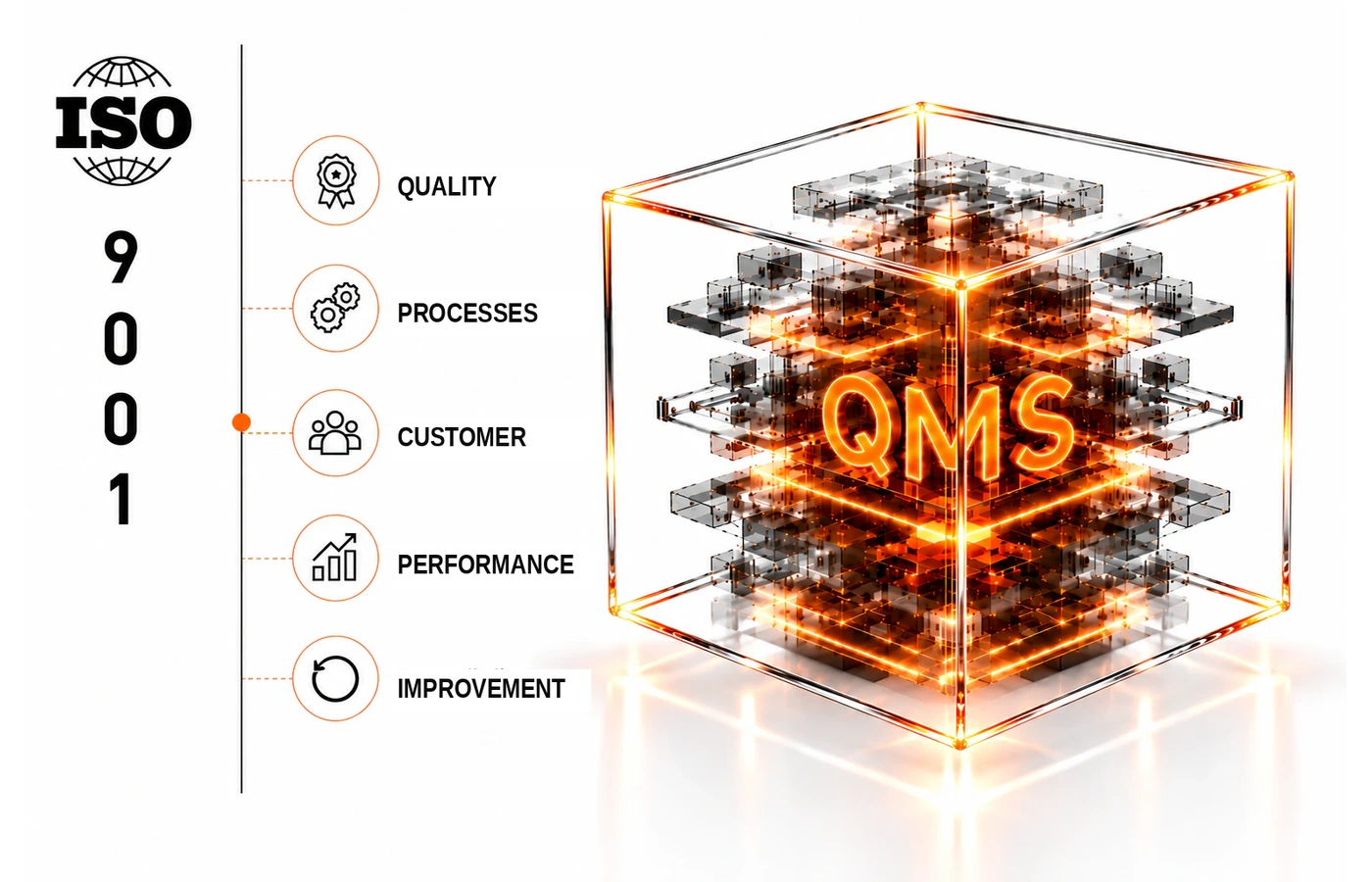
ISO 9001:2026 internal audit
quality management

ISO 9001:2026

Internal audit of processes, objectives, indicators, customer satisfaction, control of nonconformities and continual improvement, checking requirements, evidence, risks, responsibilities and corrective actions.

Learn more →
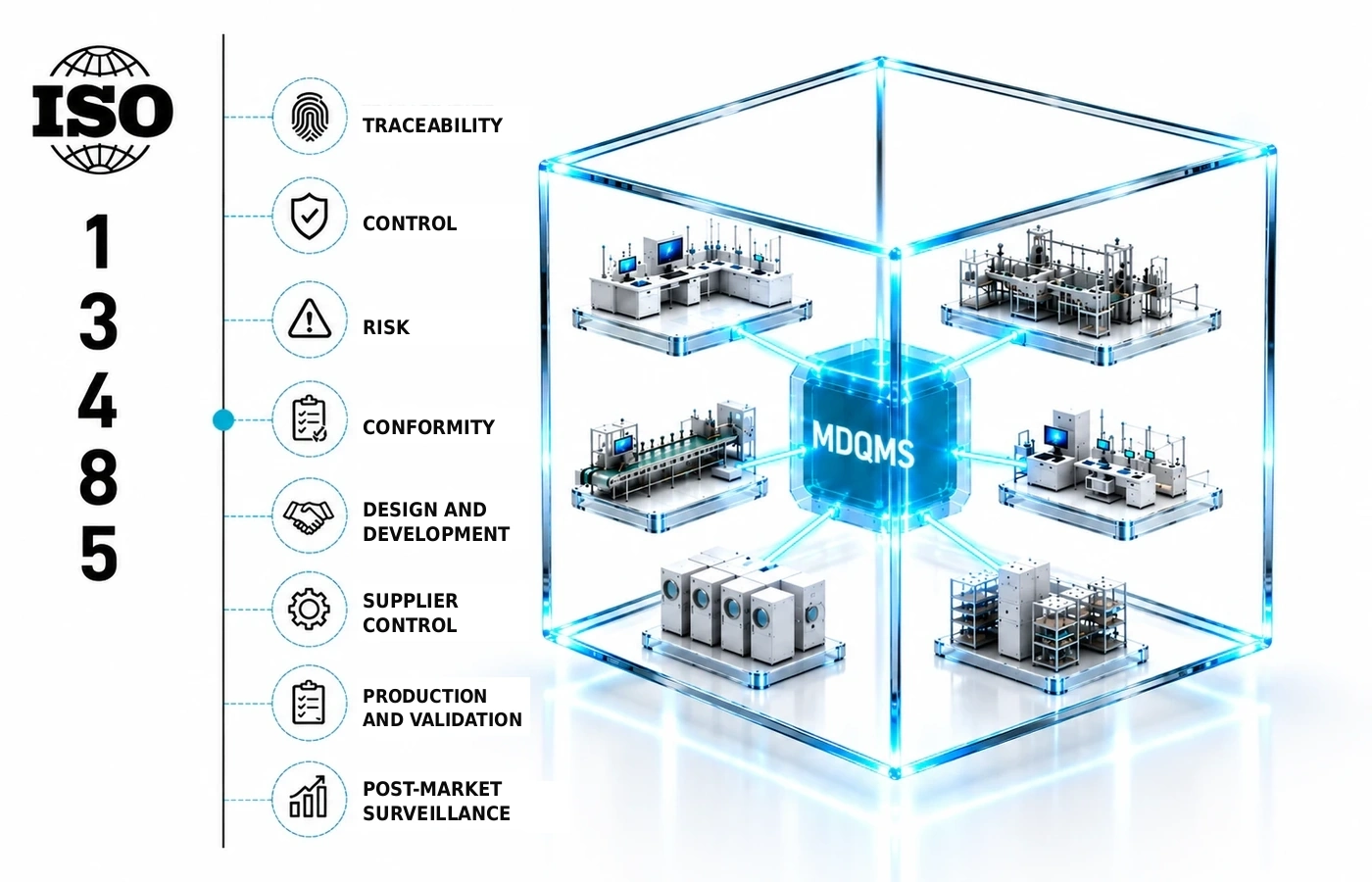
ISO 13485:2016 internal audit for medical devices, traceability, risk and documentation
medical devices

ISO 13485:2016

Internal audit of traceability, documented control, risk management, validations, complaints and regulatory compliance, checking requirements, evidence, risks, responsibilities and corrective actions.

Learn more →
ISO 14001:2026 internal audit for environmental management, environmental aspects and legal compliance
environmental management

ISO 14001:2026

Internal audit of environmental aspects, compliance obligations, environmental objectives, operational control and emergency situations, checking requirements, evidence, risks, responsibilities and corrective actions.

Learn more →
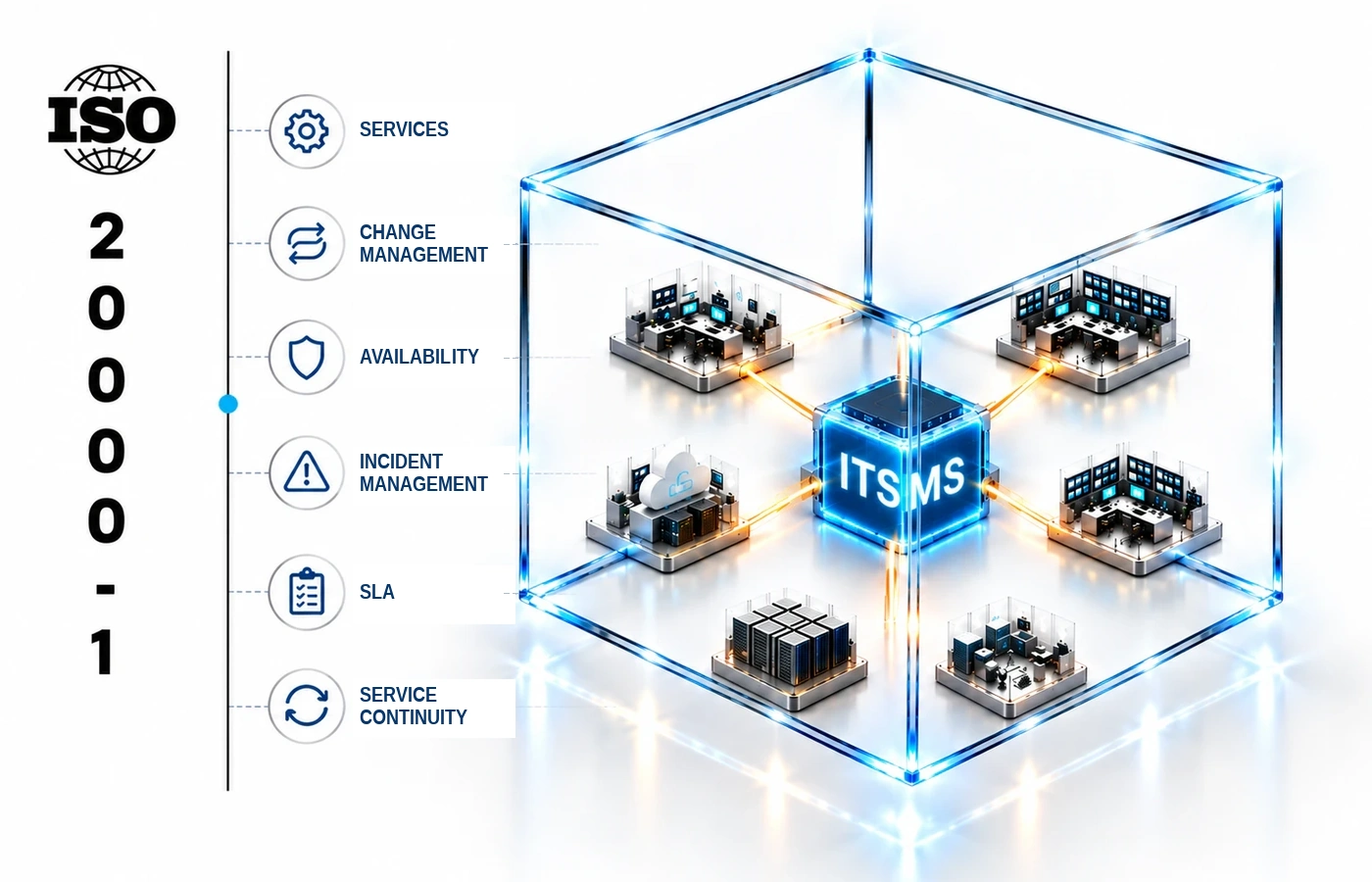
ISO 20000-1:2018 internal audit for IT services, SLAs, incidents and changes
IT service management

ISO 20000-1:2018

Internal audit of SLAs, incidents, changes, continuity, availability and IT service performance, checking requirements, evidence, risks, responsibilities and corrective actions.

Learn more →
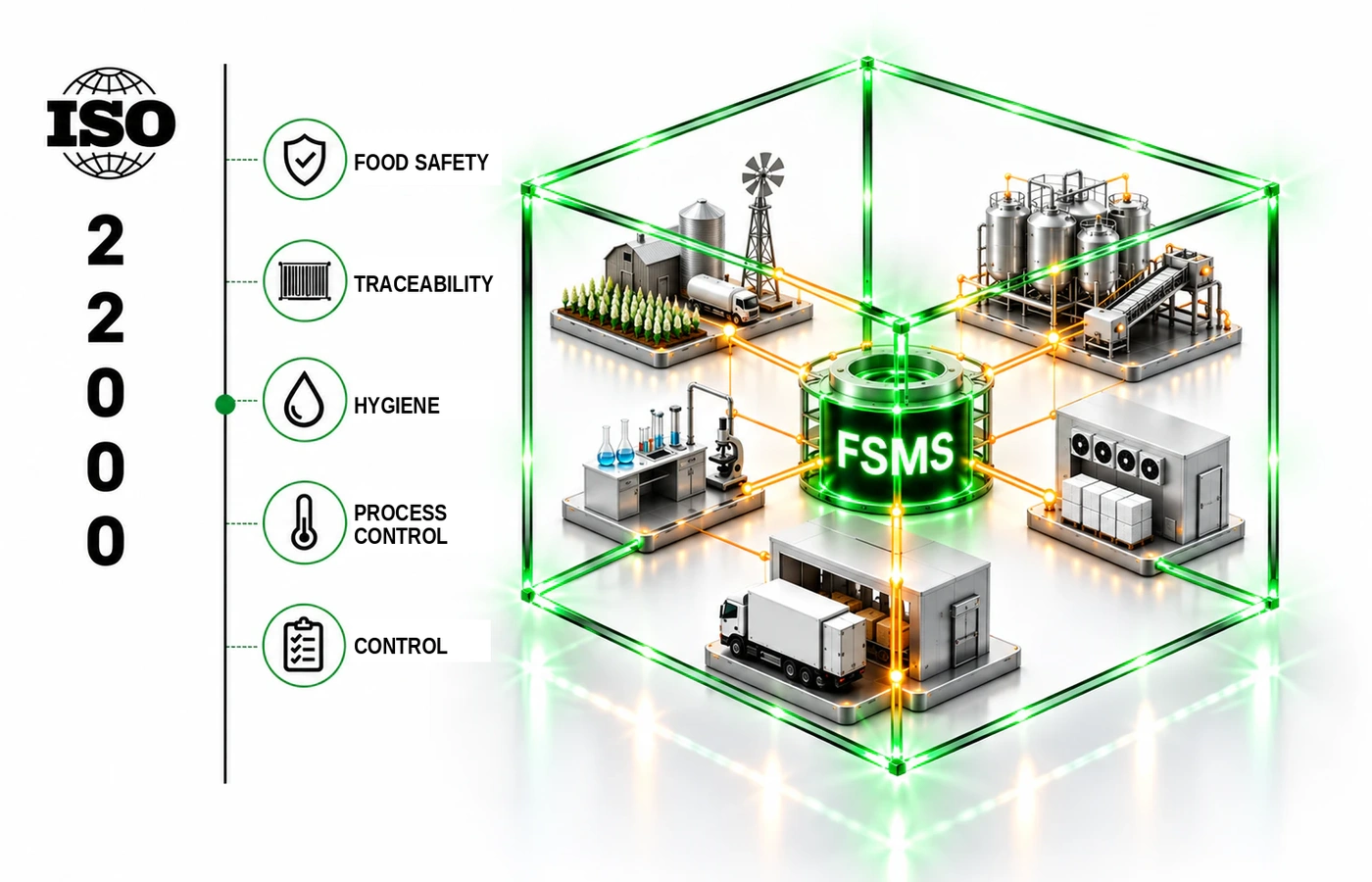
ISO 22000:2018 internal audit for food safety, HACCP and traceability
food safety

ISO 22000:2018

Internal audit of HACCP, prerequisite programmes, traceability, hazard control and communication in the food chain, checking requirements, evidence, risks, responsibilities and corrective actions.

Learn more →
ISO 22301:2019 - Business continuity management system
continuity

ISO 22301:2019

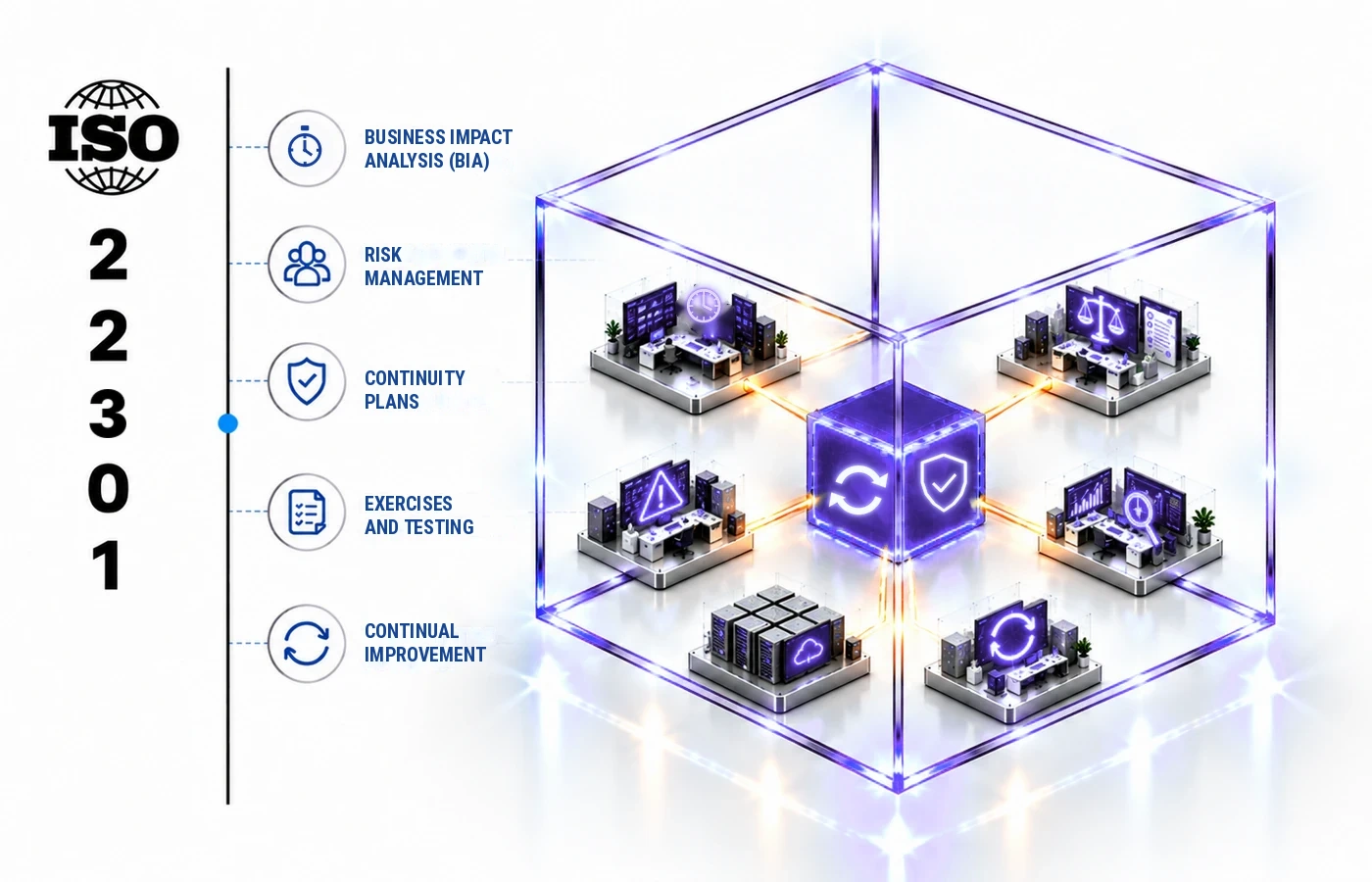
Internal audit of the BIA, continuity plans, exercises and the capacity to recover critical activities.

Learn more →
ISO 27001:2022 internal audit for information security, risks and controls
information security

ISO 27001:2022

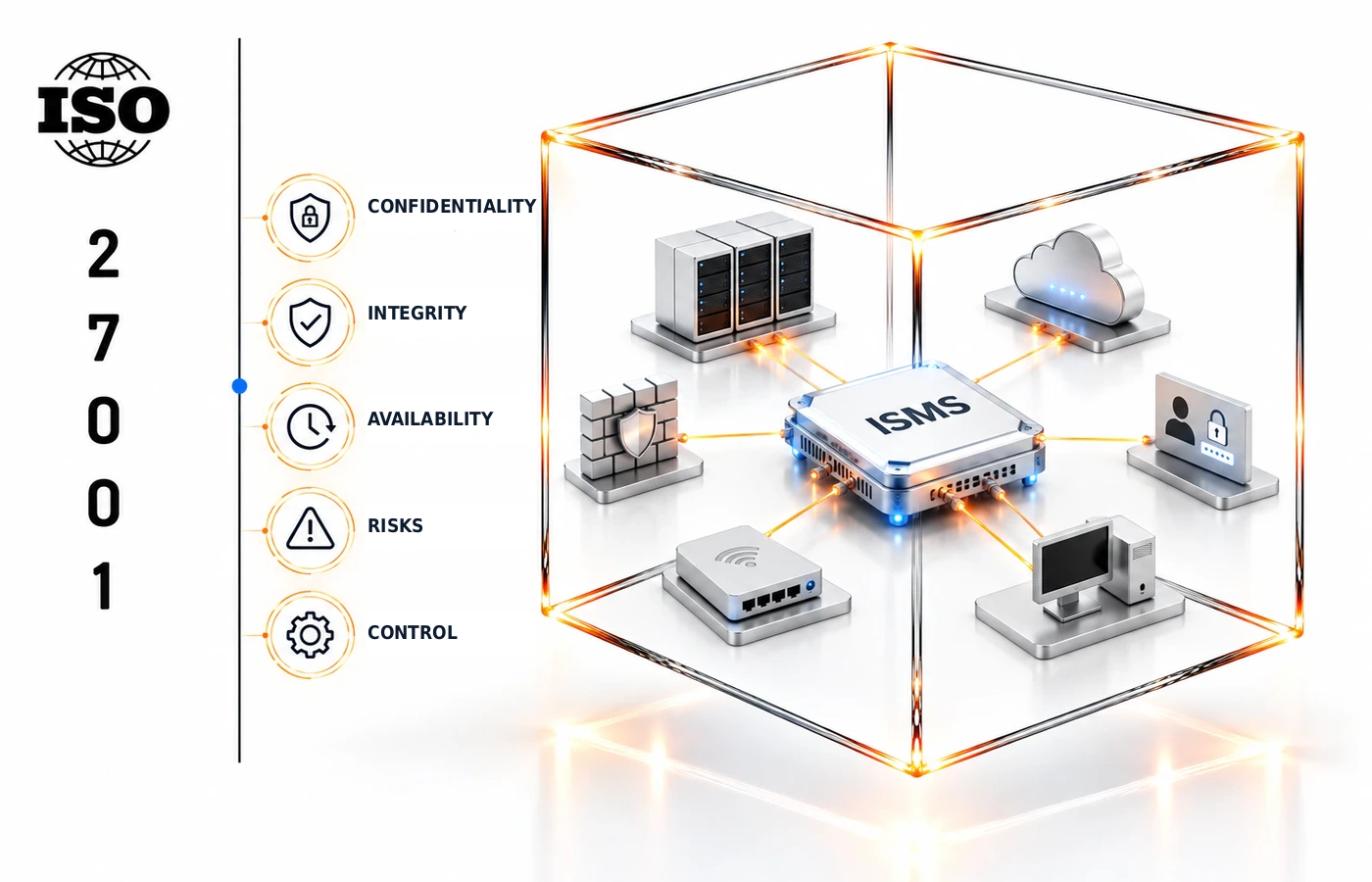
Internal audit of risk assessment, controls, the SoA, information assets, incidents, access and continuity, checking requirements, evidence, risks, responsibilities and corrective actions.

Learn more →
ISO 37001:2025 internal audit for the anti-bribery system, due diligence and compliance
anti-bribery

ISO 37001:2025

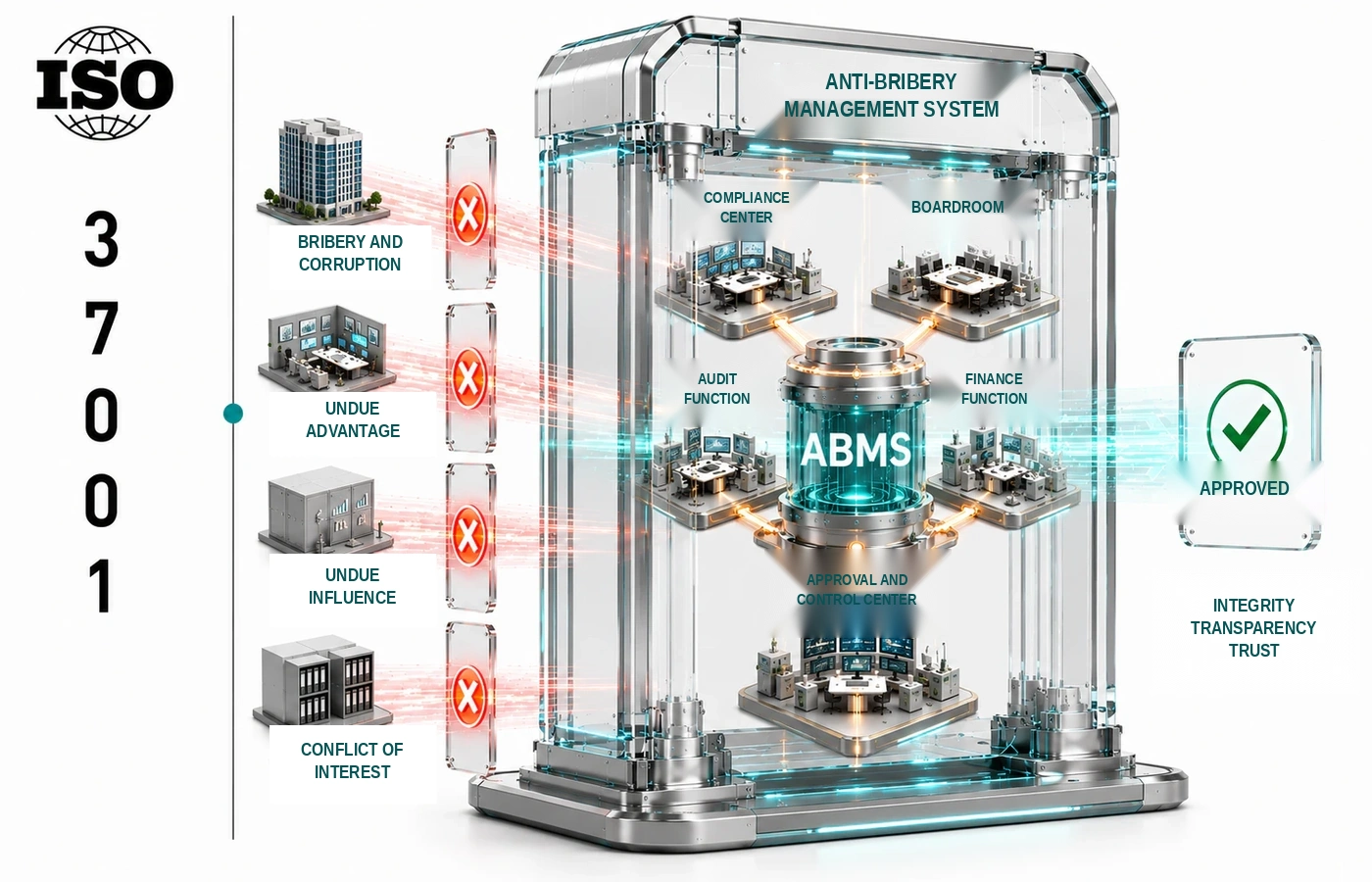
Internal audit of due diligence, gifts, conflicts of interest, financial and non-financial controls, reporting and investigation, checking requirements, evidence, risks, responsibilities and corrective actions.

Learn more →
ISO 39001:2012 internal audit for road safety, transport and operational risks
road safety

ISO 39001:2012

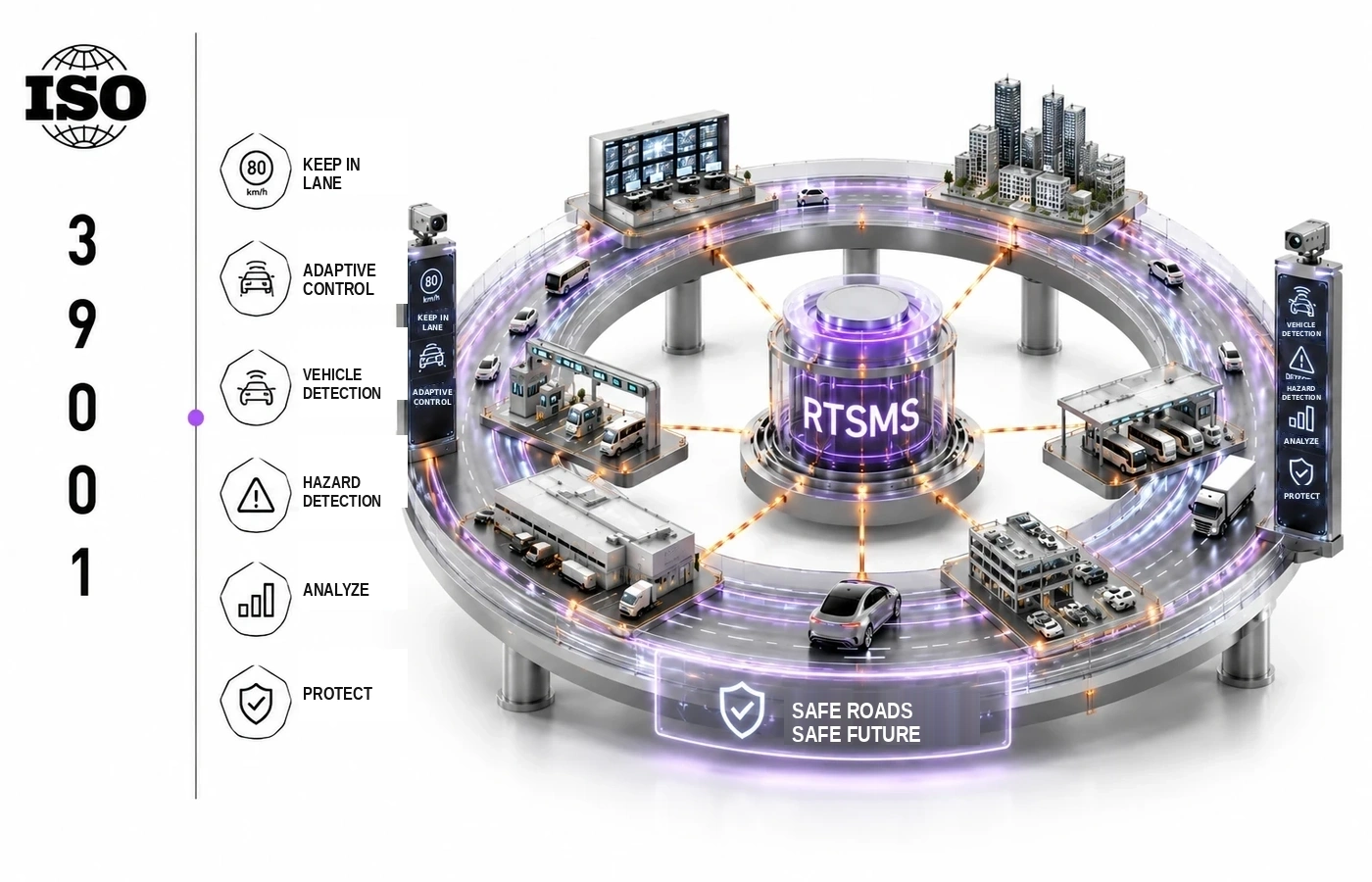
Internal audit of road safety indicators, traffic risks, driving behaviour and fleet control, checking requirements, evidence, risks, responsibilities and corrective actions.

Learn more →
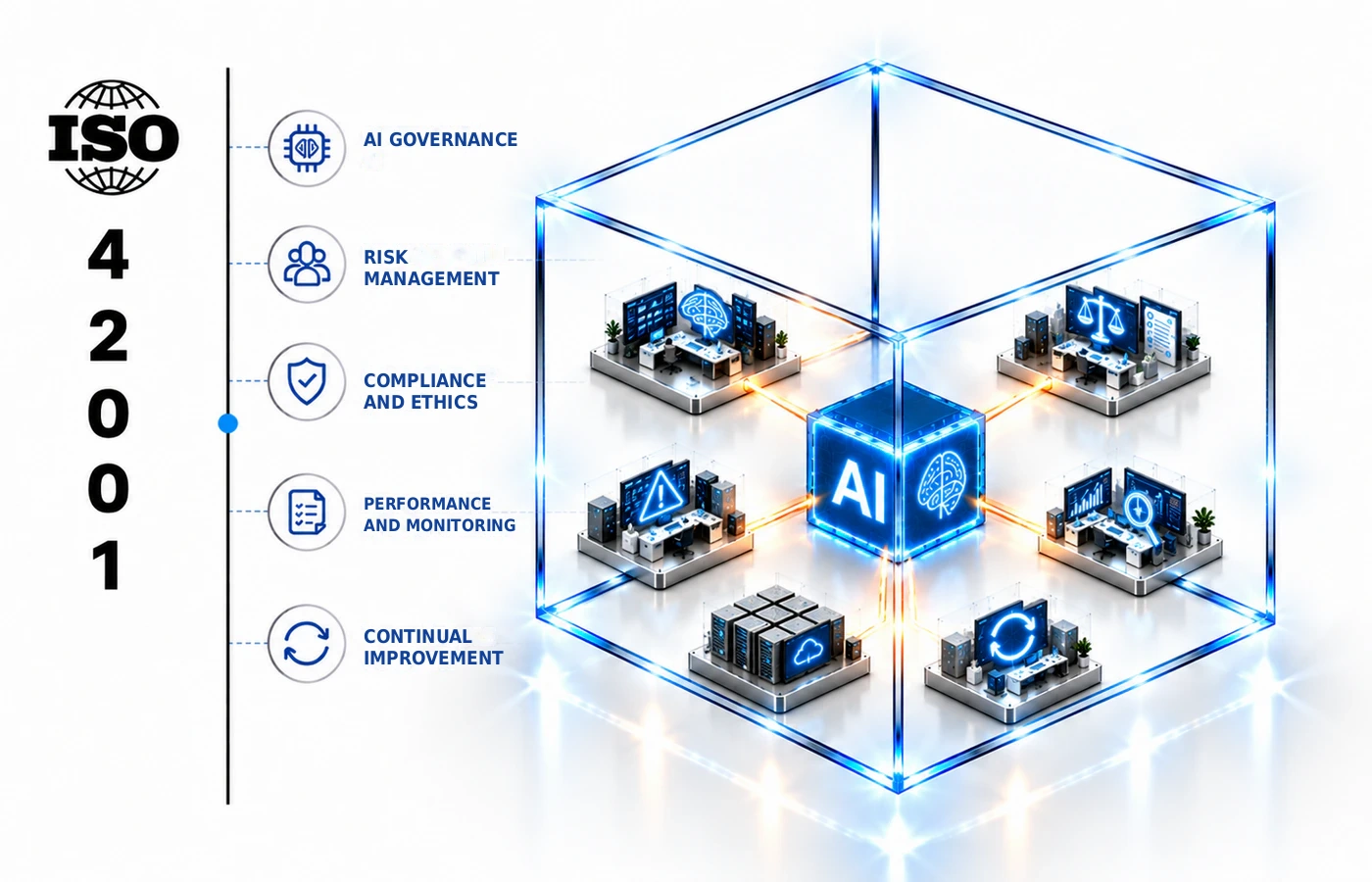
ISO 42001:2023 - Artificial intelligence management system
artificial intelligence

ISO 42001:2023

Internal audit of AI governance, risk and impact assessment of AI systems, controls and monitoring.

Learn more →
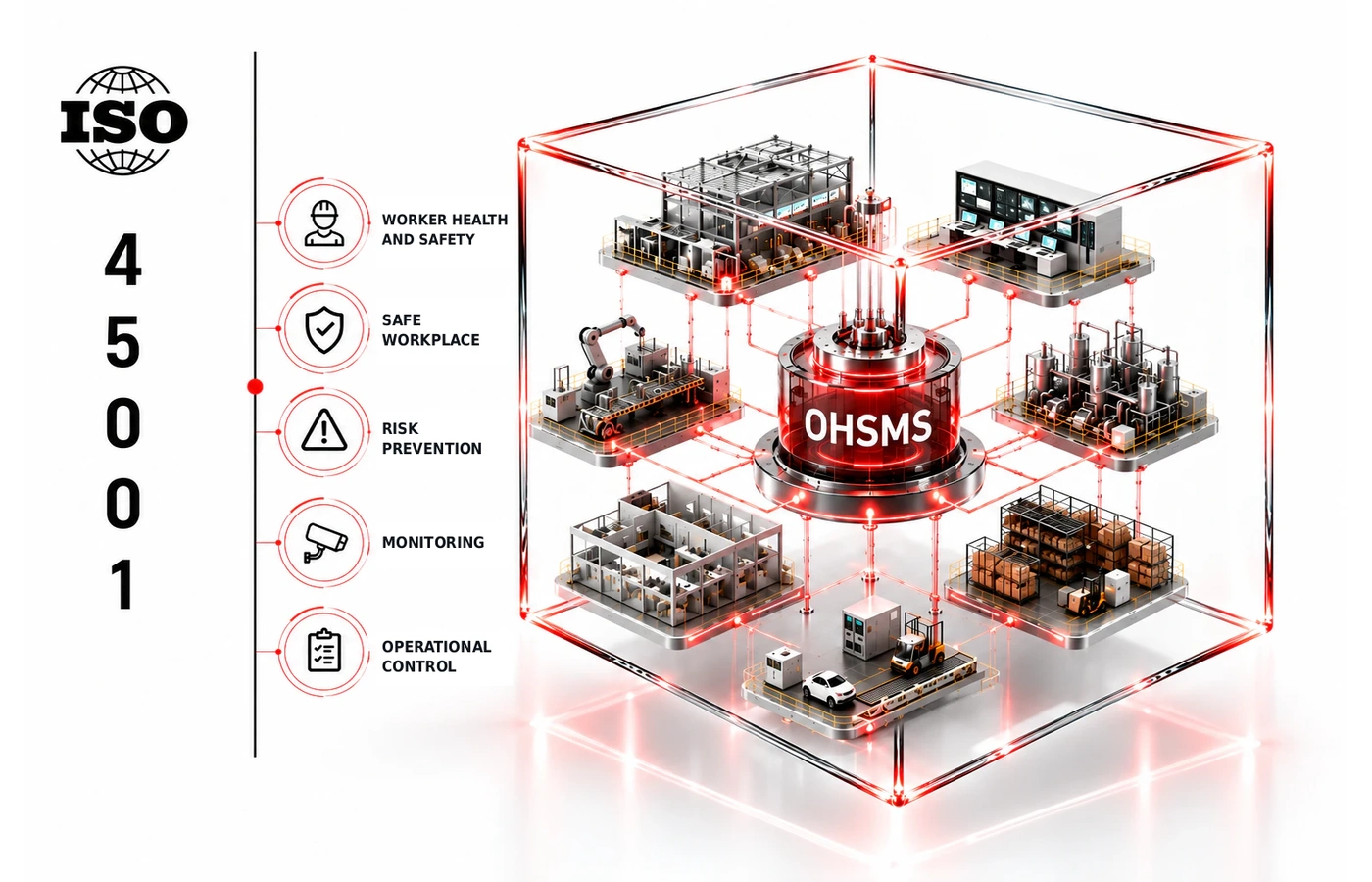
ISO 45001:2018 internal audit for occupational health and safety
occupational health and safety

ISO 45001:2018

Internal audit of hazards, OH&S risks, worker consultation, incidents, operational control and emergency preparedness, checking requirements, evidence, risks, responsibilities and corrective actions.

Learn more →
ISO 50001:2018 internal audit for energy management and energy performance
energy management

ISO 50001:2018

Internal audit of the energy review, EnPIs, baselines, objectives, monitoring and energy performance, checking requirements, evidence, risks, responsibilities and corrective actions.

Learn more →
What the service includes

Services included in the ISO internal audit

The service covers every form of internal audit an organization may need: full audit, single-standard audit, integrated audit, process audit, reporting, cost estimate, handling of nonconformities and certification support.

Full internal audit for ISO certification

We assess the system before the certification audit, identify nonconformities and prepare the organization for its interaction with the certification body.

Internal audit for surveillance or recertification

We check that the system is maintained, the corrective actions, changes, the results of the previous audit and readiness for the surveillance or recertification audit.

Internal audit for integrated systems

We audit several standards at once, reducing overlaps and checking the common requirements: context, leadership, risks, objectives, support, operations, evaluation and improvement.

Risk-based audit

We prioritize critical processes, high-impact areas, key suppliers, recurring complaints, changes and poor indicator results.

Audit by process or department

We can audit sales, procurement, production, logistics, HR, IT, quality, environment, OH&S, maintenance, finance or management on a targeted basis.

Report and support for corrective actions

The report comes with clear recommendations for handling nonconformities, analyzing causes and verifying effectiveness.

ISO 19011 and auditor competence

ISO internal audit carried out according to auditing principles, independence and a risk-based approach

A credible ISO internal audit must be planned, documented and performed objectively. In practice, the organization needs an auditor who understands the standard being audited, the real processes, the risks, objective evidence and how to word findings correctly.

The internal audit must not be confused with a formal check that documents exist. A useful audit looks at whether the management system is applied, whether processes produce the expected results, whether nonconformities are addressed at their root cause and whether management receives information clear enough for decision-making.

QMS Consulting treats the internal audit as an independent assessment of the system, not as a box-ticking exercise. We check requirements, evidence, interviews, indicators, risks, corrective actions and the effectiveness of controls, so that the report can be used before certification, surveillance or recertification.

What a professional internal audit looks at

  • Clearly defined audit objectives, criteria and scope.
  • The auditor's independence from the activity being audited.
  • A risk-based approach and the importance of processes.
  • Verifiable objective evidence, not general opinions.
  • Findings worded with criterion, evidence and impact.
  • Useful recommendations for corrective actions and improvement.
QMS methodology

How the ISO internal audit is carried out

The audit methodology is built for clarity, traceability and usefulness to management. Each stage produces information that can be used in certification preparation, in the management review and in improving the system.

1. Setting the objectives and scope

We define the standards audited, the processes, sites, criteria, period, teams involved and the main objective: certification, surveillance, recertification, internal check or management assessment.

2. Review of existing documents

We review the policies, procedures, processes, registers, risk assessments, objectives, indicators, reports, corrective actions and evidence relevant to the audit scope.

3. The audit plan

We prepare the audit agenda, the processes audited, the people to be interviewed, the audit criteria, the time allocated and how evidence will be collected, so that the audit is efficient and predictable for the internal team.

4. Interviews and process checks

We talk to process owners, analyze practical application, follow operational workflows, check traceability and compare actual working practice with the documented requirements.

5. Evaluating objective evidence

We analyze whether the evidence is sufficient, current, controlled, consistent and relevant. We do not rely on intentions or statements, but on verifiable information.

6. Writing the findings

We distinguish conformities, observations, opportunities for improvement and nonconformities. Each finding is worded with reference to the criterion, the evidence and the impact.

7. The internal audit report

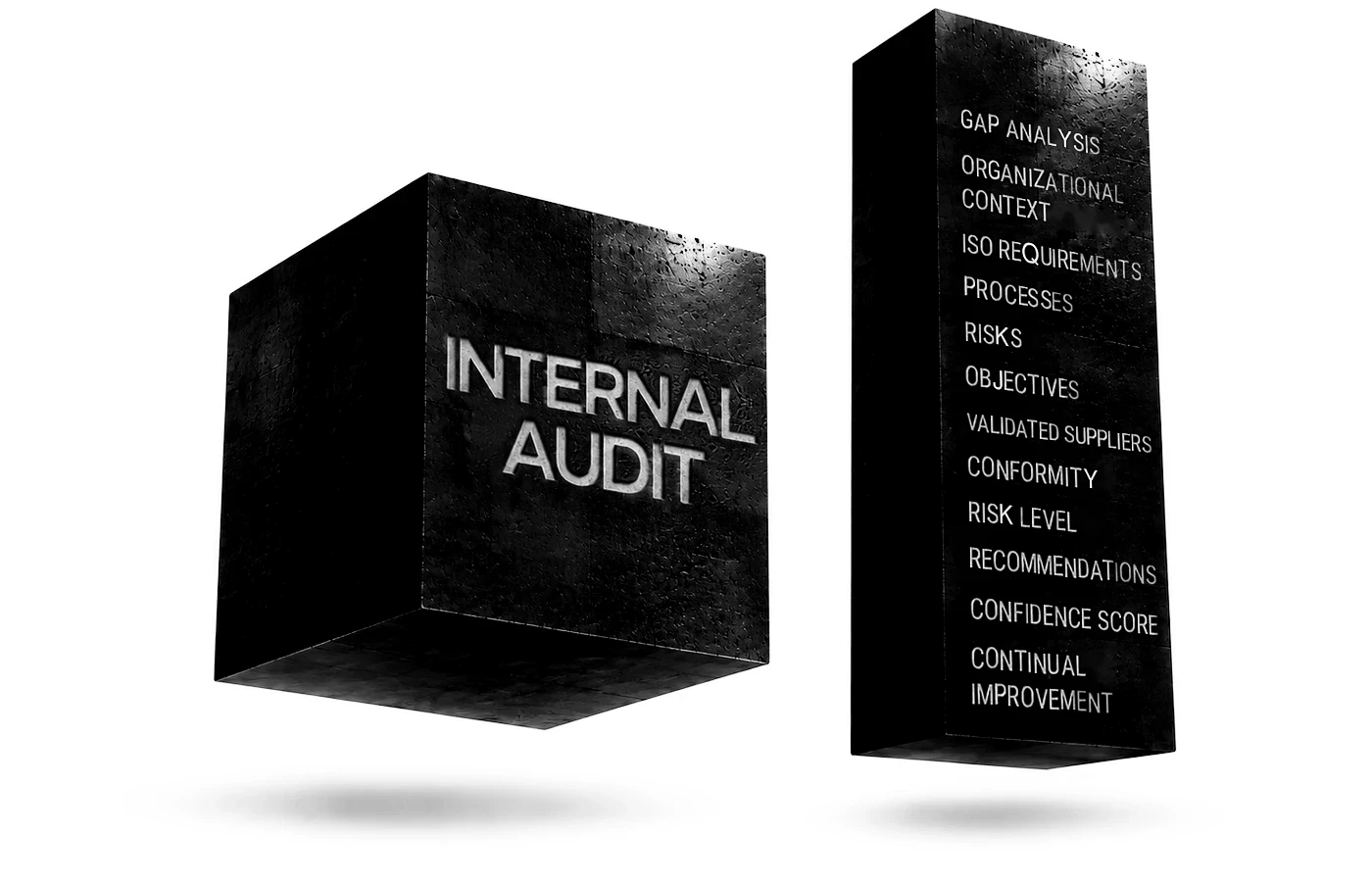
We deliver the report with the scope, objectives, criteria, processes audited, evidence, findings, nonconformities, conclusions and recommendations for corrective actions.

8. Follow-up and corrective actions

On request, we support root cause analysis, defining corrective actions, prioritizing risks and verifying the effectiveness of the measures implemented.

Industries covered

ISO internal audit adapted to your industry, risks and operational requirements

The audit is adapted to the risks and requirements specific to each sector. For each industry, you will find below the priority areas we look at and the dedicated page.

ISO internal audit for aviation, critical processes, safety and traceability
Industry

Aviation

For aviation, the focus is on documented control, competence, traceability, risk management, supplier control and compliance with safety-critical procedures.

Internal audit for Aviation →
ISO internal audit for the banking sector, information security and operational risk
Industry

Banking

In the banking and financial sector, the ISO internal audit assesses governance, information security, service continuity, compliance, access control and operational risks.

Internal audit for Banking →
ISO internal audit for IT&C, information security, SLAs and continuity
Industry

IT&C

In IT&C, the internal audit covers information security, SLAs, incident management, service continuity, changes, access, information assets and cyber risks.

Internal audit for IT&C →
ISO internal audit for energy, consumption, energy efficiency and compliance
Industry

Energy

For energy, the internal audit analyzes energy performance, consumption, compliance, operational continuity, maintenance, HSE risks and the effectiveness of performance indicators.

Internal audit for Energy →
Benefits

What the organization gains from a professionally conducted ISO internal audit

Lower risk of major nonconformities

Problems are identified before the external audit, while they can still be addressed without the pressure of certification.

Better-informed management

The report provides a clear picture of conformity, risks, performance and vulnerable areas.

Clearer processes

The audit highlights unclear responsibilities, incomplete workflows, documentation gaps and weak controls.

Better corrective actions

Findings support analysis of the real causes, not just quick, formal corrections.

Stronger evidence for certification

The organization knows what evidence must be presented, where the gaps are and how teams must be prepared.

Continual improvement

The internal audit connects nonconformities, indicators, risks and the management review in a real improvement cycle.

Why it matters

Why the internal audit is critical before certification, surveillance or recertification

Organizations that treat the internal audit as a formality often reach the external audit with procedures that are not applied, incomplete evidence, unmonitored objectives, superficial corrective actions or processes that cannot demonstrate real control.

A properly conducted internal audit reduces the risk of major nonconformities, gives management a realistic picture of the system and helps internal teams understand where action is needed. For organizations seeking certification for the first time, the internal audit is often the difference between a system that is merely documented and one that can be demonstrated. For certified organizations, the internal audit maintains the discipline of the system and prepares for the surveillance or recertification audit.

In practice, the value appears when the audit is deep enough to identify the real problems, but clear enough to be quickly turned into corrective actions.

The internal audit answers essential questions

  • Are the requirements of the standard fully covered?
  • Is there objective evidence for each process?
  • Are risks identified, addressed and monitored?
  • Are objectives measurable and tracked?
  • Are nonconformities analyzed at their root cause?
  • Are corrective actions effective?
  • Does management have enough information to make decisions?
ISO internal audit cost

How much an ISO internal audit costs and what affects the budget

The price of an ISO internal audit should not be calculated only as a number of hours, but according to the risk covered, the complexity of the system and the value of the conclusions for management.

An audit for a small company with a single standard and simple processes can be much shorter than an audit of an integrated system with several standards, sites, critical suppliers, regulated processes and complex documentation. Before quoting, it is important to clarify the standard, scope, number of employees, sites, main activities, certification status and the purpose of the audit.

The main cost factors

  • The standard or standards being audited.
  • The number of processes, departments and sites.
  • The maturity of the system.
  • The complexity of risks and legal requirements.
  • Whether the audit needs to be on site or remote.
  • The volume of documents and evidence.
  • Support for corrective actions and follow-up.
Common mistakes

Mistakes that turn the internal audit into a mere formality

Generic checklist

Checklists can help, but they do not replace professional judgement, process analysis and evaluation of real evidence.

Findings without a criterion

A finding must state the requirement that was not met. Without a criterion, the report becomes an opinion, not an audit.

Vague nonconformities

General wording does not help the team correct the cause. A nonconformity must be clear, verifiable and actionable.

No verification of effectiveness

Closing a corrective action is not enough if there is no check that the cause has been eliminated and recurrence prevented.

An overly superficial audit

An audit that only checks that documents exist, without looking at practical application, does not reflect the maturity of the system.

An audit unrelated to risks

Critical processes, changes, complaints and poor results must influence audit priorities.

How they differ

Internal audit, internal control, ISO consulting and certification audit: key differences

The term "internal audit" covers different needs. The differences below help you choose the right type of audit and make a clear request.

The ISO internal audit objectively verifies the conformity and effectiveness of the system. ISO consulting helps design, implement or improve the system. Internal control is the set of measures through which the organization controls its processes and risks. The certification audit is carried out by the certification body to issue or maintain the ISO certificate.

QMS Consulting does not issue ISO certificates. Our role is to prepare the organization, audit the internal system, identify nonconformities and provide support for corrective actions before the external audit.

Example situations

When it is worth requesting an external ISO internal audit

Before the first certification

The organization has documentation and processes in place but needs an independent check before the certification body's audit.

After major changes

New sites, new processes, new staff, major customers, legislative changes or changes to the management system have appeared.

After external nonconformities

The organization wants to check whether corrective actions are effective and whether problems are recurring.

When internal auditors are not available

Small companies or overloaded teams can outsource the internal audit for objectivity, competence and efficiency.

Frequently asked questions

ISO internal audit FAQ

The frequently asked questions are also included in FAQ Schema structured data to support organic visibility and clarity for users.

What is an ISO internal audit?

An ISO internal audit is a planned, systematic and documented assessment that checks whether the management system complies with the requirements of the applicable standard, internal requirements and the way of working set by the organization.

Why is the ISO internal audit important?

The internal audit identifies nonconformities, missing evidence, risks, unclear processes and areas where the system is not working effectively early on, before they become problems in the certification audit or in day-to-day operations.

Is an internal audit mandatory before certification?

Yes. ISO management system standards require the organization to conduct internal audits at planned intervals to check the conformity and effectiveness of the system.

How long does an ISO internal audit take?

The duration depends on the standards, number of processes, sites, employees, complexity, risks and how well the documents are prepared. An audit can last from one day to several days.

How much does an ISO internal audit cost?

The cost depends on the audit scope, the standards audited, the size of the organization, the number of sites, process complexity and whether support for corrective actions is needed.

What does the internal audit report contain?

The report includes the objectives, scope, criteria, processes audited, evidence analyzed, findings, nonconformities, observations, conclusions and recommendations for corrective actions.

What is objective evidence?

Objective evidence is verifiable information: documents, records, interviews, direct observations, indicators, reports, registers, photographs, lists or other data that support an audit finding.

What is a nonconformity?

A nonconformity is the non-fulfilment of a requirement. The requirement may come from the ISO standard, internal procedures, legislation, contracts, objectives or other rules adopted by the organization.

Can the internal audit be done online?

Yes, some parts of the audit can be carried out remotely, especially document review, interviews and checking digital evidence. Operational processes may require on-site checks.

Can an integrated system be audited?

Yes. An integrated internal audit can cover several standards in the same programme, for example ISO 9001:2026, ISO 14001:2026, ISO 45001:2018 and ISO 27001:2022.

Does QMS Consulting issue ISO certificates?

No. ISO certificates are issued by independent certification bodies. QMS Consulting provides consulting, internal audit, reporting, training and certification preparation.

Who must take part in the audit?

Process owners, relevant management, the people who manage documents and records and the employees involved in the activities being audited take part.

What documents are needed for the audit?

The policies, objectives, applicable procedures, registers, reports, operational records, risk assessments, corrective actions, indicators and the evidence required by the standard are needed.

What happens after the audit?

After the audit, the organization analyzes the findings, defines corrective actions, addresses the causes of nonconformities and verifies the effectiveness of the measures implemented.

Does the internal audit guarantee certification?

It does not guarantee certification, but it significantly increases the level of readiness by identifying problems before the certification body's audit.

What is the difference between an internal audit and a certification audit?

The internal audit is carried out for the organization and serves to check and improve. The certification audit is carried out by an independent body to issue or maintain the ISO certificate.

What is the difference between an internal audit and ISO consulting?

Consulting helps design and implement the system. The internal audit objectively checks whether the implemented system is conforming, applied and effective.

How often should the internal audit be done?

The frequency is set in the audit programme according to risks, the importance of processes, previous results, changes, complaints and the requirements of the standard.

Can a single process be audited?

Yes. An internal audit can be carried out on a process, department, site, standard, project or risk area, provided the audit scope is clearly defined.

What does a risk-based audit mean?

A risk-based audit prioritizes the processes, areas and activities with a greater impact on objectives, conformity, customers, safety or operational continuity.

What is the internal audit programme?

The audit programme is the planning of audits over a period, usually a year, including processes, criteria, frequency, responsibilities and resources.

What is the internal audit plan?

The audit plan details a specific audit: the date, times, processes, people interviewed, criteria, auditors and verification activities.

How is a nonconformity worded correctly?

A nonconformity must include the requirement not met, the objective evidence and a clear description of the situation found, without ambiguity or general opinions.

What are corrective actions?

Corrective actions are measures defined to eliminate the causes of a nonconformity and prevent it from recurring.

What does verifying effectiveness mean?

Verifying effectiveness confirms that the corrective action has eliminated the cause of the problem and that the nonconformity does not recur under the same conditions.

Does the internal audit include training?

The internal audit is not training, but it can include explanations of the findings and recommendations. To develop competences, internal auditor training can be organized separately.

Can the internal audit cover suppliers?

Yes, but supplier evaluation is usually a second-party audit. For critical suppliers, the audit can complement the internal risk management programme.

Is the internal audit relevant for small companies?

Yes. For SMEs, the internal audit helps clarify responsibilities, reduce errors, prepare for certification and maintain a simple, applicable and auditable system.

What does the client receive at the end?

The client receives the audit report, the list of findings, nonconformities, observations, recommendations and, on request, support with the corrective action plan.

How do I request a quote for an ISO internal audit?

Send us the target standards, number of employees, sites, field of activity, certification status and the purpose of the audit. Based on this information, the scope, duration and cost can be estimated.

How does ISO 19011 relate to the ISO internal audit?

ISO 19011 is the guideline used as a reference for auditing management systems. It supports audit planning, auditing principles, auditor competence, evidence collection and reporting of findings.

Must the internal auditor be independent?

Yes. The auditor must be objective and must not audit their own work. Independence reduces the risk that real problems are missed or treated as a formality.

Can the ISO internal audit be outsourced?

Yes. The internal audit can be outsourced to a competent auditor, especially when the organization lacks internal resources, needs objectivity or is preparing for certification, surveillance or recertification.

What is the difference between the audit plan and the audit programme?

The audit programme sets out the audits planned over a period, usually a year. The audit plan describes a specific audit: the date, processes, criteria, auditors, people interviewed and verification activities.
QMS Consulting

Request a quote for an ISO internal audit

Send us a few details about the target standard, field of activity, number of employees, sites and the purpose of the audit. We can propose a realistic approach for the internal audit, reporting and certification preparation.

  • ISO internal audit for a single standard or an integrated system.
  • A clear report with evidence, findings and recommendations.
  • Support for corrective actions and preparation for the external audit.

Direct contact

Phone: +40 722 773 446

Email: contact@qms.ro

Address: 12 Petru Rareș Street, Bucharest

Send an email
For business enquiries

When it makes sense to request a quote for an ISO internal audit

A quote request is useful when the organization has a concrete goal: initial certification, surveillance, recertification, a customer request, a tender, a supplier audit or an internal need to control processes.

What information helps with the estimate

For a realistic estimate, we need the target standard, number of employees, sites, main processes, the organization's activity, existing documentation and the desired deadline.

What the client receives

A work plan, clear deliverables, practical recommendations, documents proportionate to the organization and support focused on the audit programme, checklist, interviews, evidence, findings, nonconformities and reporting.

Where we deliver our services

We work with organizations in Romania and the Republic of Moldova. A significant part of projects can be run online, with on-site sessions when the process requires it.