ISO/IEC 42001:2023 – artificial intelligence governance and AIMS implementation

Consulting for ISO 42001 certification, step by step

ISO/IEC 42001:2023 implementation, AI governance, risk and impact assessment, operational controls, internal audit and certification preparation for the artificial intelligence management system.

ISO/IEC 42001:2023 consulting

ISO/IEC 42001:2023 implementation: governance, control and accountability for artificial intelligence

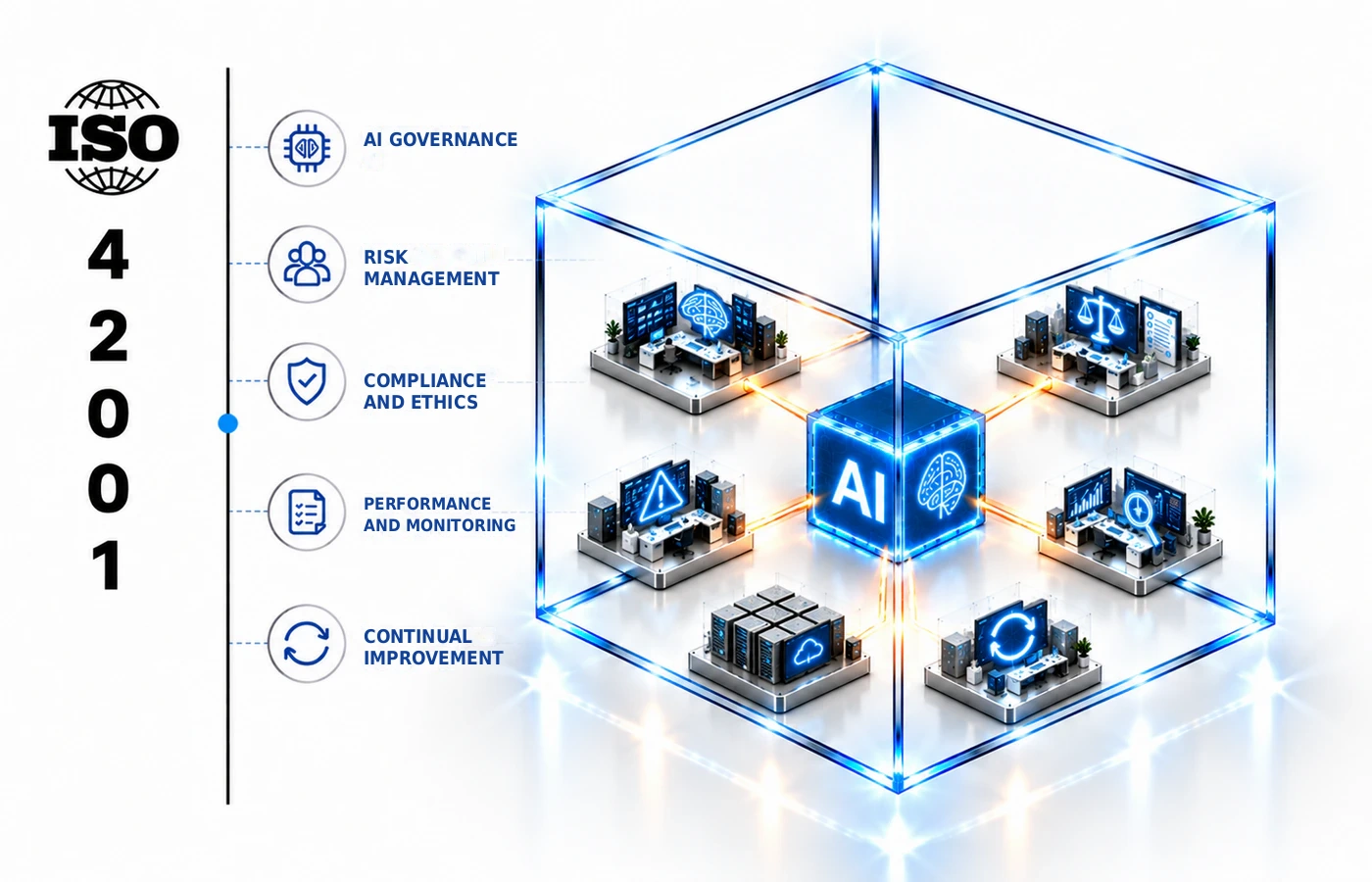
ISO/IEC 42001:2023 sets requirements for establishing, implementing, maintaining and continually improving an artificial intelligence management system (AIMS). The standard is aimed at organizations that develop, provide or use AI systems and seeks to integrate governance, risk assessment, responsibilities and operational control into management processes.

ISO/IEC 42001:2023 is the edition published in December 2023. For AI systems, control is not limited to information security: data quality, robustness, transparency, impact on individuals, human oversight and supplier relationships are also relevant.

The title of the standard as adopted in Romania: SR ISO/IEC 42001:2024 — Tehnologia informației. Inteligență artificială. Sistem de management. International reference: ISO/IEC 42001:2023 — Information technology — Artificial intelligence — Management system.

QMS Consulting helps organizations turn the requirements of the standard into an operational AIMS: inventorying AI uses, defining the scope, setting the policy and responsibilities, assessing risks and impacts, selecting controls and building the evidence needed for independent assessment.

The approach is adapted to the organization's role in the AI value chain. A model developer, a provider of AI-based solutions and a company that uses external AI services have different operational obligations and risk profiles. The system must reflect these differences, not reproduce standardized procedures unrelated to the activity.

ISO/IEC 42001:2023 consulting for the artificial intelligence management system
Who it is for

Which organizations ISO 42001 is relevant for and when it becomes a priority

ISO 42001 applies to organizations of any size and in any sector that develop, integrate, provide or use AI-based products and services. The need for implementation grows with the impact of automated decisions, the sensitivity of data, dependence on suppliers and contractual or regulatory requirements.

Developers and providers of AI systems

Companies that provide AI solutions to corporate customers must be able to demonstrate who approves uses, how performance is validated, how model changes are managed and what mechanisms exist for investigating incidents.

Companies that use external AI solutions

Organizations that purchase AI platforms, generative assistants or automated analysis services need usage rules, supplier assessments, acceptance criteria and controls for the information entered into these systems.

Organizations with sensitive automated decisions

Institutions and companies that use AI in processes that affect individuals must analyze the consequences of incorrect outputs, discrimination, explainability, individuals' rights and the possibility of human intervention.

Groups with extensive AI portfolios

Groups with several departments, products or sites can use an AIMS to standardize approvals, risk registers, performance monitoring and reporting to management without losing the specific features of each use case.

What the project includes

ISO 42001 consulting: verifiable deliverables, not formal documentation

Effective implementation of ISO/IEC 42001 is not a set of isolated policies. It requires a coherent decision-making and control system, with a defined scope, designated owners, risk criteria, documented assessments, monitoring and improvement mechanisms. The deliverables must be usable by the technical, legal, security, procurement and management teams.

  • GAP analysis against the requirements of ISO/IEC 42001:2023 and an inventory of AI systems.
  • Defining the scope of the AIMS and the governance roles and responsibilities.
  • AI policy, objectives, acceptance criteria and usage rules.
  • A methodology and register for AI risk assessment.
  • AI system impact assessments for individuals and groups.
  • Selecting and justifying the relevant Annex A controls.
  • Rules for data, validation, monitoring, changes and suppliers.
  • Training staff and verifying that controls are applied.
  • Internal audit, management review and certification preparation.

What sets an auditable AIMS apart

An auditable AIMS provides traceability between each AI use, the approval decision, the risk assessment, the impact on individuals, the selected controls, test results and monitoring measures. Procedures must describe real practices and be supported by verifiable records.

Implementation process

The stages of ISO/IEC 42001:2023 implementation, from GAP analysis to certification

The project is organized in stages with verifiable results. The sequence is adapted to the maturity of the organization and its AI portfolio, but each stage must produce evidence that management can use and the auditor can evaluate.

1. GAP analysis and inventory of AI uses

We analyze existing AI processes and solutions, supplier contracts, policies, data flows, risk assessments and controls already in place. We identify the gaps against the requirements of ISO/IEC 42001:2023 and set priorities according to impact.

2. Context, interested parties and the scope of the AIMS

We define the scope of the AIMS, the interested parties, the AI uses included and the interfaces with security, legal, procurement, development and operations processes. We document the boundaries, dependencies and responsibilities.

3. AI policy, leadership and responsibilities

We establish AI governance: the policy, objectives, approval roles, system owners, incident escalation and reporting to management. Responsibilities must exist at both strategic and operational level.

4. AI risk and impact assessment

We build the methodology for AI risk assessment and AI system impact assessment. We analyze scenarios such as incorrect outputs, unauthorized use, bias, lack of traceability, performance degradation and effects on the individuals affected.

5. Selecting controls and Annex A

We select the relevant controls, compare the necessary measures with Annex A and justify their applicability. We set rules for data, design, validation, changes, monitoring, suppliers and communicating relevant information.

6. Operational implementation and training

We train the people involved and introduce the controls into day-to-day workflows: approvals, testing, supplier assessments, monitoring records and handling nonconformities. We verify through sampling that real evidence exists.

7. Internal audit, management review and certification

We carry out the internal audit, support the management review and follow up corrective actions. We prepare the organization for the assessment carried out by an independent certification body, without confusing consulting with issuing the certificate.

Certification

How to obtain ISO 42001 certification

ISO 42001 certification is obtained through an audit carried out by an independent certification body chosen by the organization. Consulting does not replace the audit: it prepares the system and the team for it.

1. Choosing the certification body

The organization selects a certification body with valid accreditation for this standard, where accreditation exists, and agrees the audit dates with it.

2. Stage 1 audit

The body reviews the documentation, the scope of the system and the organization’s readiness for stage 2. Points to fix before continuing may be raised.

3. Stage 2 audit

The body verifies on site that the system is implemented and effective, through interviews, observation and evidence. Nonconformities found are closed through corrective actions.

4. Certification decision and surveillance

After nonconformities are closed, the body takes the certification decision and issues the certificate. The system is then checked through surveillance and recertification audits, according to the body’s rules.

At every stage, a consultant dedicated to the project and consultants experienced in certification audits prepare the evidence, the team and the responses to nonconformities. The certificate is issued only by the certification body. See ISO certification preparation.

Costs

How much ISO 42001 implementation and certification cost

The cost of implementing ISO 42001 depends mainly on the number and diversity of AI systems, the organization's role in developing or using them, the maturity of existing controls and the complexity of the risk and impact assessments. There is no universal rate that correctly reflects all these variables.

The budget usually includes the GAP analysis, designing the AIMS, documenting and implementing controls, training the teams, the internal audit and certification preparation. The certification audit is contracted separately with an independent body; there may also be costs for technical testing, monitoring tools or legal reviews.

For a realistic estimate, we assess the AI portfolio, the processes and sites included, supplier dependencies, customer requirements and the evidence already available. The proposal must specify the deliverables, internal responsibilities, assumptions and excluded activities.

The factors that determine the cost

  • The number and types of AI systems included in the scope.
  • The maturity of existing policies, controls and registers.
  • The number of entities, sites and teams involved.
  • The complexity of the risk and impact assessments.
  • Dependence on external models, data and suppliers.
  • The volume of testing and evidence needed for the audit.
Real benefits

The benefits of a working AI management system

Transparent responsibilities and decisions

A well-designed AIMS gives management a verifiable picture of how artificial intelligence is introduced, used and controlled. The benefits depend on actually applying the processes, not just on obtaining a certificate.

Control of risks and impacts

A register of AI uses and a clear approval structure make it possible to identify the owners, purposes, limits and conditions under which systems can be used.

Trust and evidence for partners

Systematic assessment of risks and impacts helps prioritize controls before errors, discriminatory outputs or unauthorized uses lead to operational consequences.

Monitoring AI performance

Evidence of testing, monitoring, change management and human oversight can support customer assessments, the audit and the dialogue with contractual partners.

Managing AI suppliers

Indicators for performance, incidents, deviations and the effectiveness of controls support decisions to maintain, modify, suspend or withdraw an AI use.

Improvement based on findings

A formal supplier evaluation process reduces reliance on sales claims and introduces verifiable requirements for outsourced AI services.

Common mistakes

Common mistakes in ISO 42001 implementation projects

ISO 42001 projects stall when they are run purely as writing exercises. The standard requires a system applied in practice, with decisions, controls and evidence proportionate to the AI risks.

An incomplete AI inventory

An incomplete inventory of AI uses leaves applications purchased by departments, experimental integrations and informally used generative tools outside of control.

Generic risk assessments

Generic risk assessments do not capture the differences between classification, recommendation, content generation or decision automation and cannot be the basis for adequate controls.

Reducing AI governance to cybersecurity

Confusing information security with AI governance ignores the impact on individuals, model limitations, validation of outputs and human intervention mechanisms.

Unclear responsibilities and approvals

Without owners and acceptance criteria, it is impossible to demonstrate the approval, monitoring and controlled withdrawal of an AI system.

Duration and effort

How long ISO 42001 implementation takes and what affects the timeline

The duration of ISO 42001 implementation is set after assessing the real situation. An organization that uses a few standardized AI services and already has ISO 27001 may need a different effort from a developer with multiple models, sensitive data and frequent update cycles.

The stages that take the most time are often inventorying AI uses, collecting evidence, assessing impacts, integrating controls into development workflows and obtaining decisions from process owners.

A credible timeline includes periods for applying controls, building up records, the internal audit, the management review and correcting nonconformities. An initial GAP analysis makes it possible to estimate the effort without artificial promises about the certification date.

Factors that affect the timeline

  • The diversity of AI use cases.
  • The availability of the inventory and technical documentation.
  • The teams' capacity to apply the new controls.
  • The number of suppliers and outsourced flows.
  • The need for impact assessments and additional testing.
  • Time for the internal audit and remediating findings.
Standard update

ISO 42001, the EU AI Act and managing the impact of AI systems

ISO/IEC 42001:2023 provides a voluntary framework for AI governance, while the EU AI Act sets differentiated legal obligations. A well-implemented AIMS can support responsibilities, documentation and monitoring, but ISO 42001 certification does not replace legal compliance, the assessment of how each system is classified or the applicable legal procedures. The assessment of the impact of AI systems on individuals, groups and society must be linked to the risk register and the measures actually implemented.

Organizations must analyze separately whether they are providers, deployers, importers or distributors and whether their uses fall into regulated categories. The applicable legal requirements are checked for each case, taking into account the application timeline and any legislative changes.

What needs to be analyzed in practice

  • The organization's role in relation to each AI system.
  • Legal classification and applicable obligations.
  • Assessment of risks and impact on individuals.
  • Transparency and human oversight requirements.
  • Evidence on data, testing and monitoring.
  • Linking AIMS controls with legal obligations.
Relevant industries

Industries and uses where AI governance is essential

The relevance of ISO 42001 is determined not only by sector, but mainly by the purpose of the AI systems, their degree of autonomy, the data processed, the individuals affected and the possible consequences of errors. In IT&C, control may focus on developing and testing models; in financial services, on the traceability of recommendations; in healthcare, on validation and human oversight; in human resources, on the impact on candidates; and in logistics or energy, on the continuity and safety of processes.

Related standards

Integrating ISO 42001 with ISO 27001 and other management systems

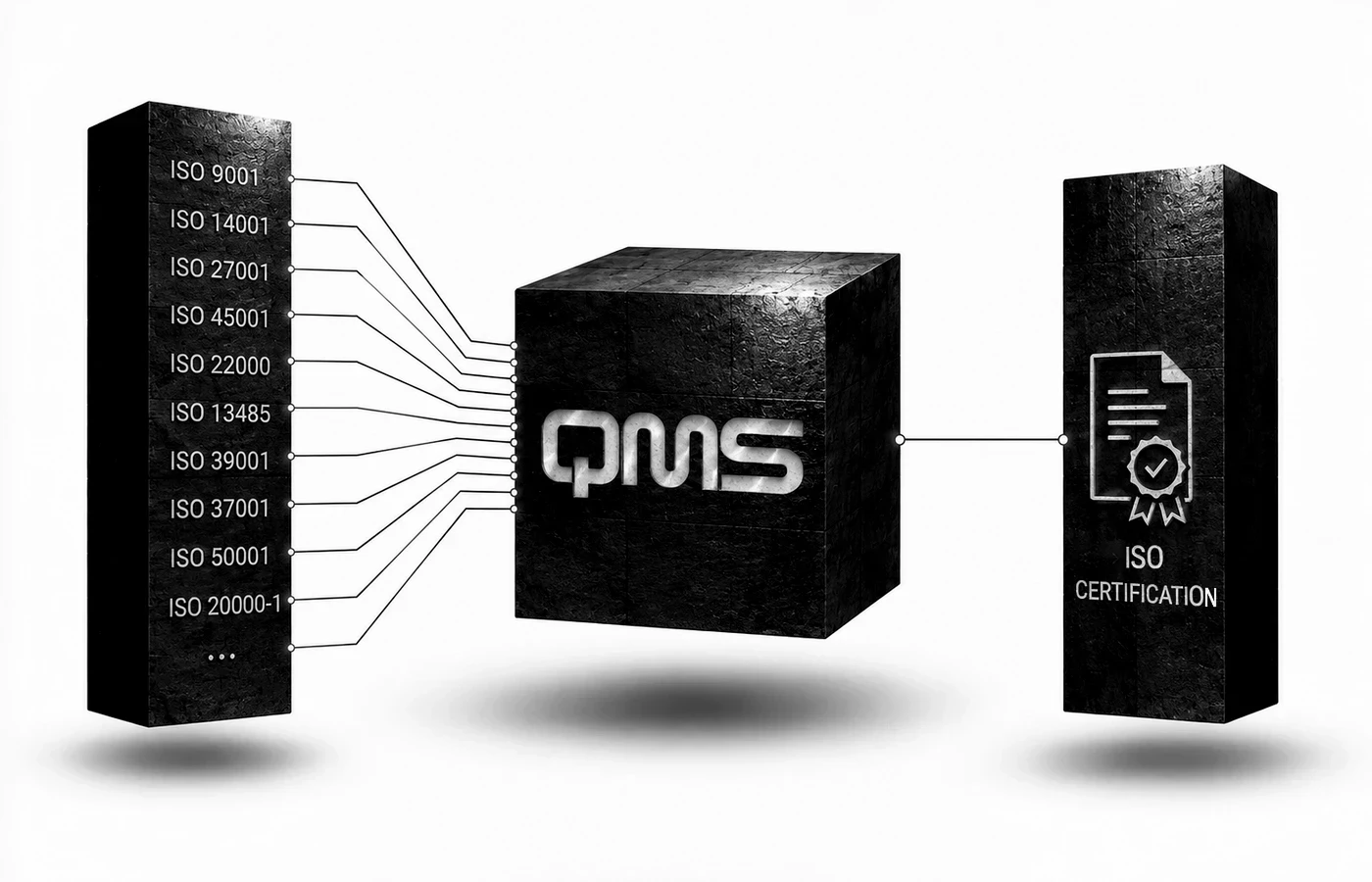
ISO/IEC 42001 uses the harmonized structure of management standards, so the policy, objectives, competences, document control, internal audit and management review can be integrated with existing processes. The AI-specific requirements — impact assessment, the life cycle and the Annex A controls — remain distinct and must be addressed explicitly.

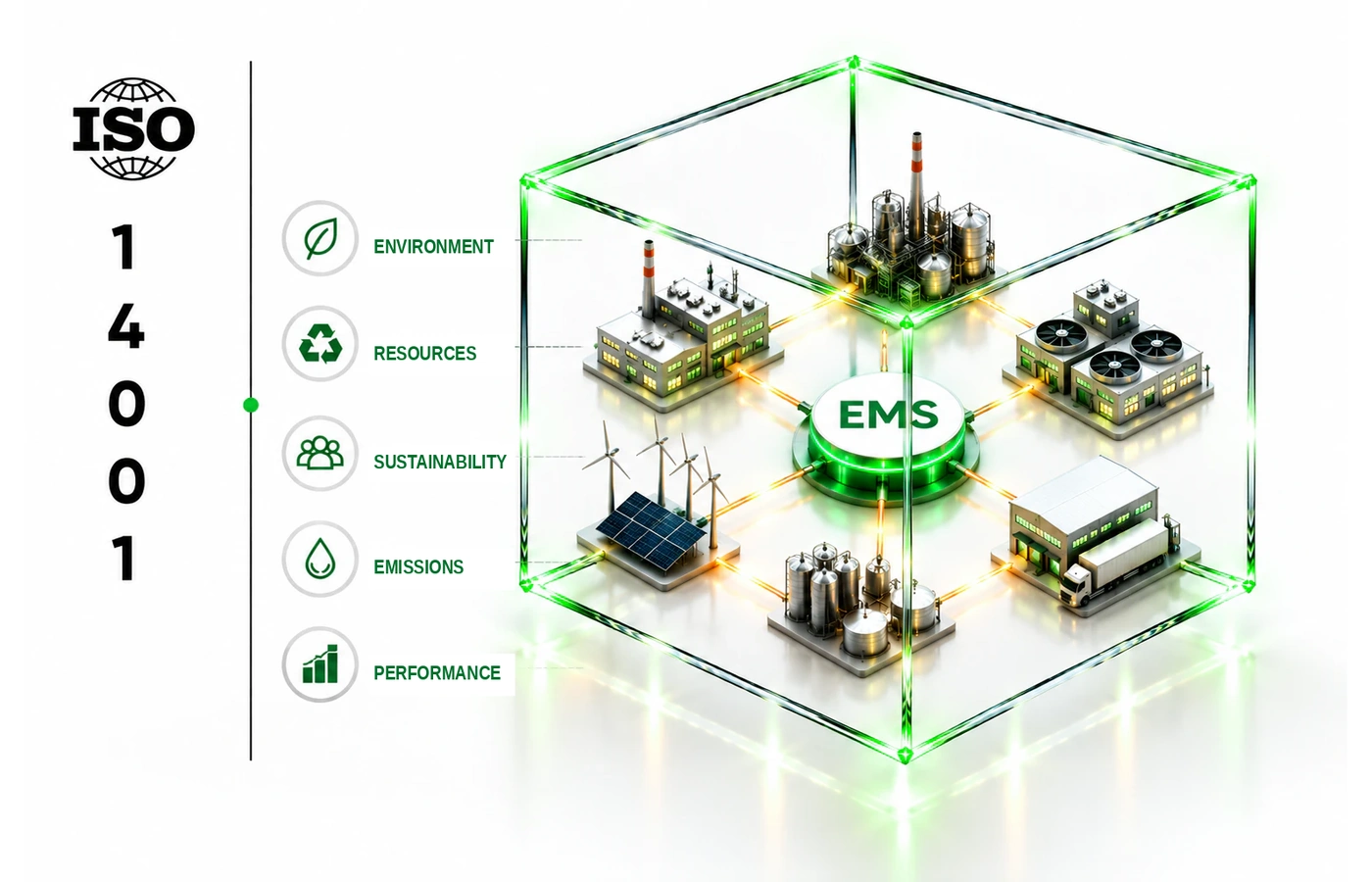
ISO 14001:2026 - Environmental management system
Standard

ISO 9001 – Quality management

ISO 9001 supports the process approach, performance measurement and corrective actions. In an integrated system, these mechanisms can be extended to the approval and control of AI uses, without confusing quality requirements with AI governance requirements.

Learn more →
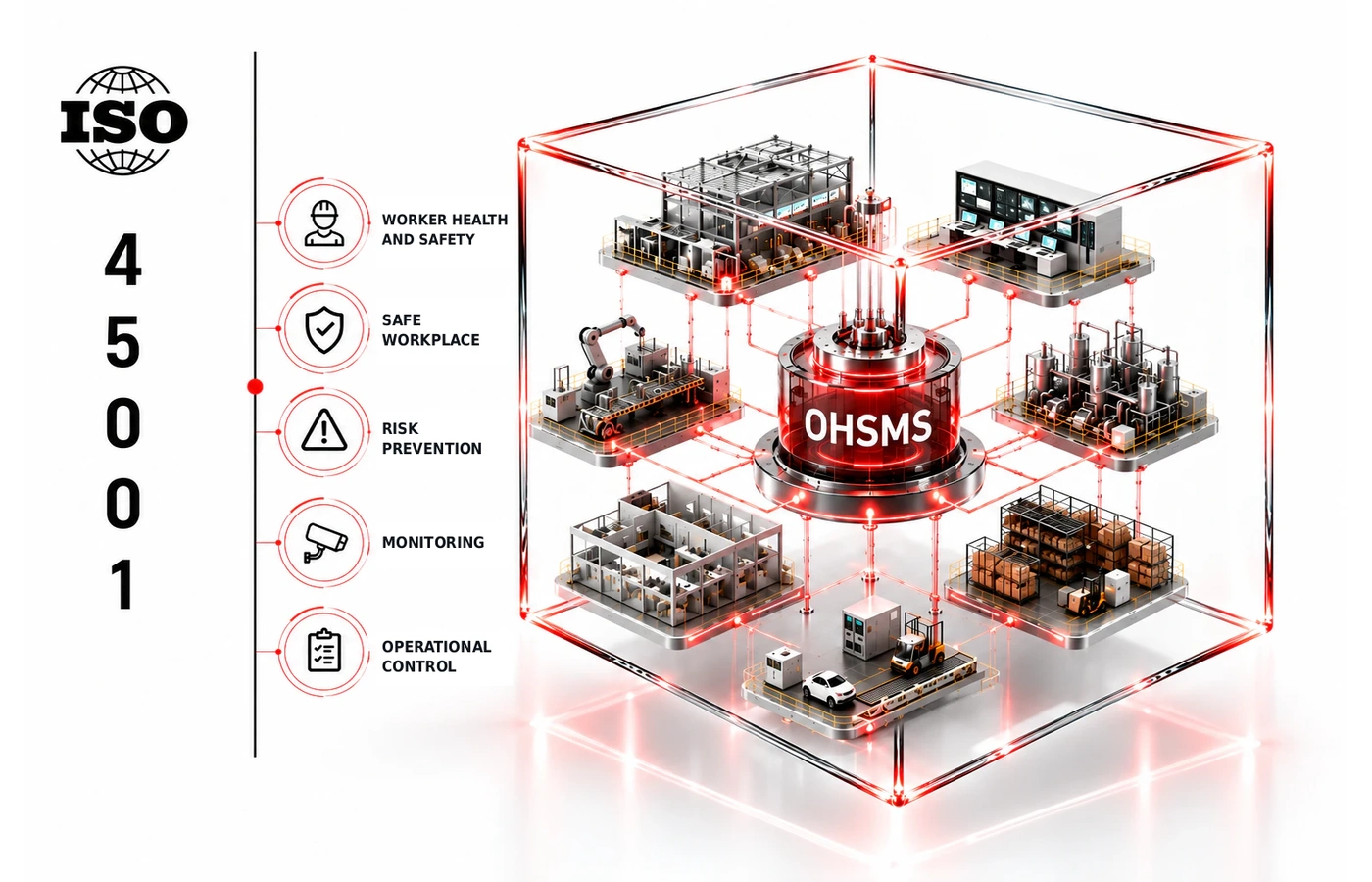
ISO 45001:2018 - Occupational health and safety management system
Standard

ISO 45001 – Occupational health and safety

ISO 45001 provides a perspective on responsibilities, competences and risk assessment for workers. In AI projects that affect work, it is important to coordinate technological changes with occupational health and safety processes.

Learn more →
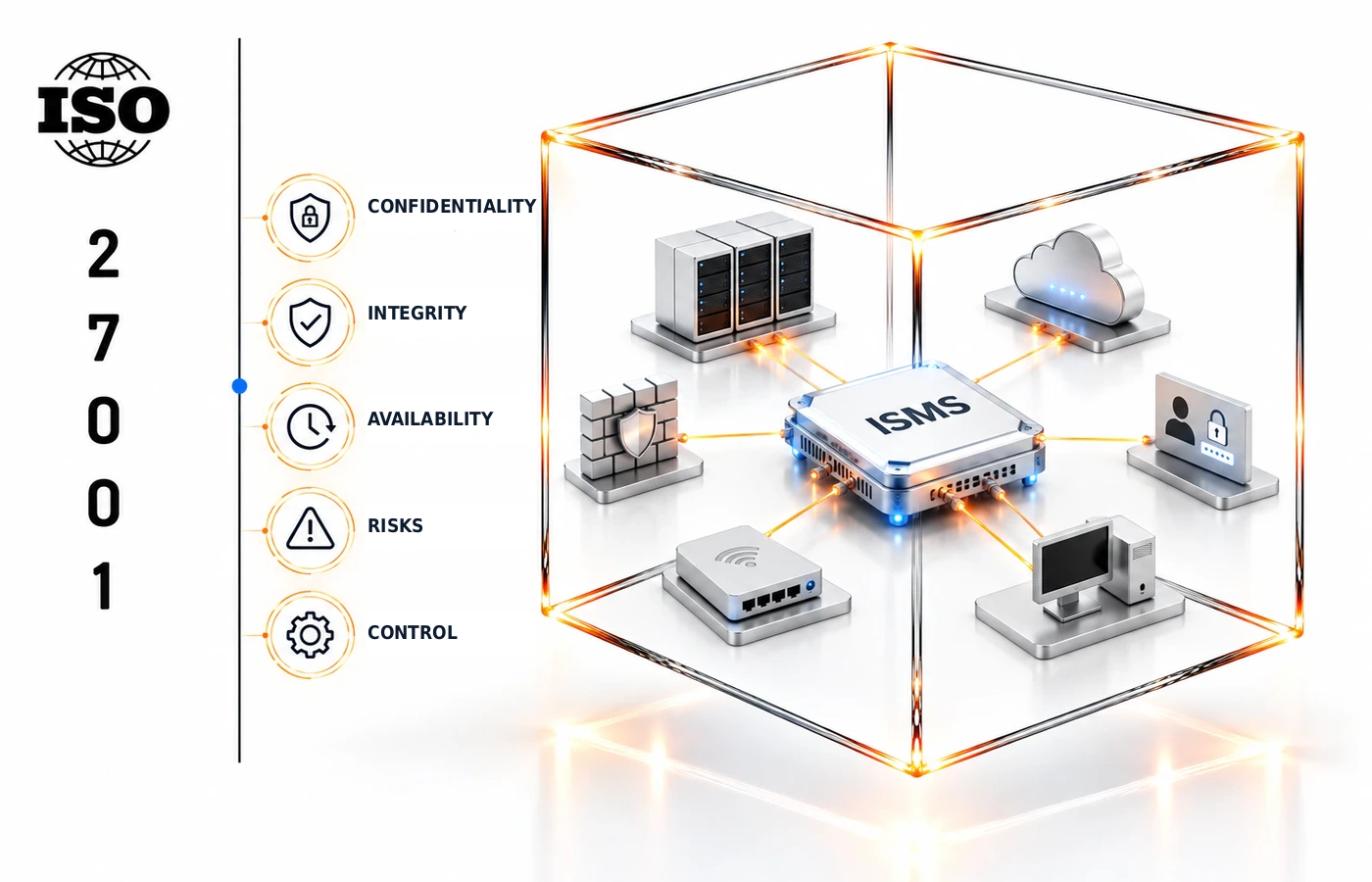
ISO 27001:2022 - Information security management system
Standard

ISO/IEC 27001:2022 – Information security

ISO/IEC 27001:2022 covers information security and provides mechanisms for access, suppliers, incidents and data protection. ISO 42001 complements these mechanisms with AI impact assessment, life cycle controls and governance of AI uses.

Learn more →
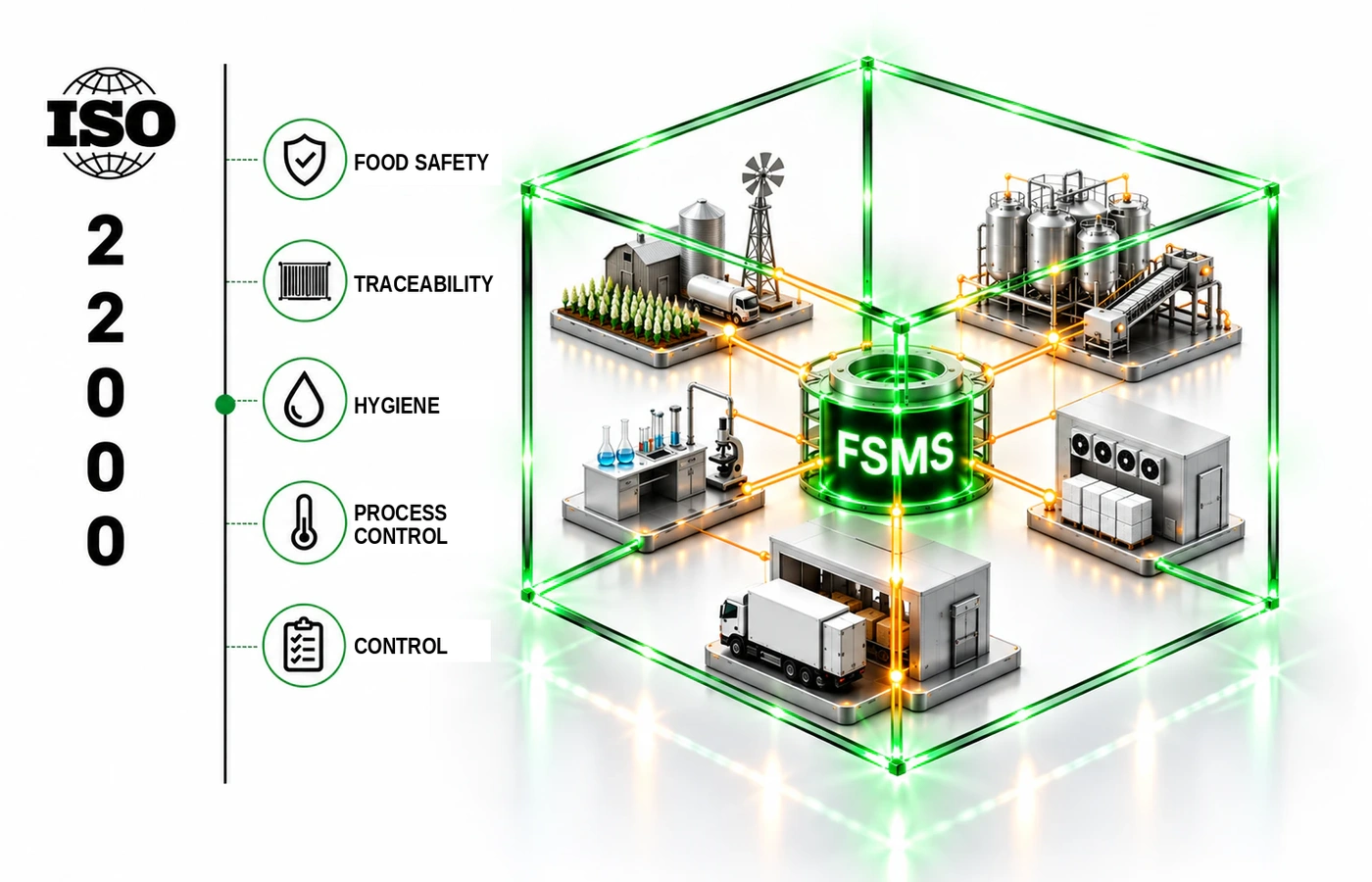
ISO 22000:2018 - Food safety management system
Standard

ISO 22000 – Food safety

ISO 22000 illustrates systematic risk control in sensitive processes. For food organizations introducing AI, existing control processes can be coordinated with AI assessments, without replacing the requirements specific to each standard.

Learn more →
Related services

QMS Consulting services for ISO 42001 implementation

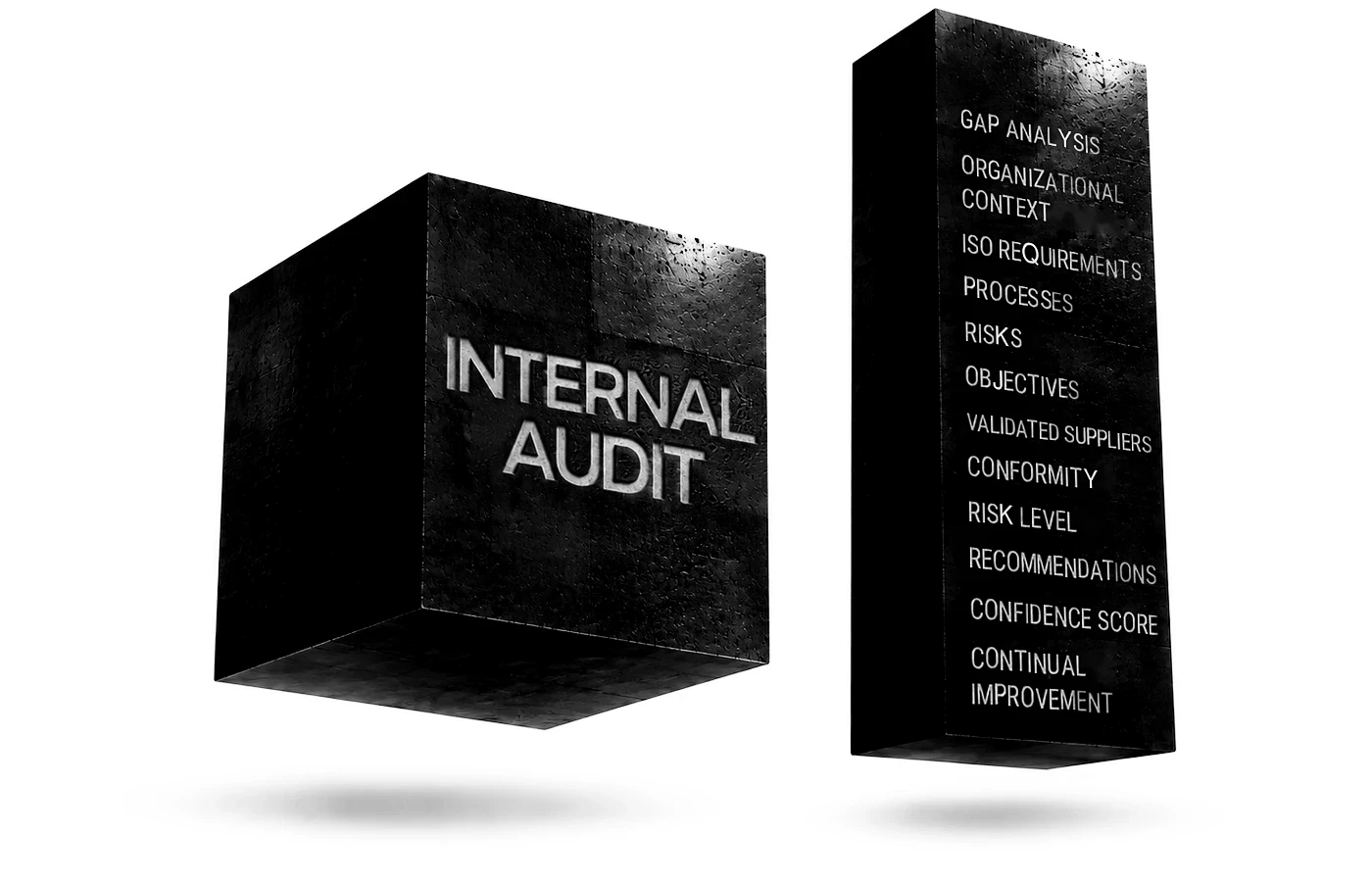
ISO internal audit to verify the conformity and effectiveness of the system
Service

ISO 42001 internal audit

Through the internal audit, we check the application of policies, assessments, controls and records; we report the findings and follow up corrective actions.

Learn more →
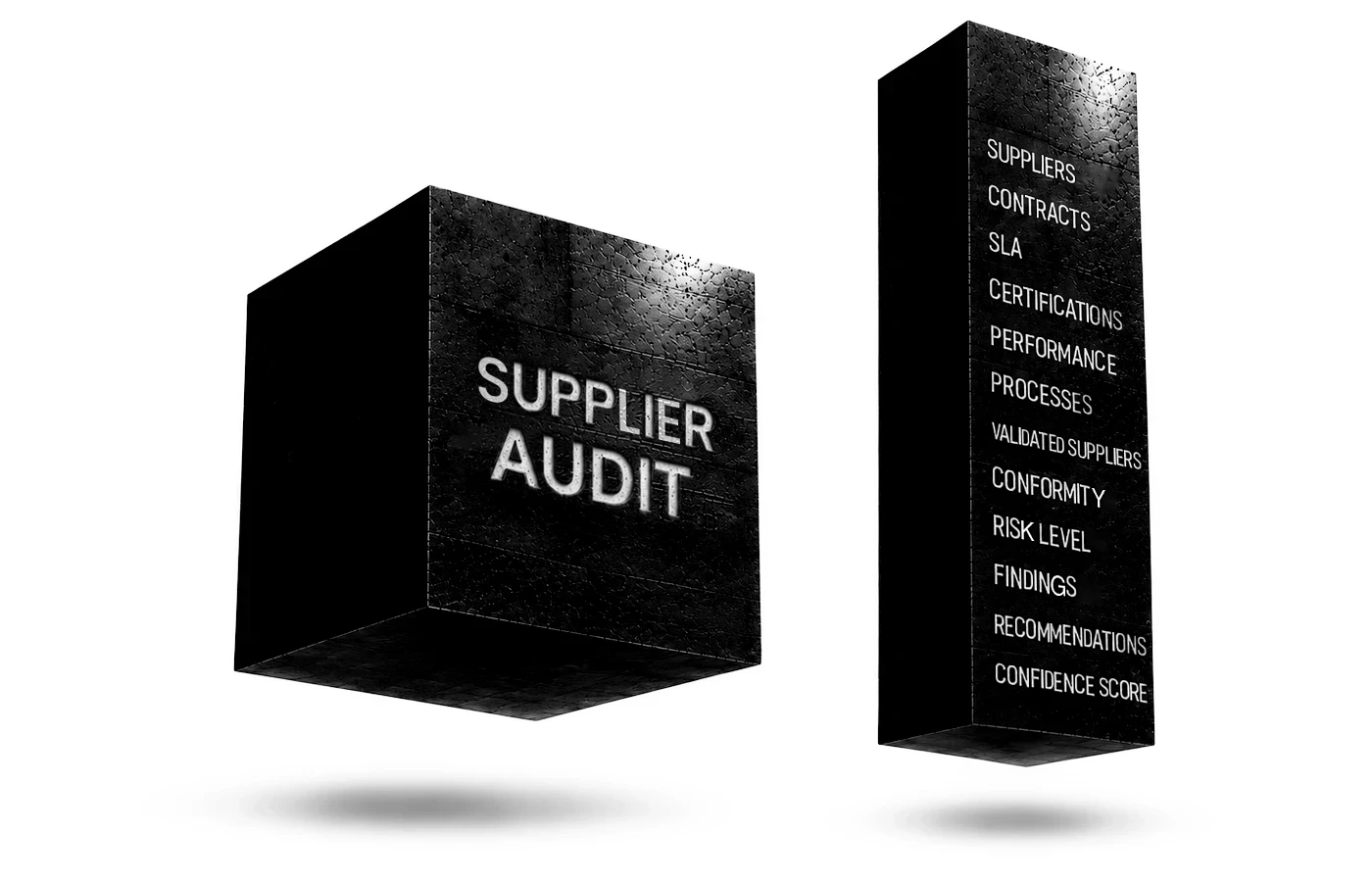
Second-party audit for suppliers and subcontractors
Service

AI supplier audit

We evaluate AI solution providers and outsourced processes against contractual requirements, risks and the available evidence of control.

Learn more →
ISO consulting for implementing management systems
Service

AIMS consulting

We design and implement the AIMS: GAP analysis, scope, policy, responsibilities, risk and impact assessments, AI controls and operational evidence.

Learn more →
ISO certification preparation and the certification body's audit
Service

ISO 42001 certification preparation

We review the documentation, records and nonconformities, and prepare the team for assessment by an independent certification body.

Learn more →
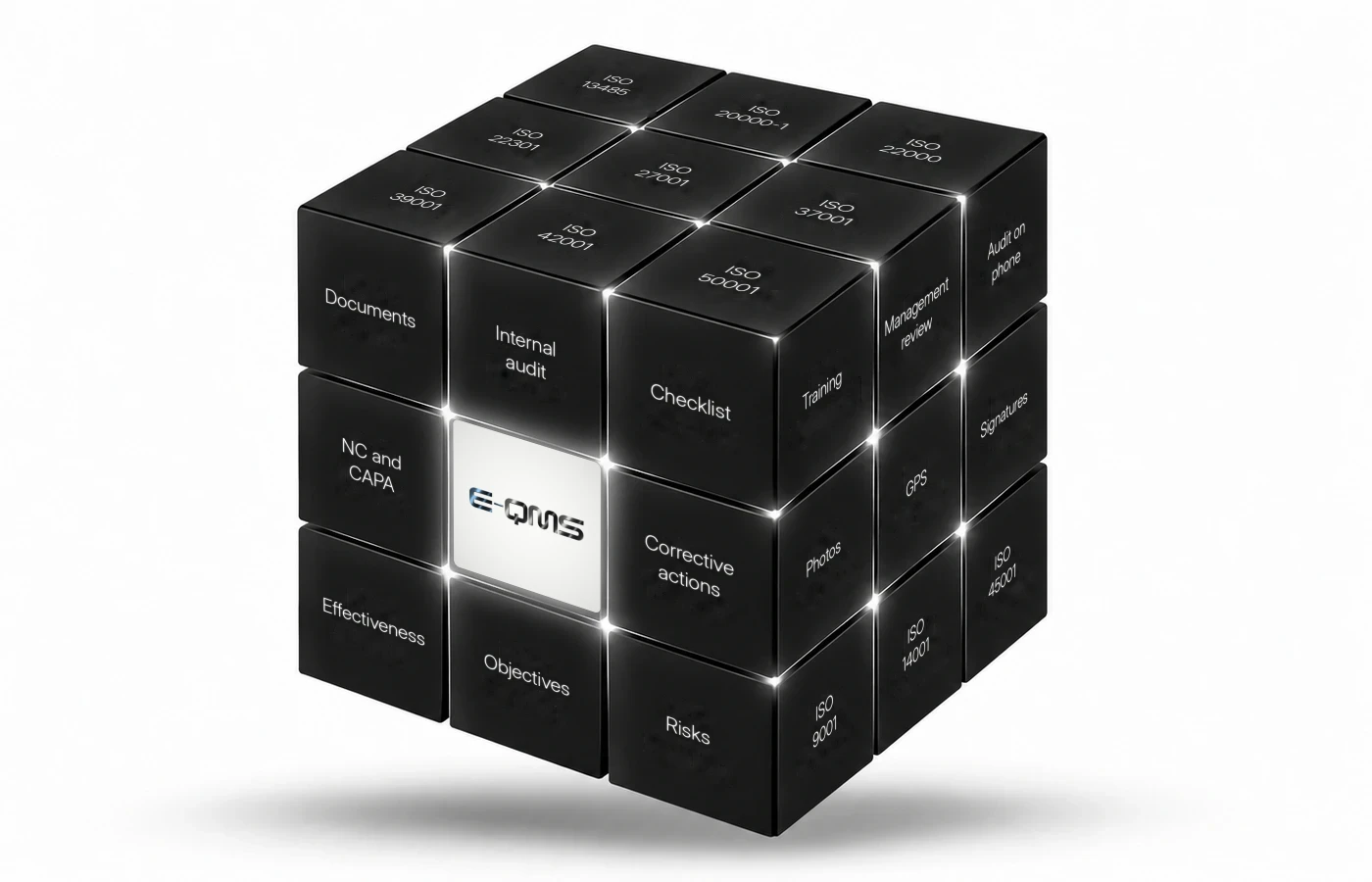
E-QMS, platform for the ISO management system
Platform

E-QMS platform

Documents, internal audit, nonconformities, corrective actions and management review, with alerts and reports generated automatically.

Learn more →
ISO Internal Auditor training for audit planning, auditing and reporting
Service

AIMS internal auditor training

We develop internal auditors' competences in audit planning, interviewing, sampling and writing evidence-based findings.

Learn more →
ISO Lead Auditor training for coordinating audits and audit teams
Service

Advanced audit training

We provide training in coordinating audit programmes and the integrated assessment of AI governance, information security and compliance.

Learn more →
FAQ

Frequently asked questions about ISO/IEC 42001:2023

What is ISO/IEC 42001:2023?

ISO/IEC 42001:2023 is the international standard for artificial intelligence management systems (AIMS). It sets requirements for governance, risk and impact assessment, operational control, monitoring, internal audit and continual improvement in organizations that develop or use AI.

How much does ISO 42001 implementation and certification cost?

The cost depends on the number of AI systems, the complexity of the uses, the level of existing controls, the number of sites and the effort required for risk and impact assessment. Consulting and the independent certification audit are separate budget components; a GAP analysis allows a well-founded estimate.

How long does ISO 42001 implementation take?

The duration varies depending on the maturity of the organization and its AI portfolio. Implementation must include inventorying systems, analyzing risks, applying controls, collecting evidence, the internal audit, the management review and remediating nonconformities. The timeline is set after the initial assessment.

Is ISO 42001 mandatory?

ISO/IEC 42001 is a voluntary standard, but it may become a contractual requirement or a supplier evaluation criterion. Legal obligations on AI must be analyzed separately, depending on the organization's role, the use and the applicable legislation.

Who issues the ISO 42001 certificate?

The certificate is issued by an independent certification body, following the assessment of the AI management system. The consultant can support implementation, the internal audit and preparation for the assessment, but must not be confused with the body that makes the certification decision.

What does ISO 42001 consulting include?

Typically, the project includes a GAP analysis, defining the scope of the AIMS, the AI policy and responsibilities, risk and impact assessment, selecting Annex A controls, documentation, training, the internal audit, the management review and certification preparation.

What documents and evidence are needed for ISO 42001?

Depending on the scope, the AI policy, the system inventory, objectives, risk registers, impact assessments, justification of controls, life cycle and supplier procedures, monitoring records, audit results, the management review and corrective actions may be needed.

What is an AIMS?

An AIMS (Artificial Intelligence Management System) is the interconnected set of policies, responsibilities, processes, resources and controls through which the organization sets objectives and manages the responsible development, provision or use of AI systems.

How are AI risks assessed?

The organization defines criteria and an appropriate methodology to identify risk scenarios, analyze likelihood and consequences, decide on treatment and verify the effectiveness of controls. The analysis must include the characteristics of the AI use, the data, the outputs, the individuals affected and external dependencies.

What is an AI system impact assessment?

It is a distinct process, linked to risk management, that examines the potential effects of AI systems on individuals, groups and society. Its conclusions feed into the choice of control measures and decisions on the use of the system.

What is the difference between implementation and certification?

Implementation means designing and operating the AIMS in the organization. Certification is the independent assessment of the system's conformity with the requirements of the standard. Having documents is not enough without evidence of application and effectiveness.

Is ISO 42001 suitable for small companies?

Yes. The standard applies to organizations of any size, and the complexity of the AIMS must be proportionate to the role, AI uses, risks and available resources. A well-sized system avoids unnecessary bureaucracy and keeps the essential controls.

How does ISO 42001 relate to ISO 27001?

ISO 27001 covers information security management, while ISO 42001 covers artificial intelligence management. Common processes such as auditing, document control and supplier evaluation can be integrated, but AI impact assessment and life cycle governance require specific measures.

Does ISO 42001 certification guarantee compliance with the EU AI Act?

No. ISO 42001 certification can provide a governance structure and useful evidence, but it does not replace the analysis of the specific legal obligations under the EU AI Act or the required conformity assessment procedures, where applicable.

What happens after ISO 42001 certification?

The organization must maintain the system by updating the AI inventory, reassessing risks and impacts, monitoring performance, managing incidents and changes, internal audits, the management review and corrective actions. Certification does not end the governance cycle.

How long does ISO 42001 certification take?

Duration depends on the certification body, the size of the organization and the time needed to close any nonconformities. The stage 1 and stage 2 audits are scheduled together with the chosen body.

How do I choose a certification body for ISO 42001?

Choose a body with valid accreditation for the standard and your field of activity, where accreditation exists, and compare offers and audit conditions. The consultant does not certify and does not influence the body’s decision.
QMS Consulting

Talk to an ISO 42001 consultant

QMS Consulting can assess the scope of the AIMS, the maturity of AI governance, priority risks and the steps needed to implement ISO/IEC 42001:2023. The initial discussion aims to set up a realistic project, with deliverables, responsibilities and evidence for the independent certification audit.

Direct contact

Phone: +40 722 773 446

Email: contact@qms.ro

Address: 12 Petru Rareș Street, Bucharest

Send an email