Quality
ISO 9001:2026
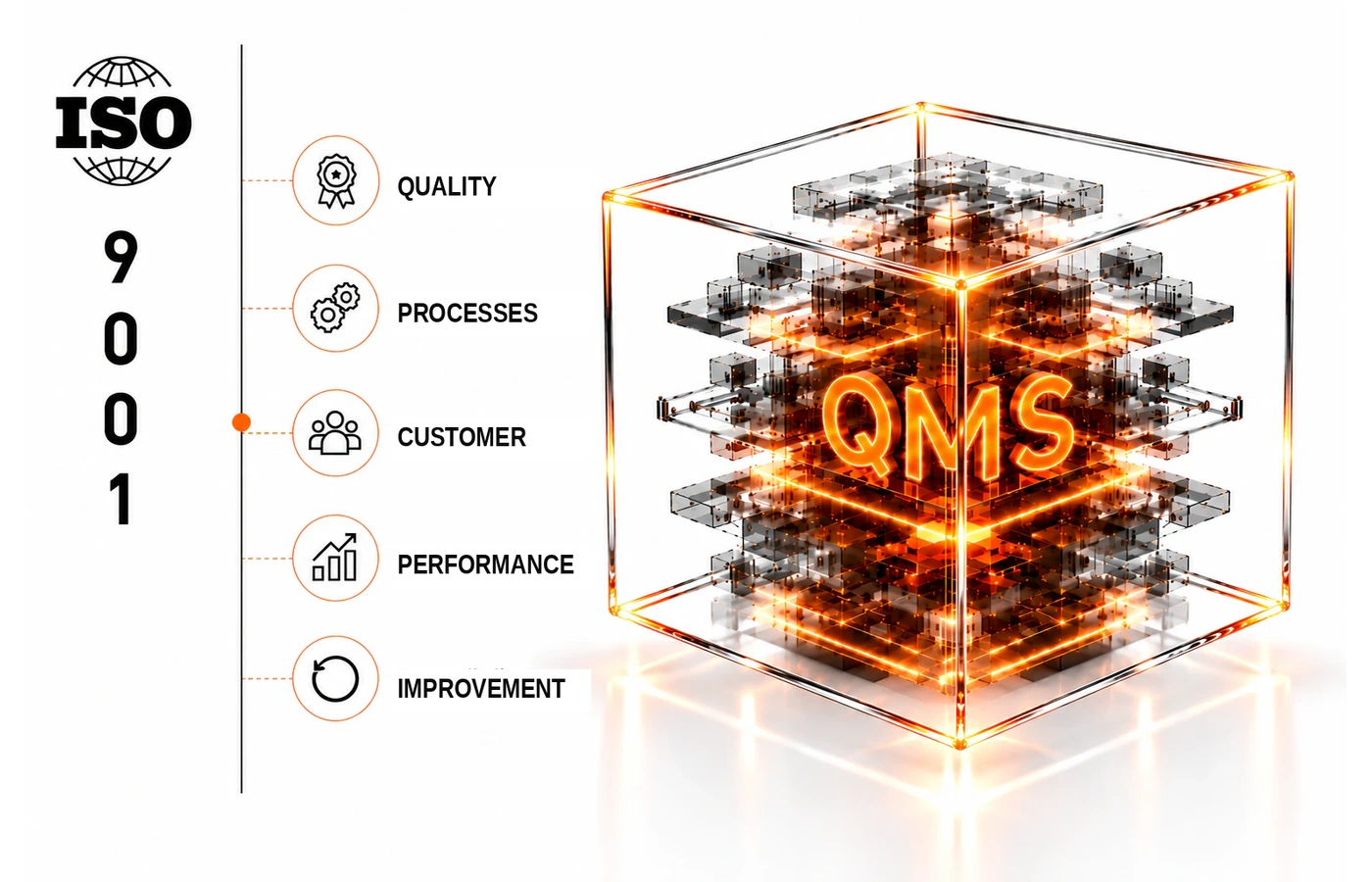
Quality management: processes, objectives, indicators, customer satisfaction, nonconformities and continual improvement.
Learn more →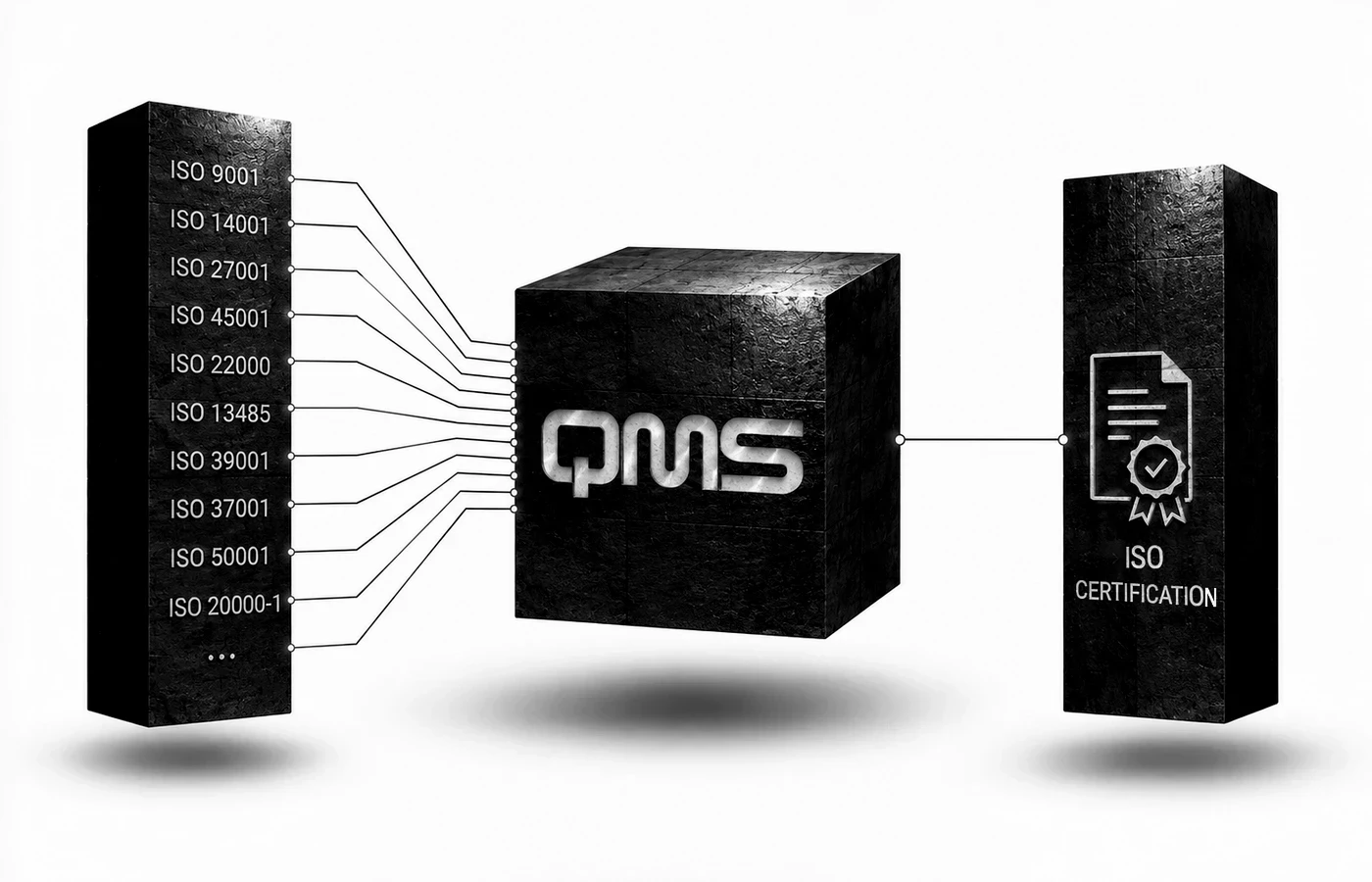
Support for organizations that want to obtain, maintain or renew ISO certification: checking the management system, internal audit, mock audit, preparation for stage 1 and stage 2, handling nonconformities and organizing the evidence for the certification body.
ISO certification preparation is the stage in which the organization checks whether the management system is implemented, working, internally audited, reviewed by management and supported by objective evidence. It is not enough for documents to exist; they must be applied, understood and supported by real processes.
QMS Consulting supports organizations preparing for initial certification, the stage 1 audit, the stage 2 audit, a surveillance audit or recertification. The approach is practical: we analyze the requirements of the standard, check the evidence, identify the risks of nonconformity and prepare the team for the auditors' questions.
The purpose of the service is to reduce the risk of major nonconformities, clarify responsibilities and increase the chances that the certification audit runs in a controlled way, without unnecessary surprises.
The ISO certificate is issued by an independent certification body. Certification preparation means checking the system before the external audit, so that the documentation, processes, internal audit, management review and objective evidence can support the requirements of the standard.
We check the certification scope, processes, documentation, risks, objectives, training, internal audit, management review, nonconformities, corrective actions and the evidence the auditor may ask for.
The certification body plans the audit, independently assesses the system and decides whether to issue the certificate. The consultant can prepare the organization, but does not replace the independent audit and does not guarantee certification.
A certification audit is an external assessment of the system's maturity. Proper preparation helps the organization go into the audit with clear documents, complete evidence and people who understand the requirements they apply.
We check the system before the external audit and identify the areas that may lead to observations, minor nonconformities or major nonconformities.
We clarify what evidence is needed for each relevant requirement: documents, registers, indicators, reports, training, audits and corrective actions.
People must be able to explain the processes they apply. Preparation reduces confusion and helps the team answer consistently during the audit.
Stage 1 and stage 2 have different objectives. Preparing separately for each stage helps the organization manage its resources and risks better.
We do not treat nonconformities as a formality. We help with root cause analysis, corrections, corrective actions and evidence of effectiveness.
Preparation does not stop when the certificate is issued. The system must be maintained through internal audits, surveillance, updates and improvement.
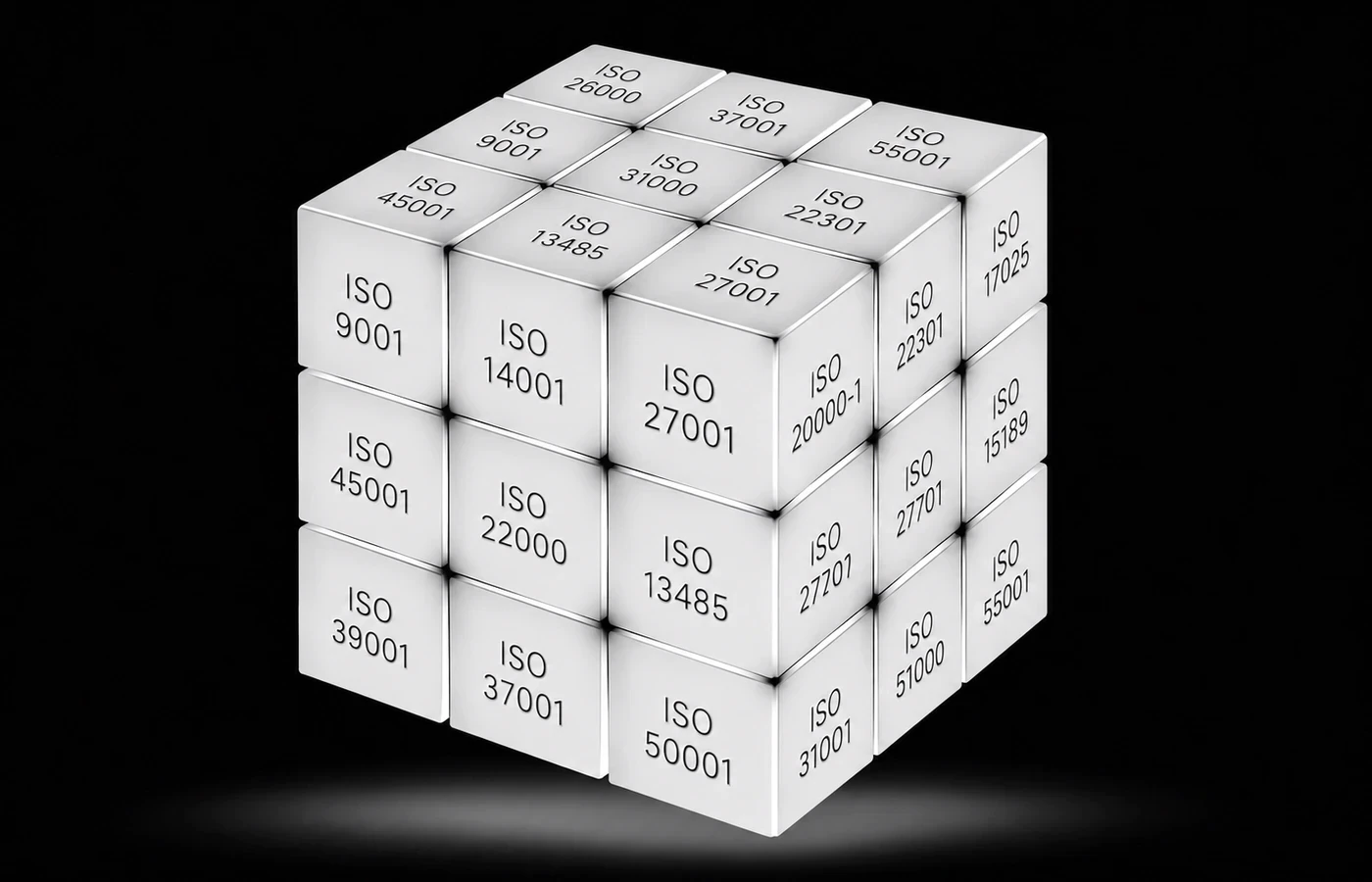
Each standard has specific requirements, but they all follow the same principle: a management system must be defined, implemented, monitored, audited and improved. Certification preparation is adapted to the standard, the industry and the organization's risks.
Quality management: processes, objectives, indicators, customer satisfaction, nonconformities and continual improvement.
Learn more →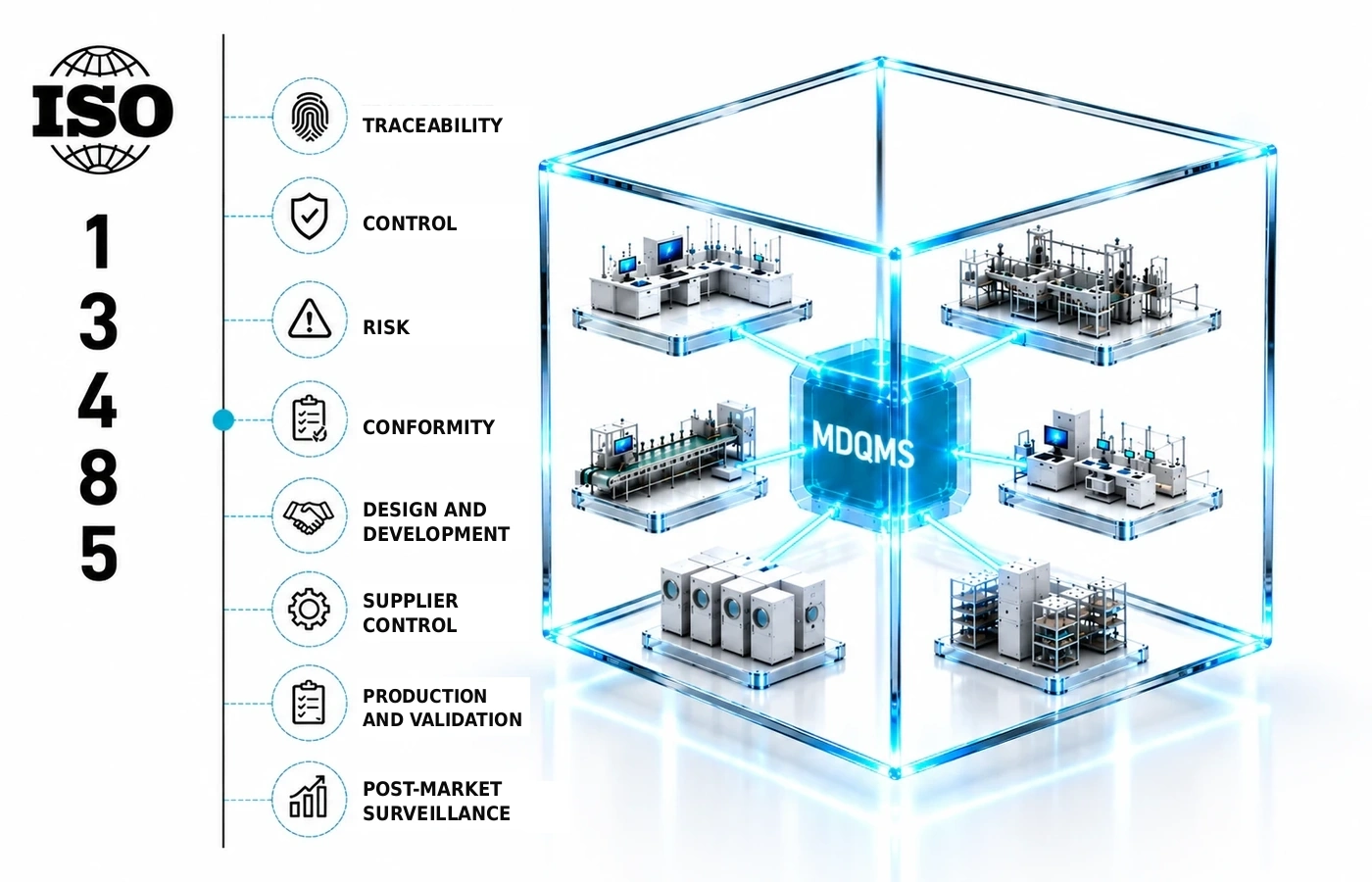
Medical devices: traceability, documented control, regulatory requirements, validations, complaints and risk.
Learn more →
Environmental management: environmental aspects, compliance obligations, operational control and environmental performance.
Learn more →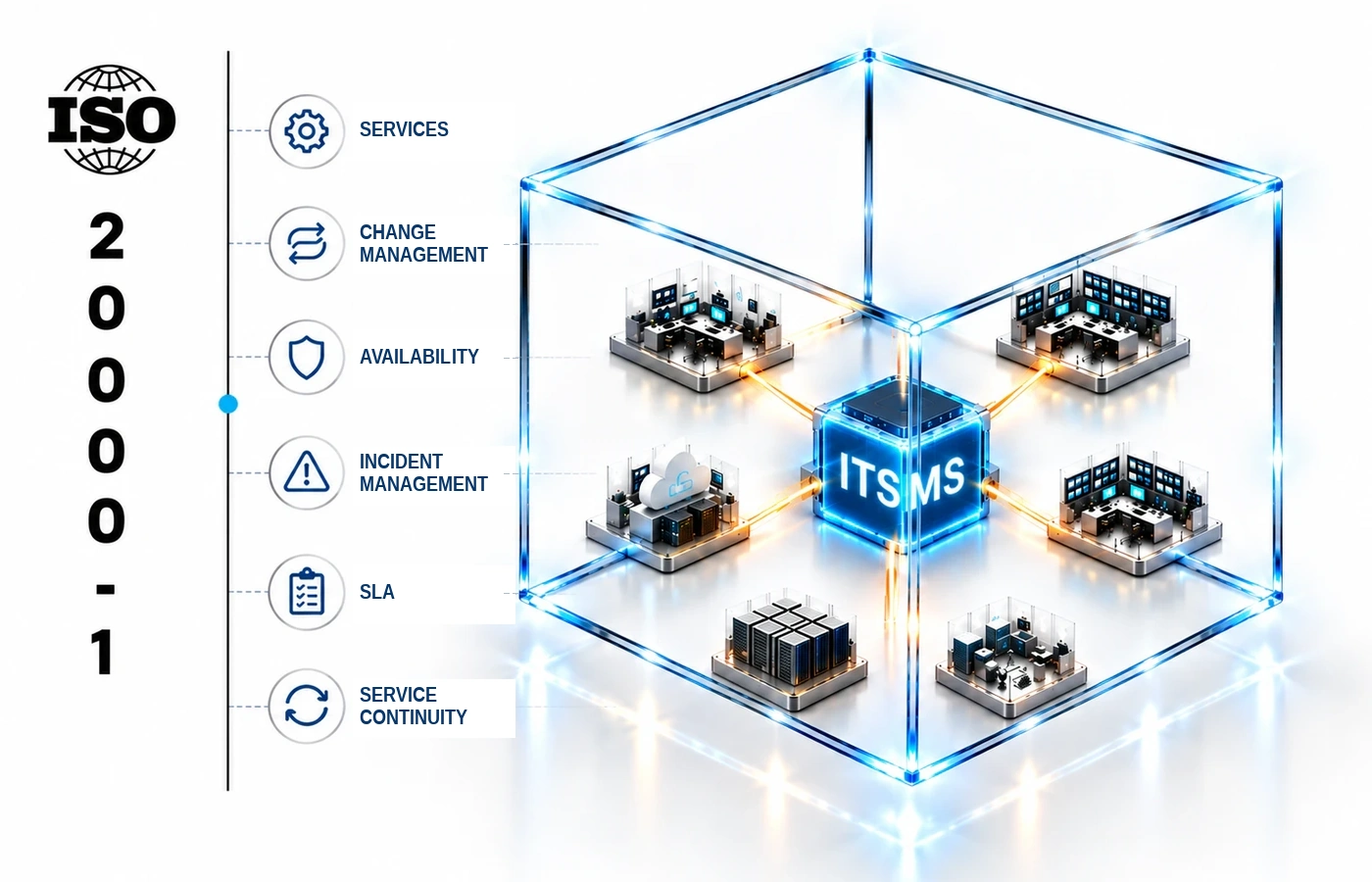
IT service management: SLAs, incidents, changes, suppliers, availability and quality of service delivery.
Learn more →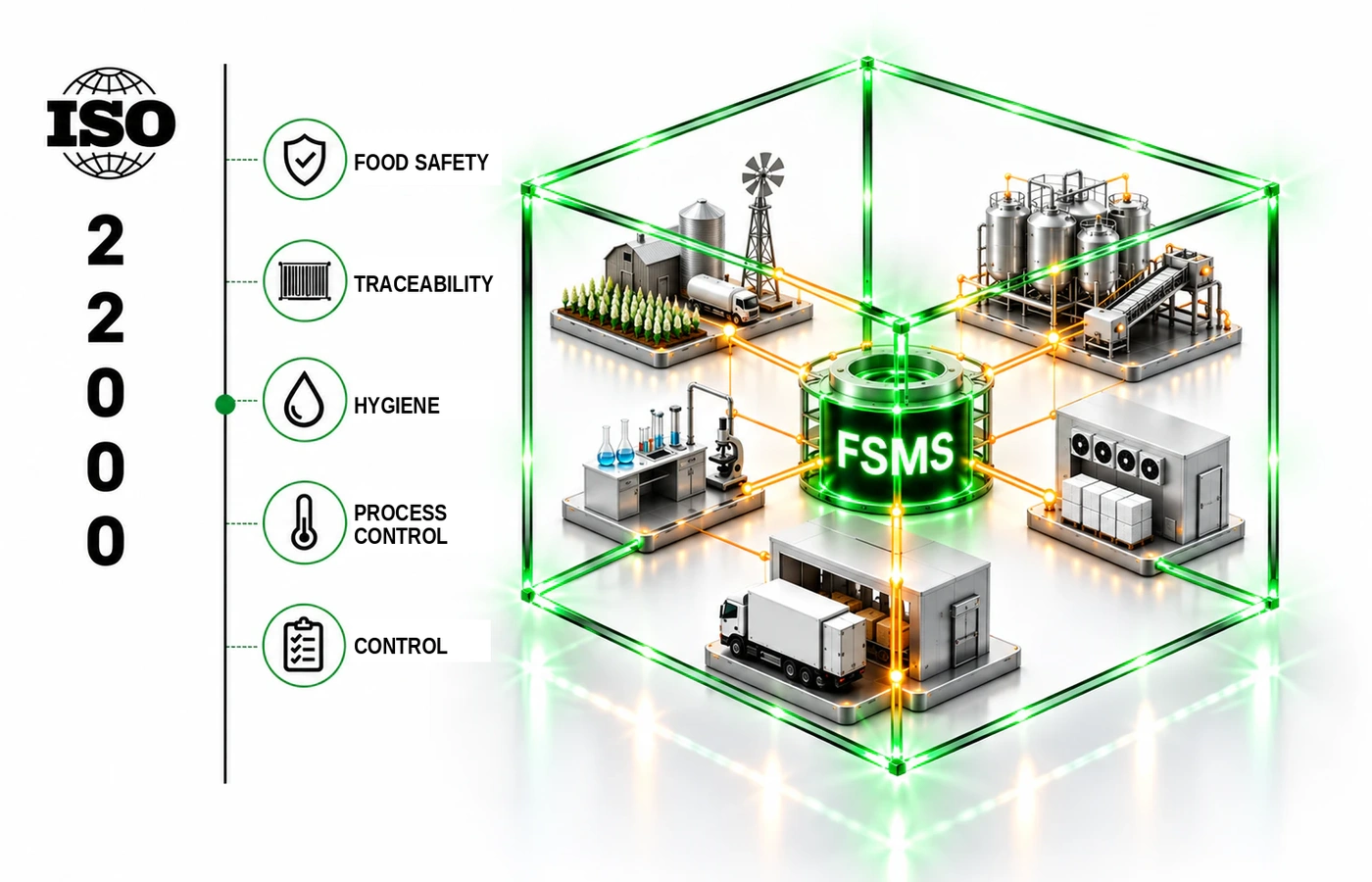
Food safety: HACCP, PRPs, traceability, control of food hazards and supplier management.
Learn more →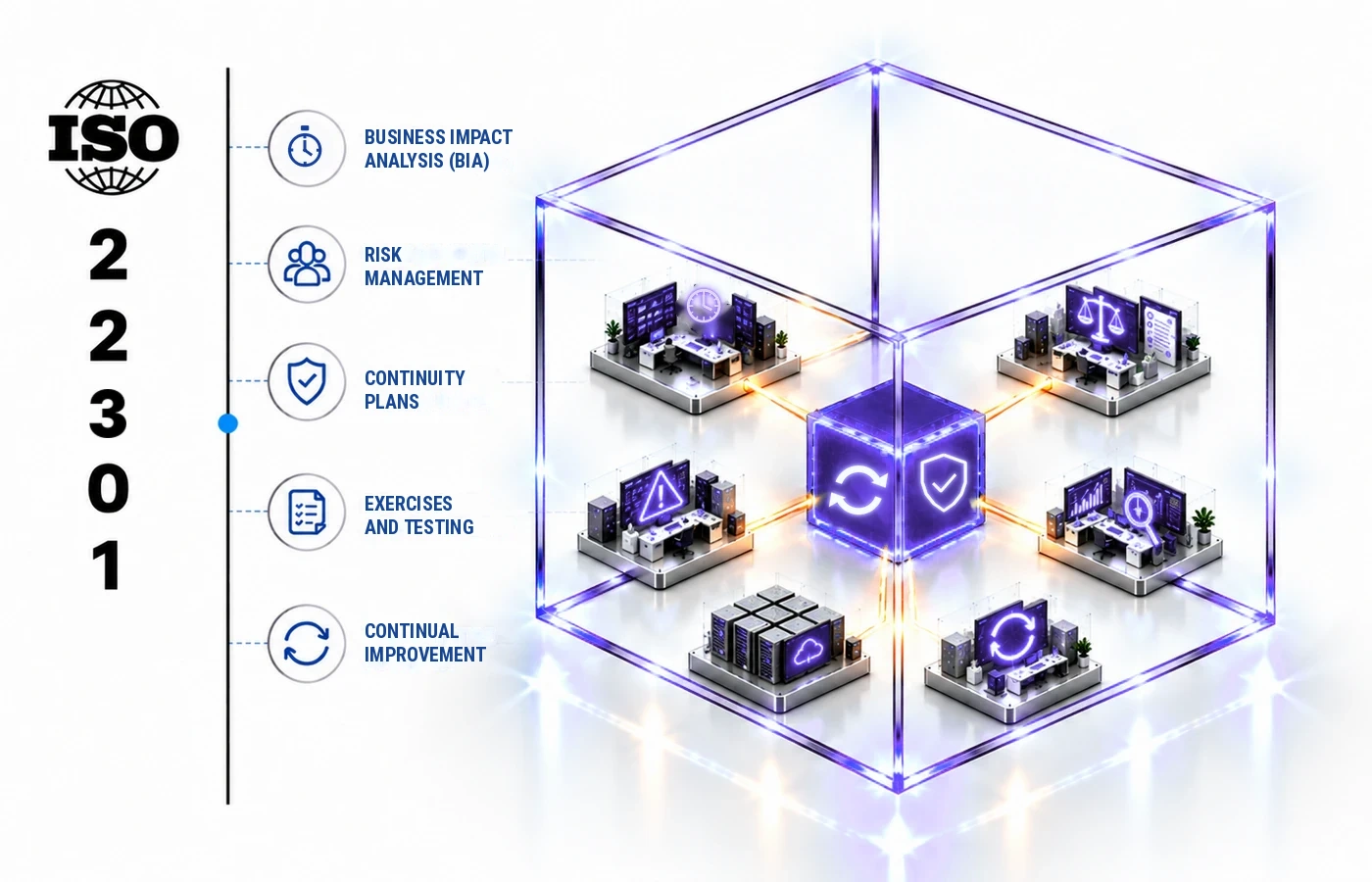
Business continuity: BIA, continuity strategies and plans, documented exercises and recovery.
Learn more →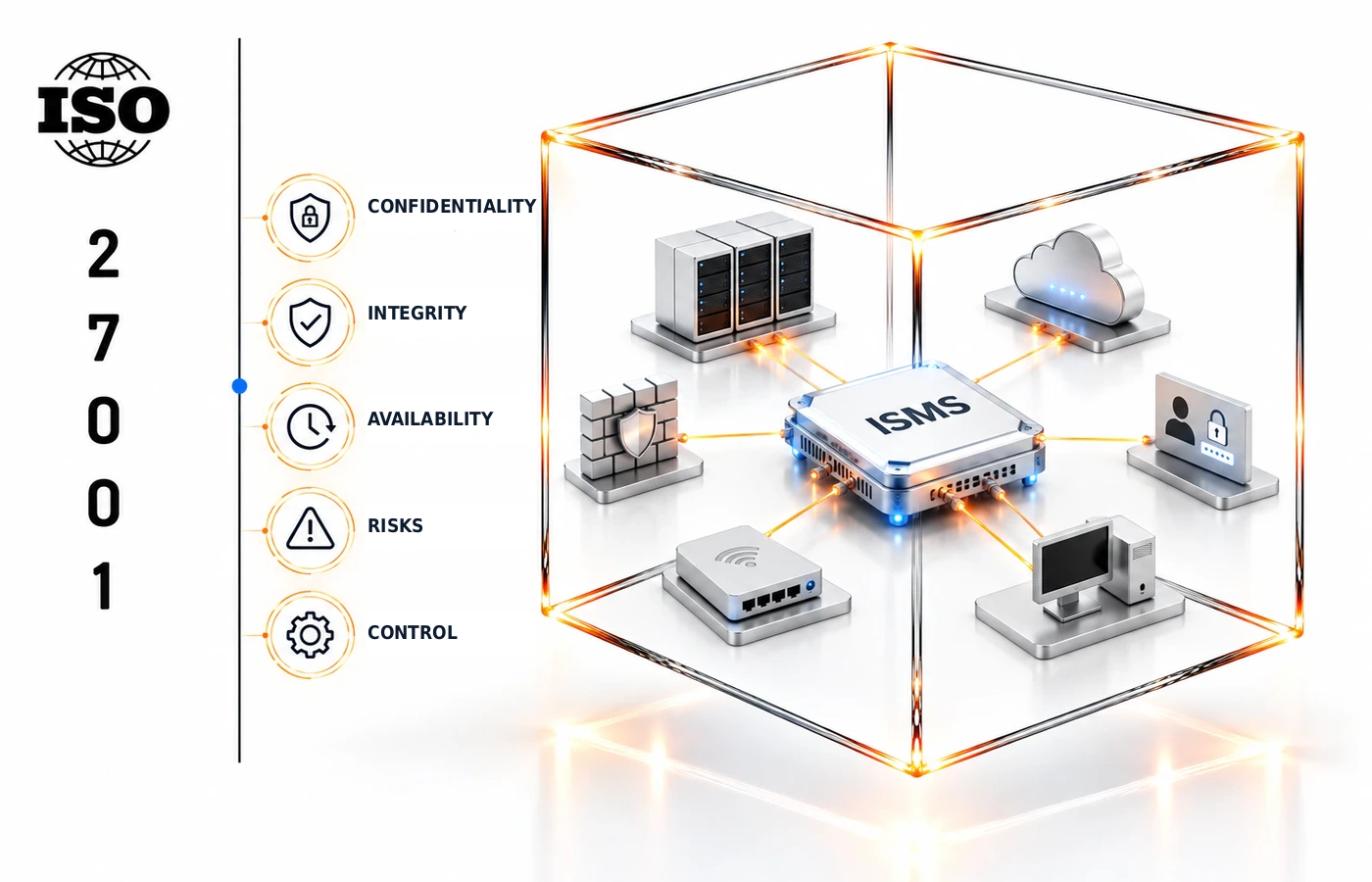
Information security: risk assessment, controls, information assets, incidents and data protection.
Learn more →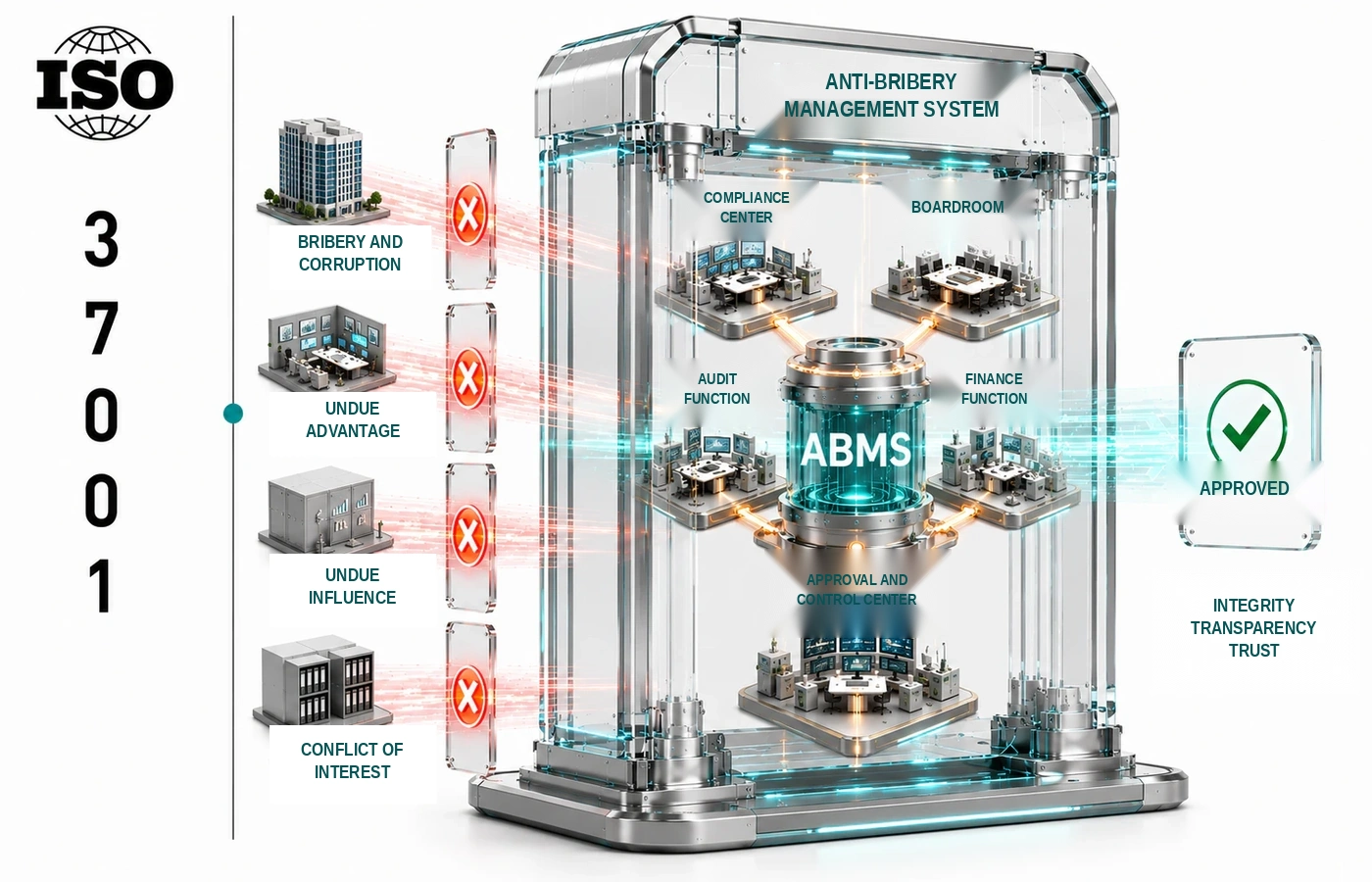
Anti-bribery system: due diligence, third-party control, integrity, internal investigations and organizational compliance.
Learn more →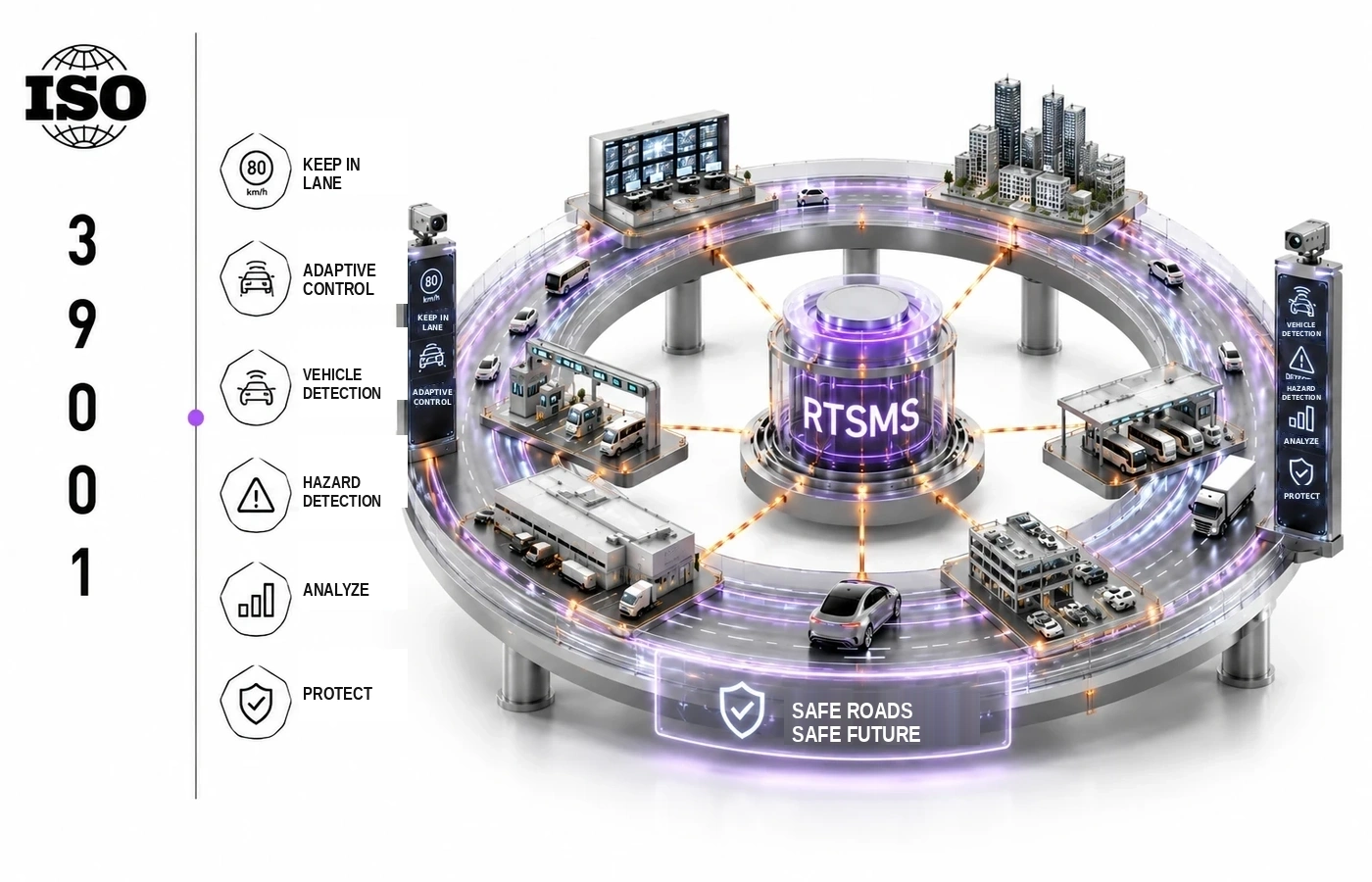
Road safety: fleets, transport, risk indicators, driving behaviour and operational control.
Learn more →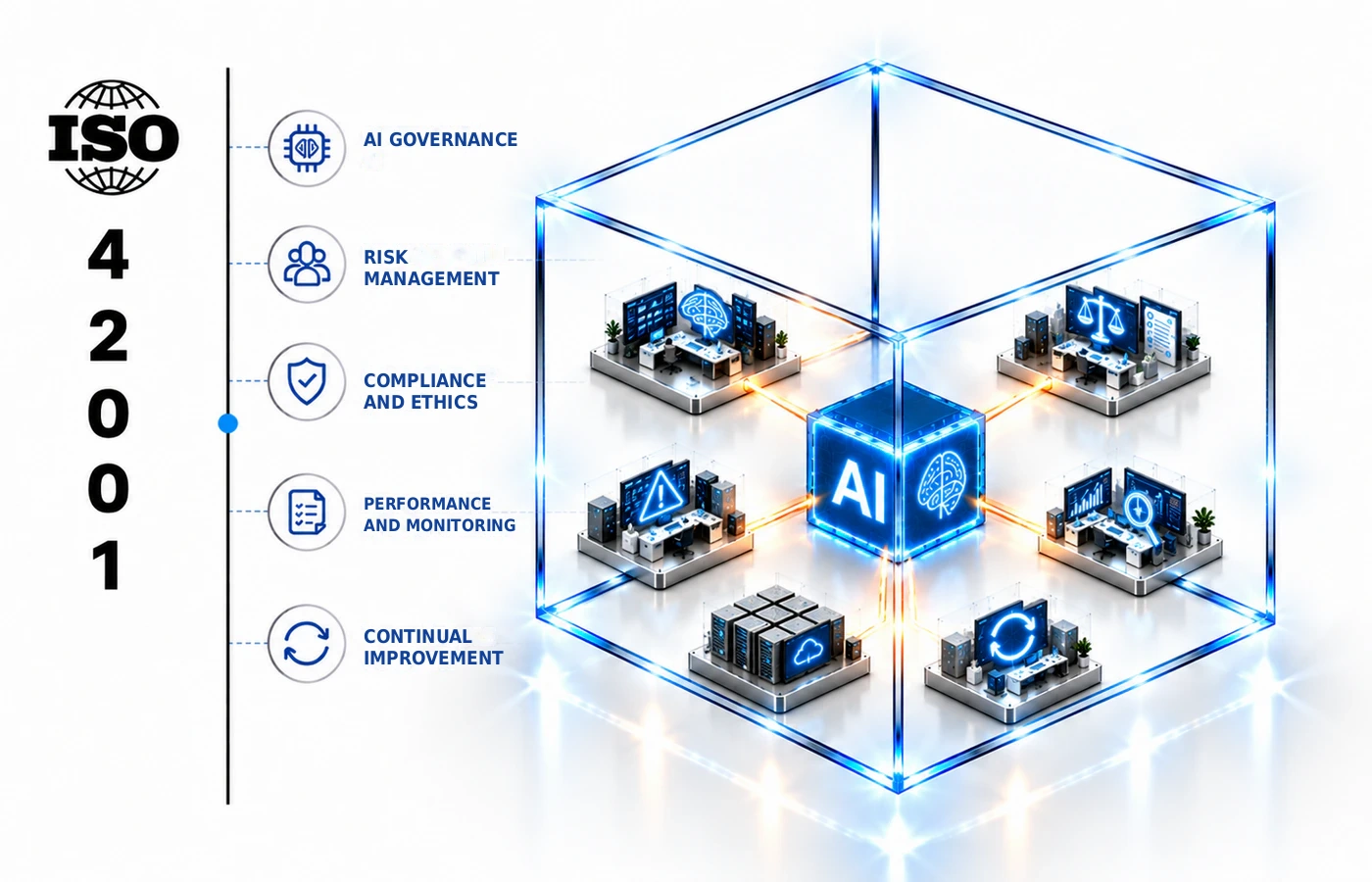
AI management system: policies, AI risk and impact assessment, controls and monitoring.
Learn more →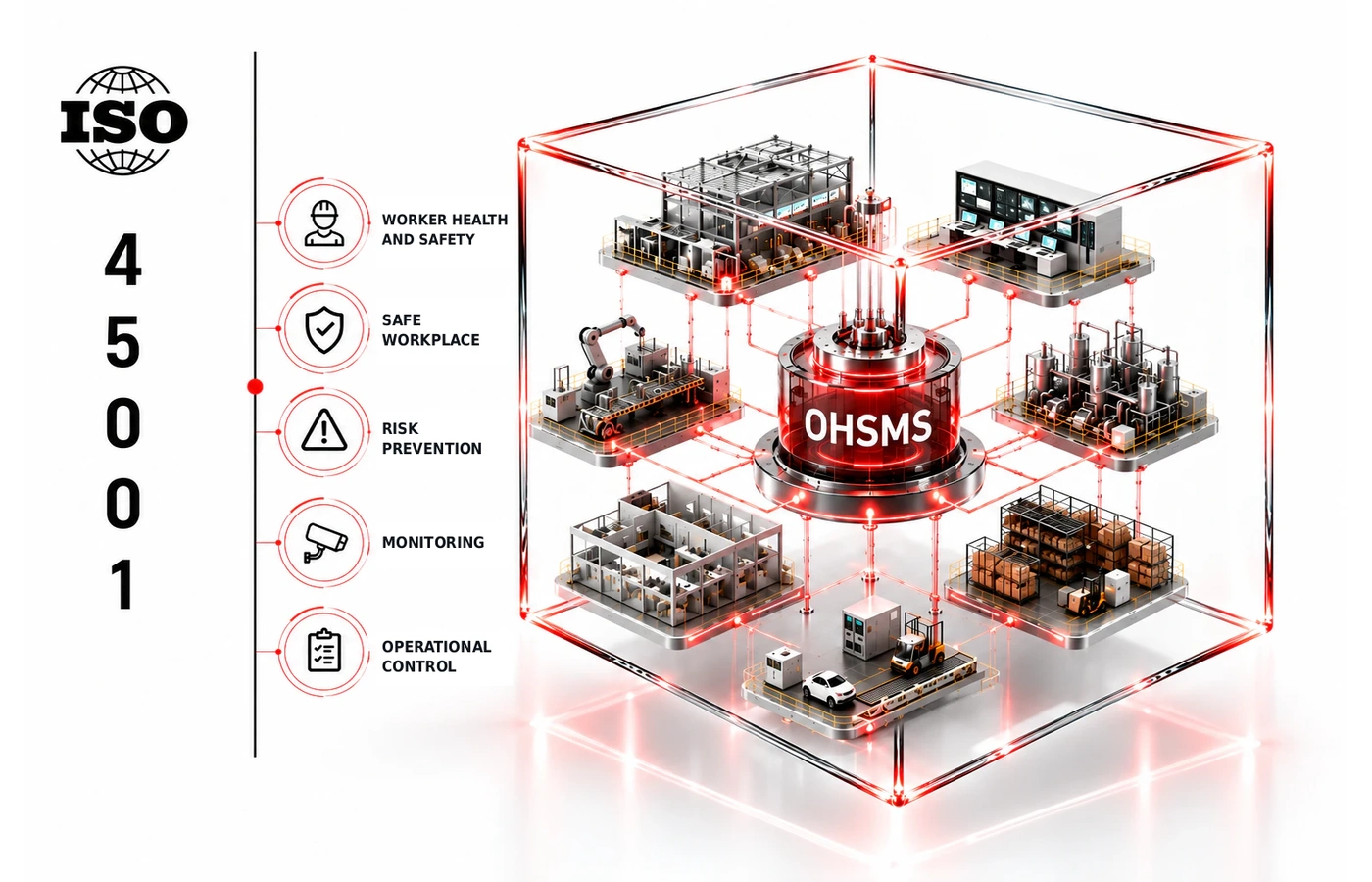
Occupational health and safety: hazards, OH&S risks, worker consultation and incident prevention.
Learn more →
Energy management: consumption, EnPIs, energy baseline, energy performance and operational optimization.
Learn more →For an organization to be certified, the management system must be implemented. This means defined processes, clear responsibilities, monitored objectives, risks addressed, available evidence and improvement mechanisms.
In practice, many organizations approach the audit with incomplete documentation, unclear responsibilities or insufficient evidence. Certification preparation corrects these areas before the external auditor records them officially.
A mature management system can be explained by the team, verified through evidence and supported by results. That is why certification preparation must include both checking the documents and checking practical application.
The service is built for organizations that want a realistic check before the certification body's audit. We do not promise certification, because the decision belongs to the independent body, but we reduce the risks through preparation, verification and clear actions.
The process is staged to cover both the documents and practical implementation. Each stage brings clarity: what exists, what is missing, what must be corrected and what evidence is needed.
We clarify the target standard, the certification scope, processes, sites, desired timeframe and current level of readiness.
We analyze the policies, objectives, procedures, registers, forms and how the documentation covers the requirements of the standard.
We analyze whether processes are applied, whether there is objective evidence and whether staff understand their responsibilities.
We test the system before the external audit through interviews, sampling, document checks and well-founded findings.
We define corrections, causes, corrective actions, responsibilities, deadlines and evidence for closing the findings.
We check the scope, documentation, processes, sites and the organization's readiness for the initial review stage.
We prepare the evidence of implementation, the team, the interviews and how the system will be presented in the main audit.
After certification, we support the organization with surveillance audits, internal audits, recertification and continual improvement.
Stage 1 checks the organization's readiness for the main audit: the certification scope, documentation, processes, sites, applicable requirements and the general level of implementation. The aim is to make it clear whether the system can proceed to stage 2.
QMS Consulting helps the organization go into stage 1 with the essential documents ready, a clear scope and a realistic picture of the areas that may raise questions or observations.
Auditors do not just look for documents but for evidence that the system is used. Staff must be able to explain the activities, responsibilities, evidence and how nonconformities are handled.
Stage 2 is the main certification audit and checks the actual application of the management system: interviews, processes, objective evidence, results, internal audit, management review and corrective actions.
Preparing for stage 2 involves checking processes in practice, preparing the team for interviews and organizing the evidence so that the audit can follow the requirements of the standard without unnecessary obstacles.
The same ISO requirements apply differently in a manufacturing company, an IT firm, a food business, a laboratory or a construction company. That is why audit preparation must take into account the risks, contractual requirements and processes specific to the sector.

ISO certification for farms, forestry operations, primary processors and organizations that manage traceability, environment, resources and suppliers.
Learn more →
Certification preparation in supply chains where quality, traceability, suppliers and process control are critical.
Learn more →
Management systems for organizations with high requirements for safety, traceability, documentation and operational control.
Learn more →
ISO certification for internal control, information security, risk management, suppliers and auditable evidence.
Learn more →
Certification preparation in organizations with environmental, OH&S, legal compliance, storage and substance control risks.
Learn more →
ISO for tenders, quality of execution, subcontractors, technical documentation, environment and occupational health.
Learn more →
Preparation for ISO 22000:2018, ISO 9001:2026 and food safety systems with HACCP, PRPs and traceability.
Learn more →
Certification for software companies, IT suppliers, SaaS providers, integrators and organizations that manage data, SLAs and security.
Learn more →
Systems for documented control, competence, traceability, equipment, validation and technical evidence verified in the audit.
Learn more →
ISO for transport, warehousing, fleets, traceability, suppliers, indicators and control of operational risks.
Learn more →
Preparation for maritime, port and related organizations with requirements for safety, environment and control of operations.
Learn more →
Certification for medical devices, healthcare and related services where traceability, risk and compliance are essential.
Learn more →
ISO for high-risk processes, OH&S, environment, maintenance, critical suppliers and strict operational control.
Learn more →
Systems for services, customer experience, food safety, environment, suppliers and operational standardization.
Learn more →
Preparation for ISO 50001:2018, ISO 14001:2026, ISO 45001:2018 and integrated systems in organizations with significant consumption and risks.
Learn more →Nonconformities must not be handled with superficial explanations. A mature system shows that the organization understands the cause of the problem, defines appropriate actions and verifies their effectiveness.
Before the audit, we analyze whether corrective actions are worded correctly, whether they have owners and deadlines, whether there is evidence of implementation and whether the problem has really been eliminated or reduced.
Most problems arise when the organization confuses the existence of documents with the real implementation of the system. Auditors check whether the system works, not just whether the procedures are saved in a folder.
The internal audit must check the system in depth, not automatically confirm that everything is compliant.
Management must review results, risks, resources, performance, audits and improvement decisions.
A requirement is not demonstrated through intention but through verifiable information: registers, reports, indicators, interviews and results.
Documents that do not reflect real activity create confusion and may lead to audit findings.
If staff do not know their role, the system cannot be credibly sustained.
Closing an action is not enough if it is not demonstrated that the problem does not recur.
Certification is not the end of the management system. After the certificate is issued, the organization must maintain the system, keep evidence, carry out internal audits and deal with the changes that occur in processes, staff, suppliers or legal requirements.
The surveillance audit checks whether the system remains conforming and effective. Recertification reassesses the system at the end of the certification cycle. QMS Consulting can also support the organization after certification, so that the system does not become a formality.
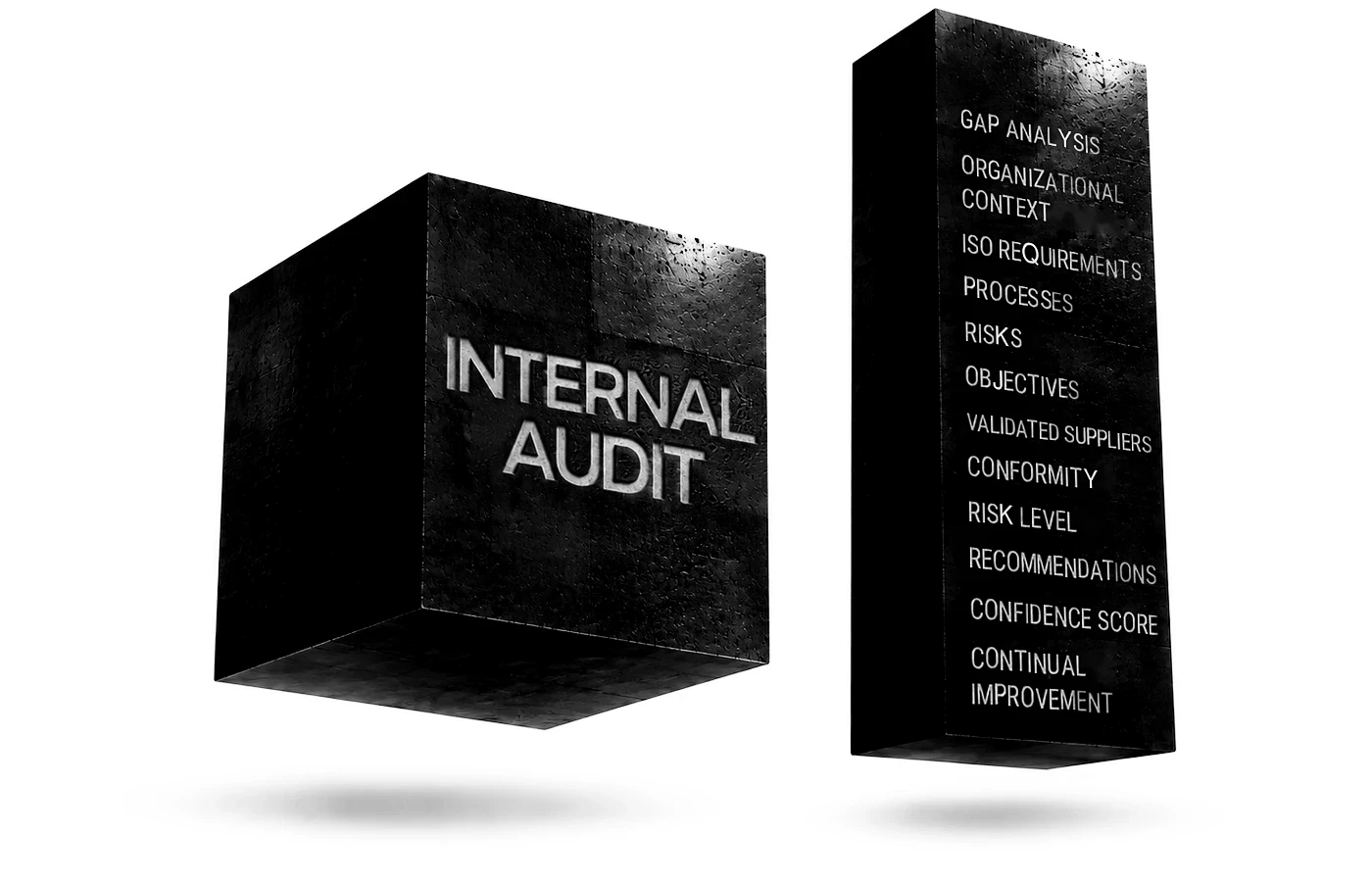
Certification preparation is connected with implementing the management system, the internal audit, supplier audits and team training. Below you will find the services that complete the path to the certificate.
Checking the conformity and effectiveness of the management system before certification, surveillance or recertification.
Learn more →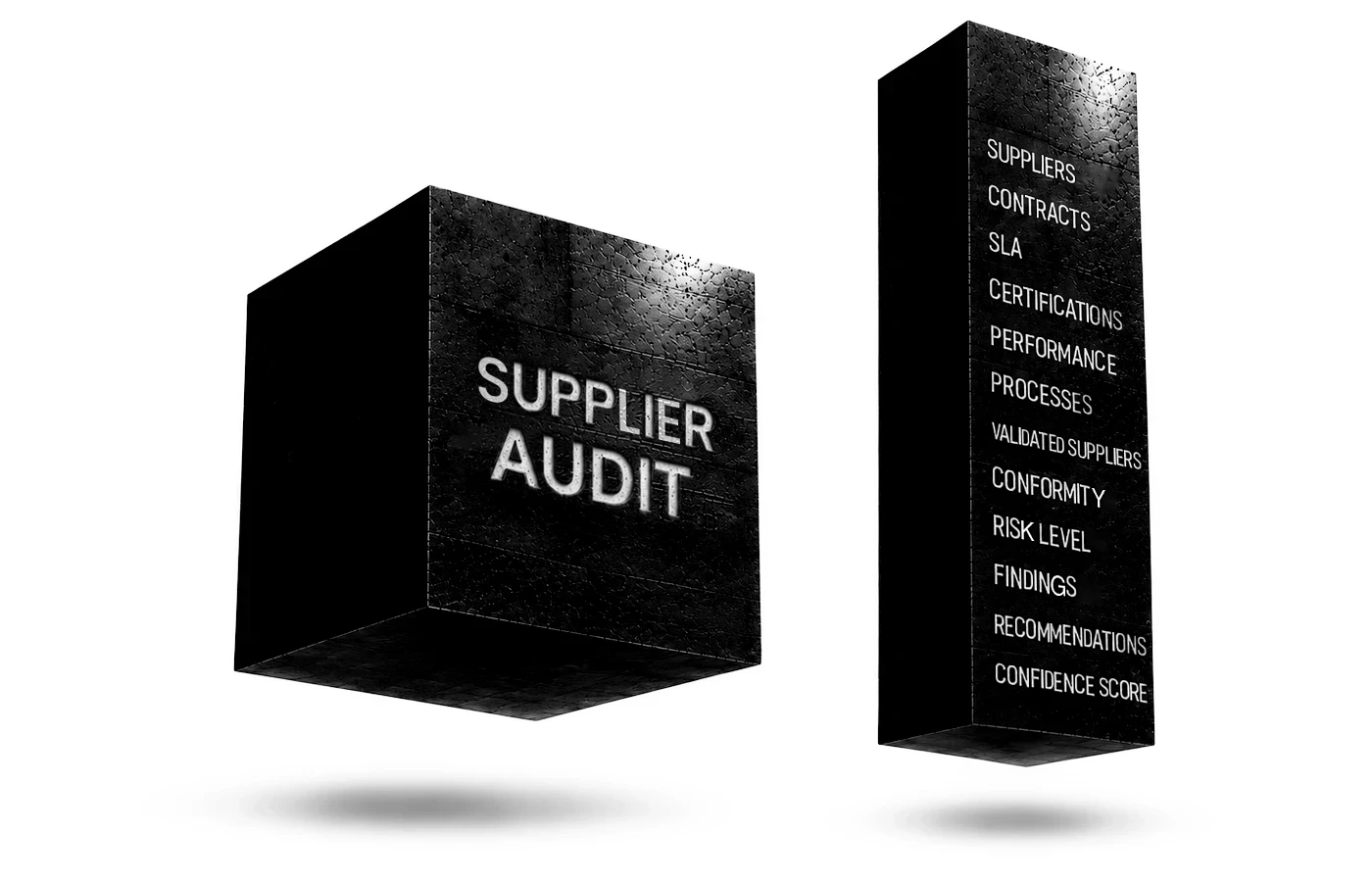
Evaluating critical suppliers, subcontractors and partners to control external risks.
Learn more →Implementing management systems: GAP analysis, processes, documentation, training and audit preparation.
Learn more →
Documents, internal audit, nonconformities, corrective actions and management review, with alerts and reports generated automatically.
Learn more →
Training for internal auditors: planning, interviews, objective evidence, findings and reporting.
Learn more →
Advanced competences for coordinating audits, audit teams and reporting to management.
Learn more →ISO certification preparation is a complete check of the management system before the certification body's audit. It includes reviewing the documentation, the internal audit, the management review, objective evidence, nonconformities, corrective actions and preparing the team for interviews.
No. ISO certificates are issued by independent certification bodies. QMS Consulting provides consulting, implementation, internal audit and certification preparation, without replacing the role of the certification body.
ISO implementation builds the management system within the organization. ISO certification is the independent assessment of the system by a certification body, on the basis of which the certificate can be issued.
The stage 1 audit checks whether the organization is ready for stage 2. Auditors review the certification scope, documentation, main requirements, sites, processes and level of implementation.
The stage 2 audit checks the actual application of the management system. Auditors talk to staff and check processes, objective evidence, results, the internal audit, the management review and corrective actions.
The scope of the system, the policy, objectives, processes, risks, documentation, evidence, training, internal audit, management review, nonconformities and corrective actions are checked.
It depends on the type and severity of the nonconformities. Major nonconformities must be addressed before the certificate is issued, while for minor ones the certification body may require corrective action plans and evidence.
A major nonconformity indicates a significant gap in the system or its inability to achieve the planned results. It can block the issue of the certificate until it is addressed.
A minor nonconformity is an isolated deviation that does not compromise the system as a whole, but requires correction, root cause analysis and corrective action.
The duration depends on the standard, the size of the organization, the maturity of the system, the number of processes, existing documentation and the volume of missing evidence. Some organizations need a few weeks, others a few months.
The documents depend on the standard, but may include policies, objectives, a process map, risk registers, procedures, instructions, forms, the internal audit, the management review, corrective actions and monitoring evidence.
Yes. For ISO management systems, the internal audit is an essential requirement. It checks whether the system is conforming, implemented and effective before the external audit.
The management review is top management's evaluation of the system. It reviews results, indicators, audits, nonconformities, risks, opportunities, resources, feedback and improvement decisions.
After certification, the system must be maintained. Surveillance audits, periodic internal audits, corrective actions, document updates and continual improvement follow.
The surveillance audit is the periodic audit carried out by the certification body to check that the system is maintained after the certificate is issued.
Recertification is the audit through which the certification body reassesses the system at the end of the certification cycle, in order to issue a new certificate.
A significant part of the preparation can be done remotely through document review, interviews and checking evidence. For operational processes or high risks, on-site checks may be more appropriate.
The certification body is chosen based on accreditation, recognition, scope of activity, sector experience, availability and the requirements of customers or tenders.
The consultant can help with clarifications, organizing evidence and supporting the team, but the system must be explained by the people who apply it within the organization.
The choice depends on the objective: ISO 9001:2026 for quality, ISO 14001:2026 for the environment, ISO 27001:2022 for information security, ISO 45001:2018 for OH&S, ISO 22000:2018 for food safety, ISO 13485:2016 for medical devices and ISO 50001:2018 for energy.
Yes. Several standards can be audited as an integrated system, especially if there are common processes for documentation, risks, internal audit, corrective actions and management review.
The risks include major nonconformities, a delayed certification, additional costs, missing evidence, unprepared staff and a formal system that cannot be maintained.
Objective evidence is verifiable information that demonstrates that a requirement is met: documents, records, indicators, interviews, observations, reports or monitoring results.
The cost depends on the standard, the size of the organization, the number of processes, the maturity of the system, the volume of documents and the level of support needed before the audit.
Management system certification is not an individual certification of each product. It shows that the organization has controlled processes for managing the relevant requirements.
The most common mistakes are a formal internal audit, an incomplete management review, insufficient evidence, unclear responsibilities, procedures that are not applied and corrective actions that are not verified.
A quote request is useful when the organization has a concrete goal: initial certification, surveillance, recertification, a customer request, a tender, a supplier audit or an internal need to control processes.
For a realistic estimate, we need the target standard, number of employees, sites, main processes, the organization's activity, existing documentation and the desired deadline.
A work plan, clear deliverables, practical recommendations, documents proportionate to the organization and support focused on the stage 1 audit, the stage 2 audit, checking evidence, corrective actions and certification support.
We work with organizations in Romania and the Republic of Moldova. A significant part of projects can be run online, with on-site sessions when the process requires it.
Send us a few details about the target standard, the status of your system and the desired certification date. We will guide you through the right steps before the stage 1 audit, the stage 2 audit, surveillance or recertification.
Phone: +40 722 773 446
Email: contact@qms.ro
Address: 12 Petru Rareș Street, Bucharest
Send an emailChoose whether to allow visitor statistics. You can change your choice at any time from the site footer.