Standard
ISO 9001:2026
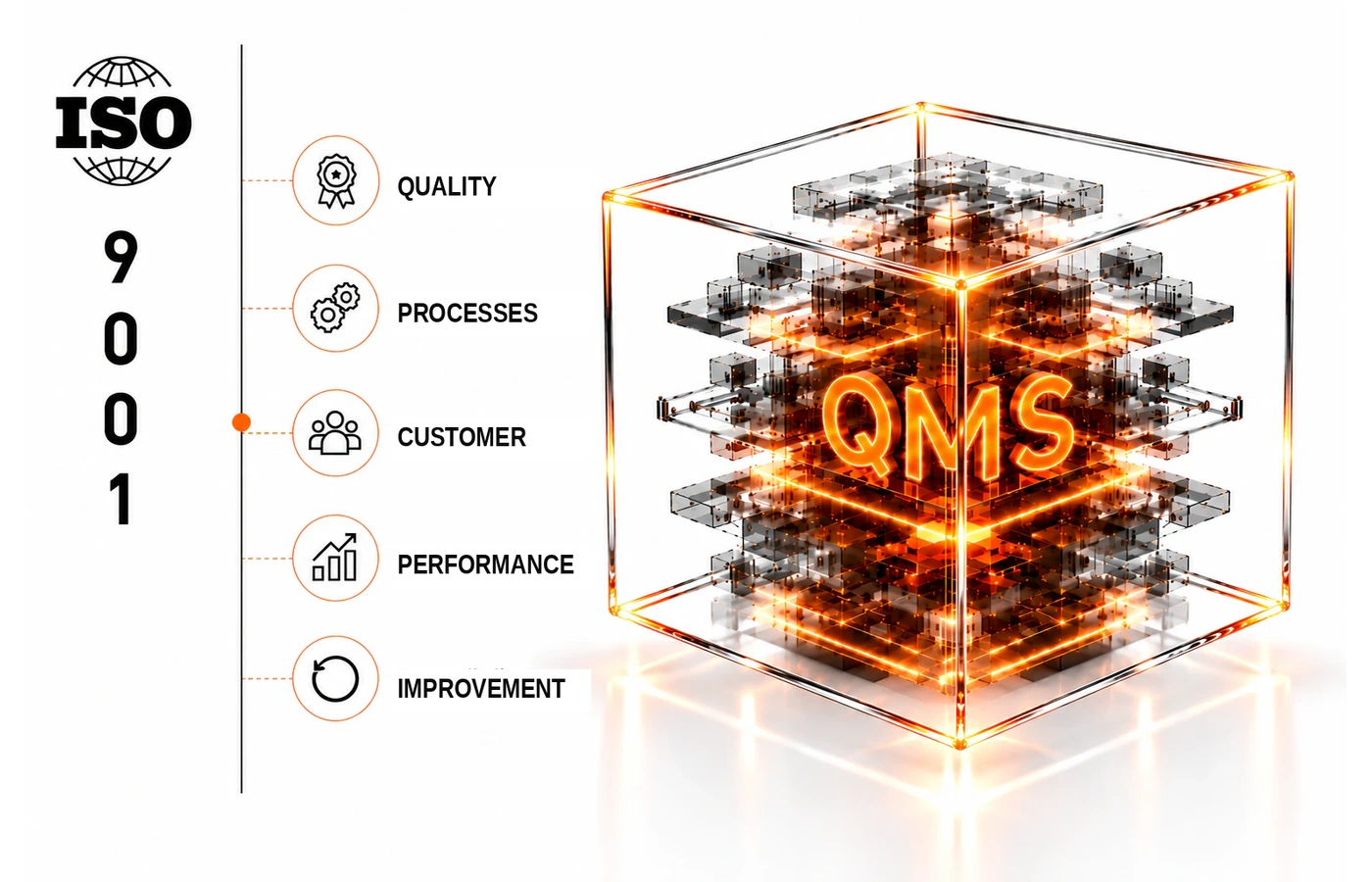
Quality management for clear processes, measurable objectives, operational control, customer satisfaction and continual improvement.
Learn more →
ISO consulting for organizations that want to implement clear, applicable and auditable management systems: GAP analysis, process design, documentation, risks, internal audit and certification preparation.
ISO consulting should not just mean writing procedures. A good ISO implementation project builds a management system that is applicable, proportionate to the organization and capable of producing clear evidence at the audit.
QMS Consulting supports organizations in implementing ISO management systems from the initial analysis to certification preparation. We work with the organization's real processes, its concrete risks, customer requirements and the evidence that must be presented at the audit.
The goal is a system that clarifies responsibilities, controls important activities, helps management make decisions and can be maintained after the certificate is obtained.
To make the right decision, the organization must distinguish between ISO consulting, implementing the management system and the certification issued by an independent body.
Helps the organization interpret the requirements of the standard, design processes, prepare documentation, train the team, check evidence and reduce the risk of nonconformities.
Independently assesses the implemented system and decides whether to issue the certificate. QMS Consulting does not issue ISO certificates; it prepares the organization for an audit backed by real evidence.
A well-implemented ISO system adds value beyond certification: it reduces risks, clarifies processes, improves control and provides verifiable evidence for customers, management and certification bodies.
Processes are defined through inputs, outputs, responsibilities, criteria, indicators and evidence, so that people know what needs to be done and how conformity is demonstrated.
Risks are analyzed in relation to real activity, and controls are integrated into the processes that affect quality, environment, security, safety or performance.
The system defines which documents, registers, reports, indicators and actions must be kept to demonstrate the implementation of ISO requirements.
The organization goes into the audit with a clear scope, applicable documentation, a completed internal audit, a management review and corrective actions addressed.
Implementation can cover a single standard or an integrated system. ISO standards share common requirements on the context of the organization, leadership, risks, documentation, internal audit, corrective actions and improvement, but each standard also has requirements specific to its field.
Quality management for clear processes, measurable objectives, operational control, customer satisfaction and continual improvement.
Learn more →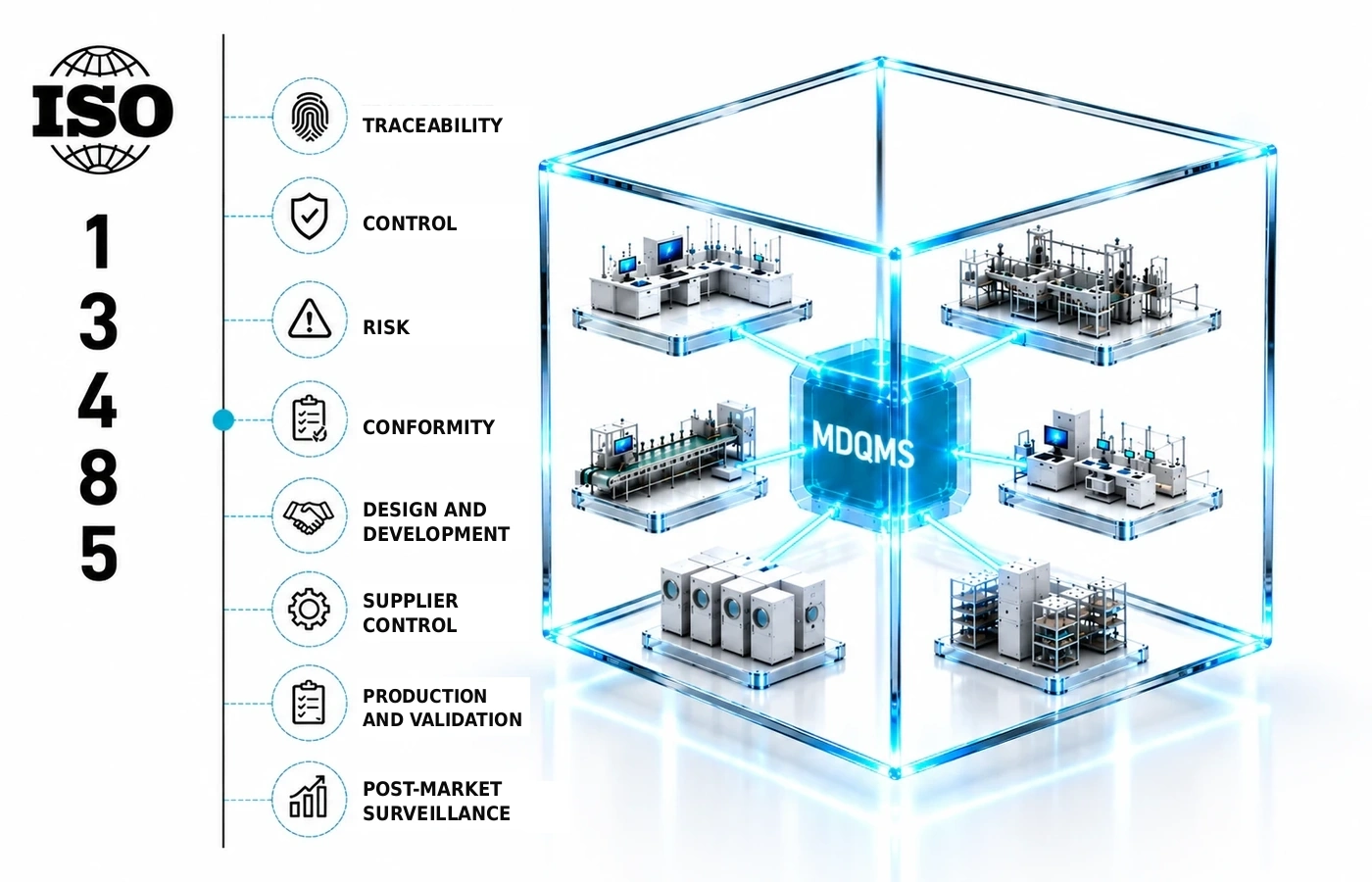
Management system for medical devices, traceability, controlled documentation, regulatory requirements and risk management.
Learn more →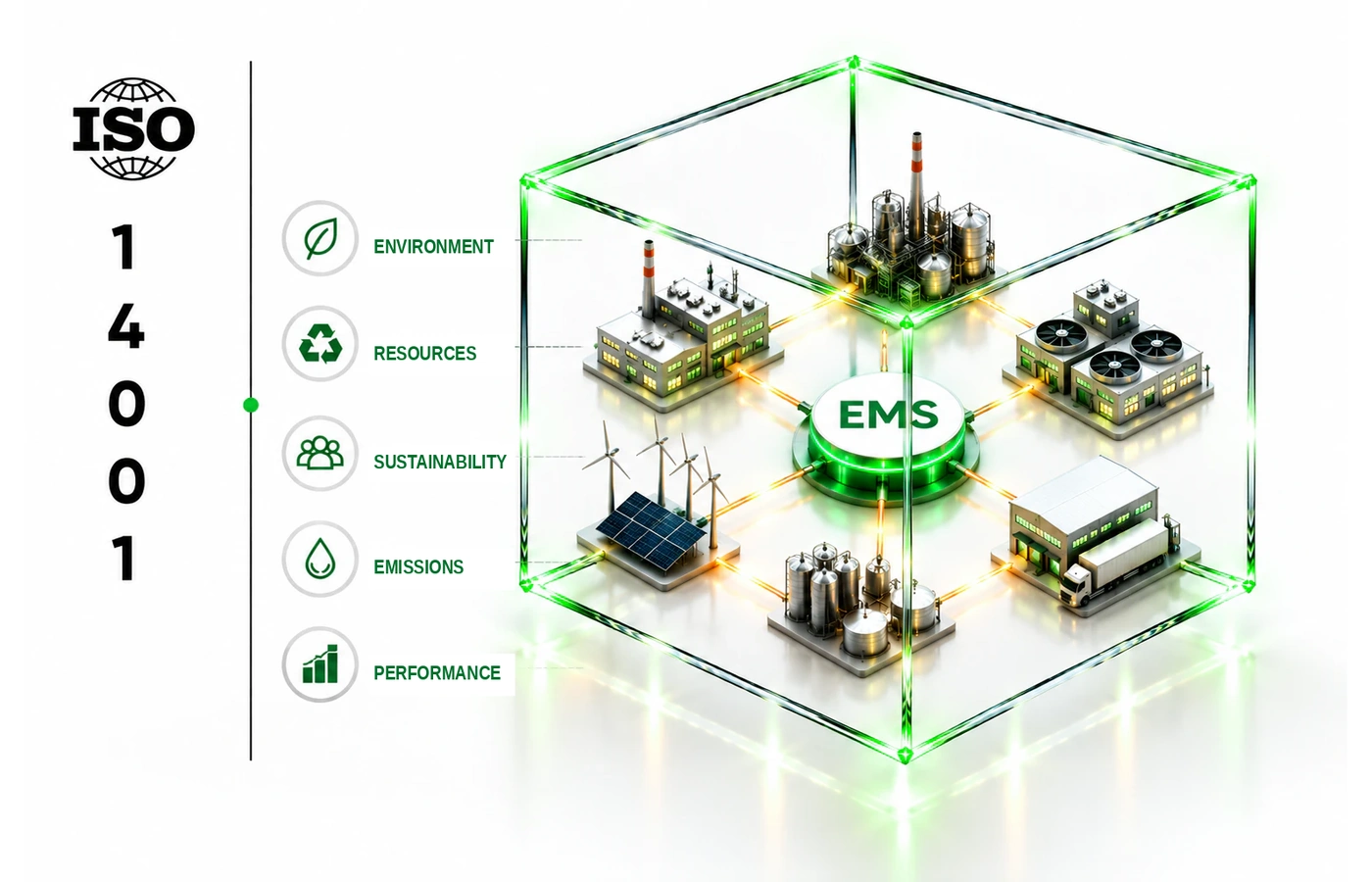
Environmental management for identifying environmental aspects, compliance obligations, objectives, operational control and sustainable performance.
Learn more →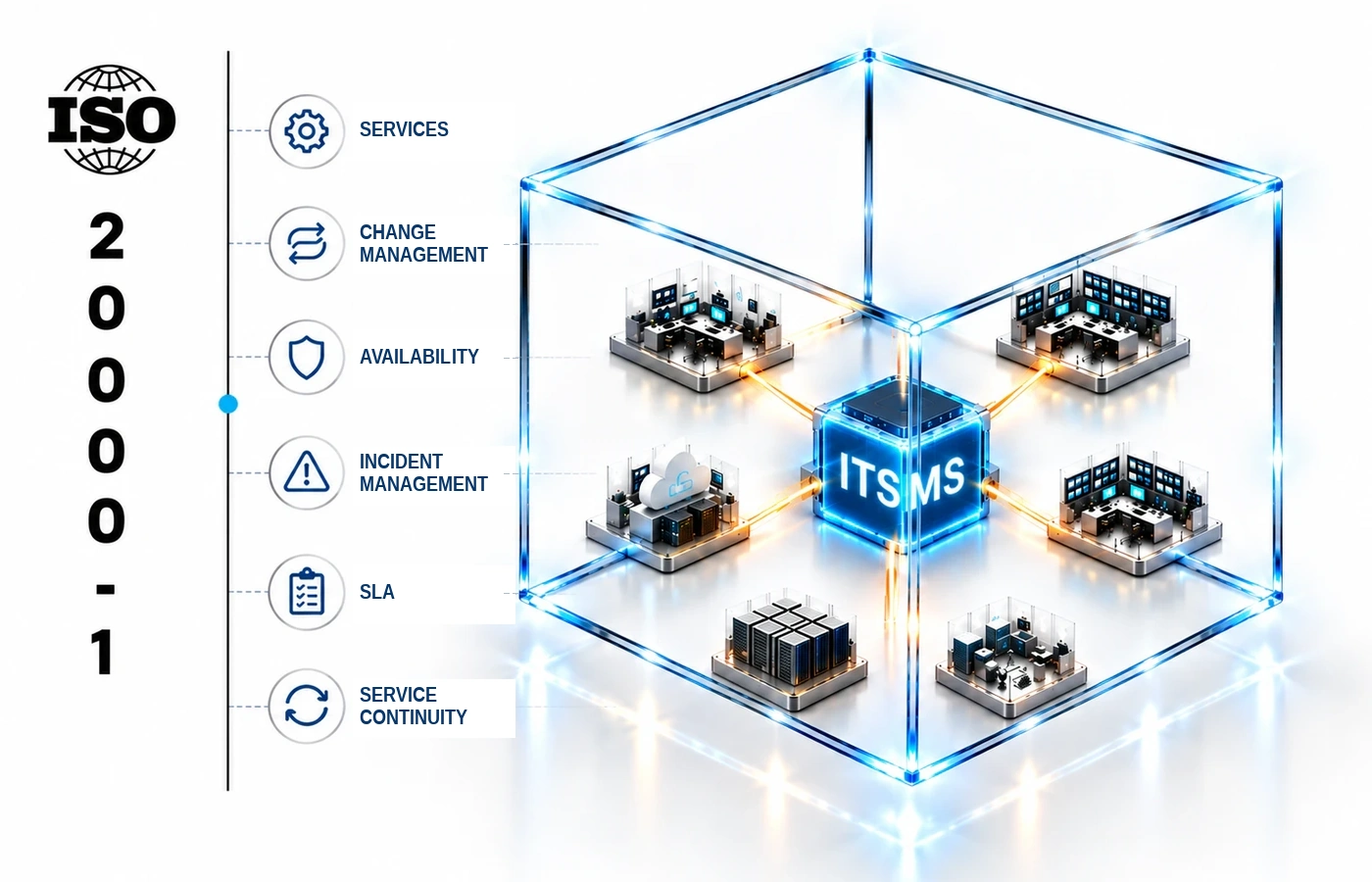
IT service management for SLAs, incidents, changes, availability, continuity, IT suppliers and controlled delivery.
Learn more →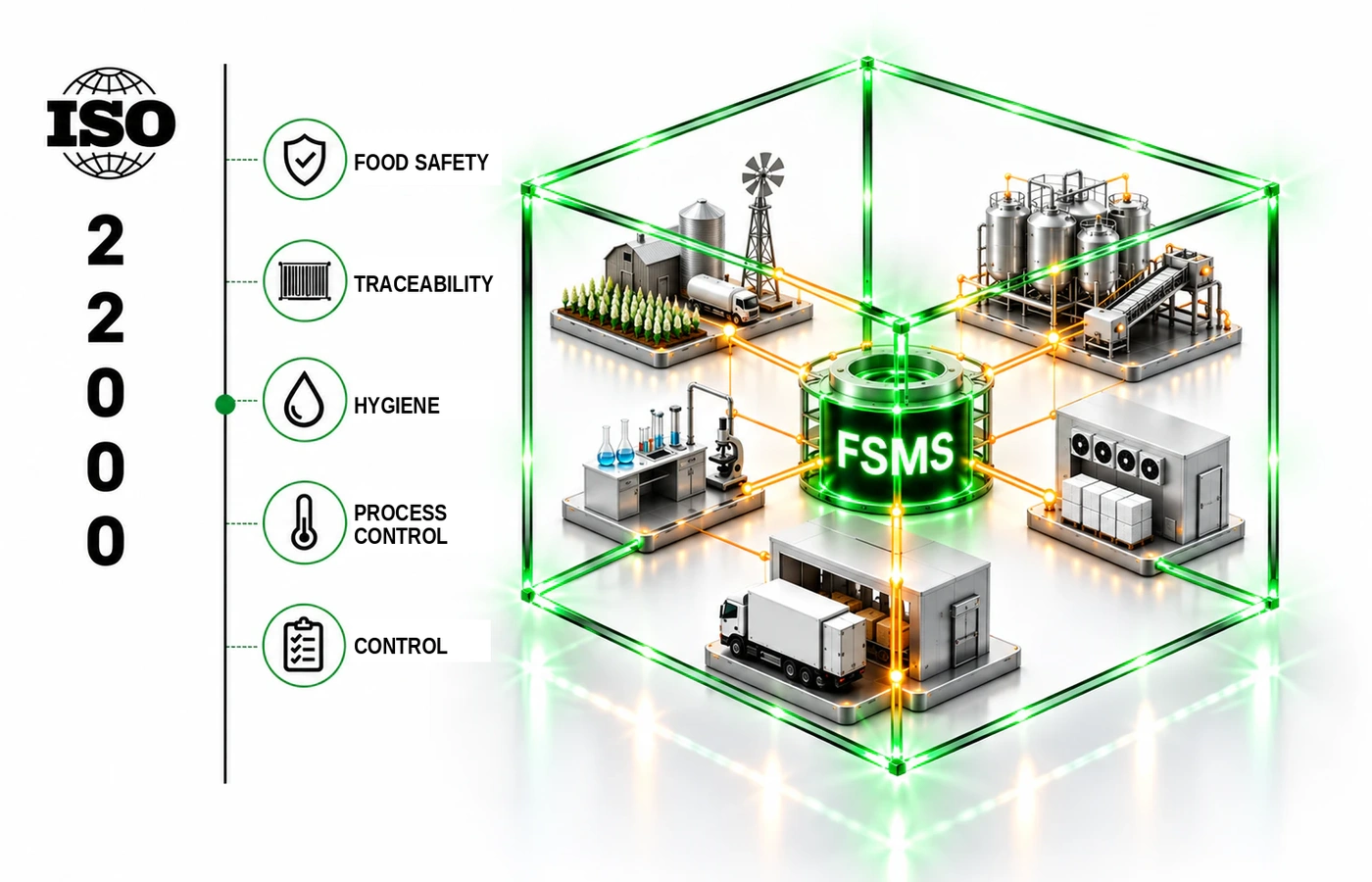
Food safety for HACCP, PRPs, traceability, hazard control, communication along the food chain and operational verification.
Learn more →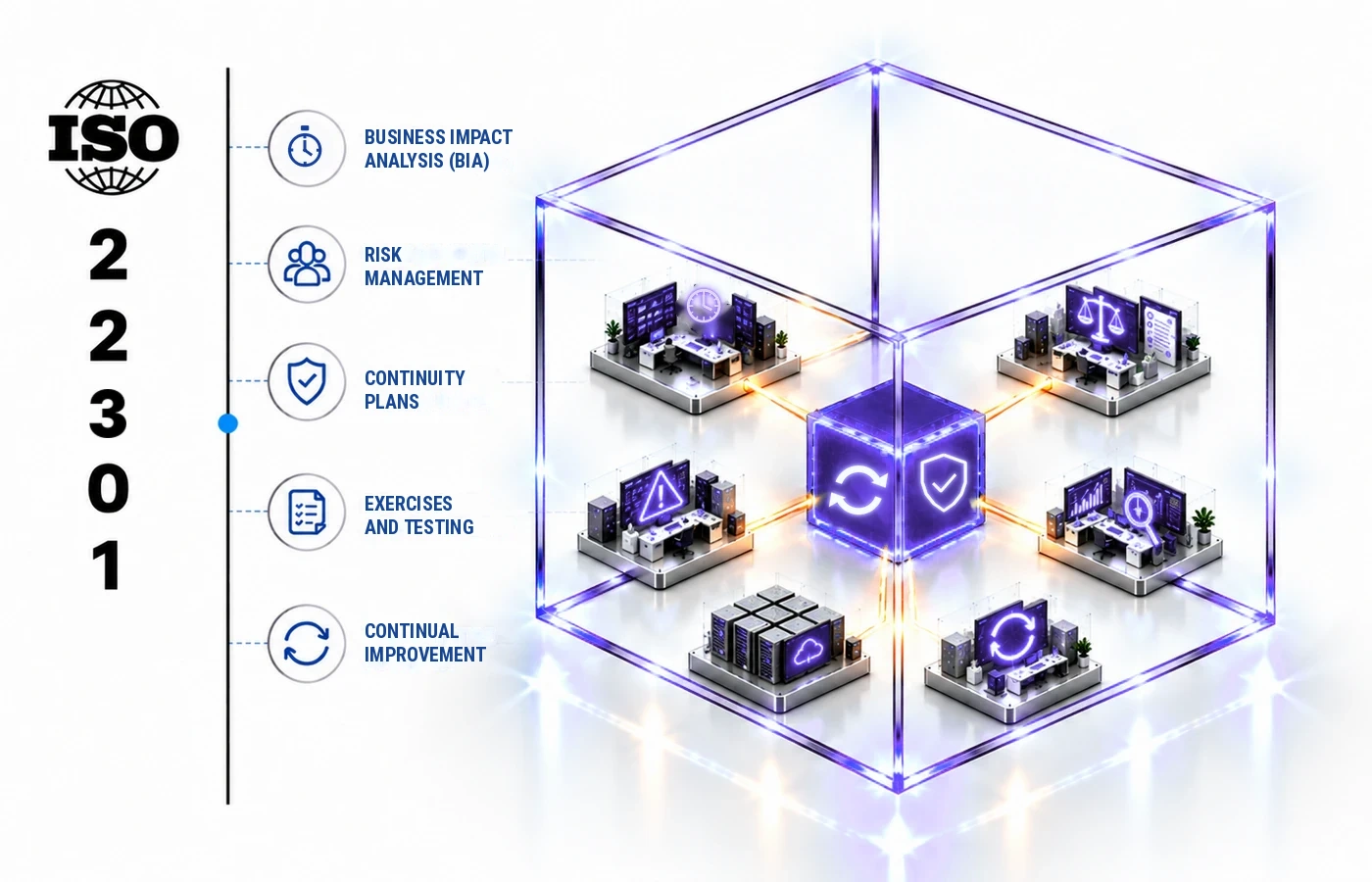
Business continuity: impact analysis, continuity plans, exercises and recovery of critical activities.
Learn more →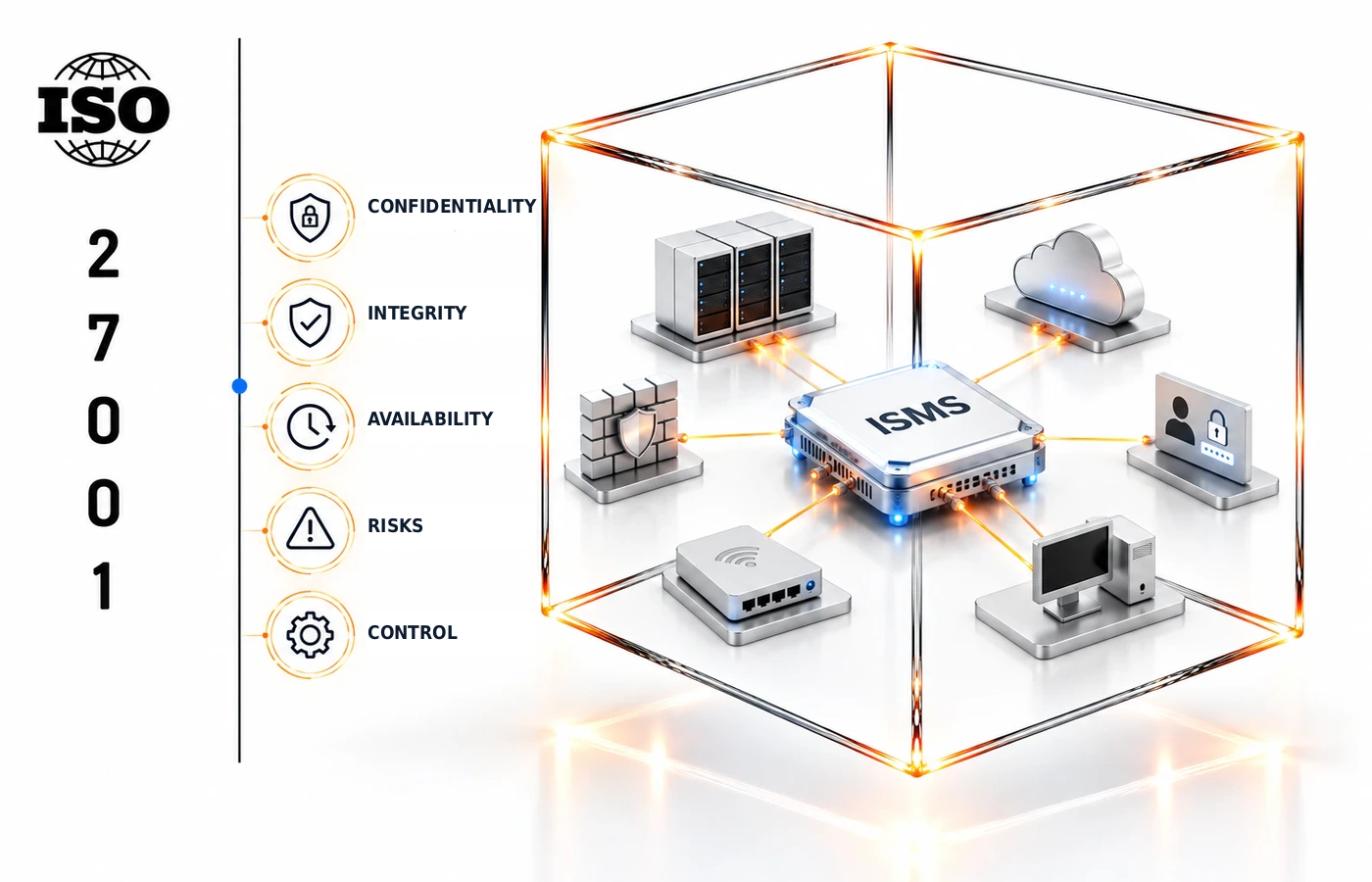
Information security for risk assessment, controls, information assets, policies, incidents and data protection.
Learn more →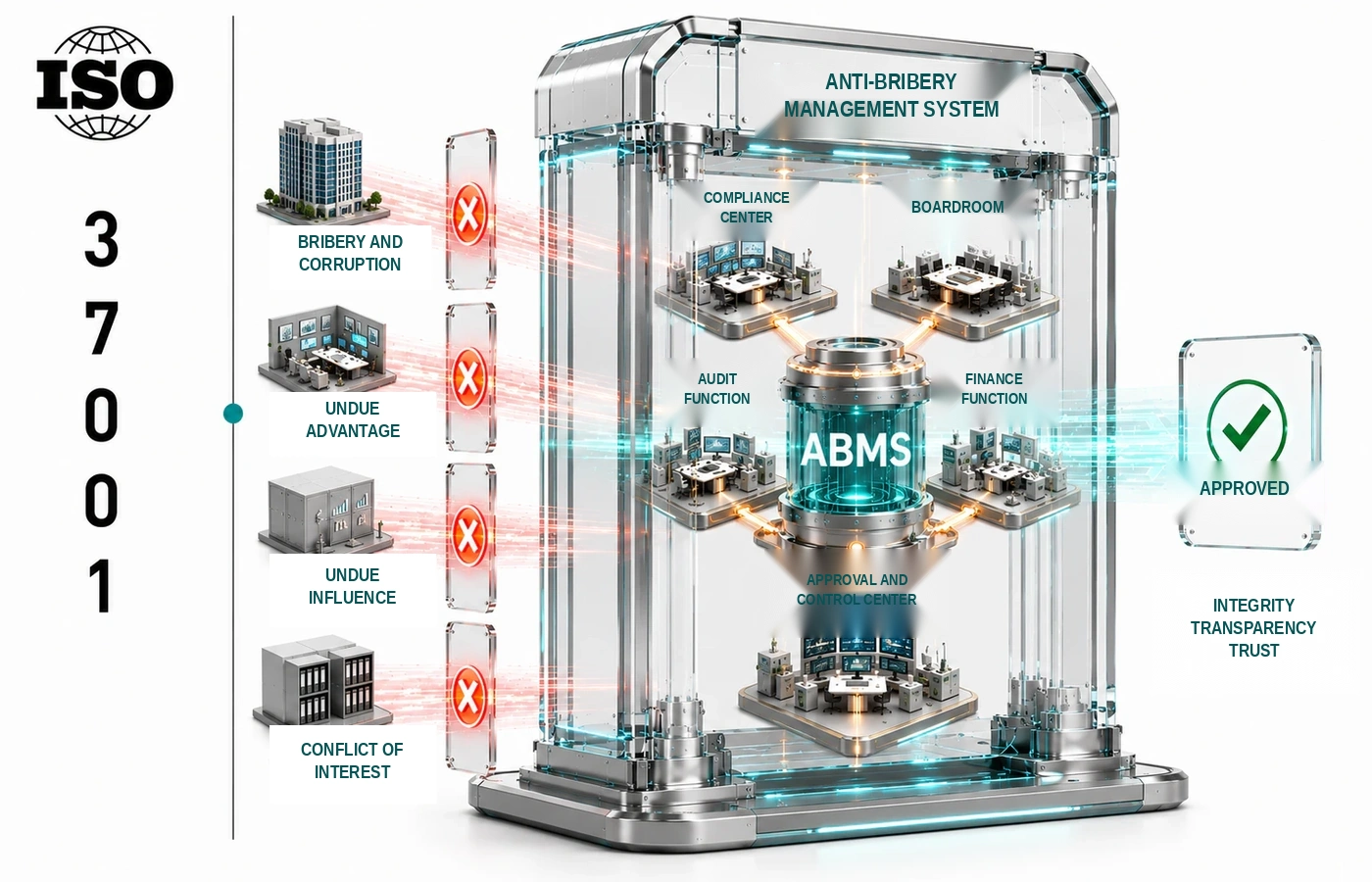
Anti-bribery system for integrity, due diligence, financial and non-financial controls, third parties, reporting and organizational compliance.
Learn more →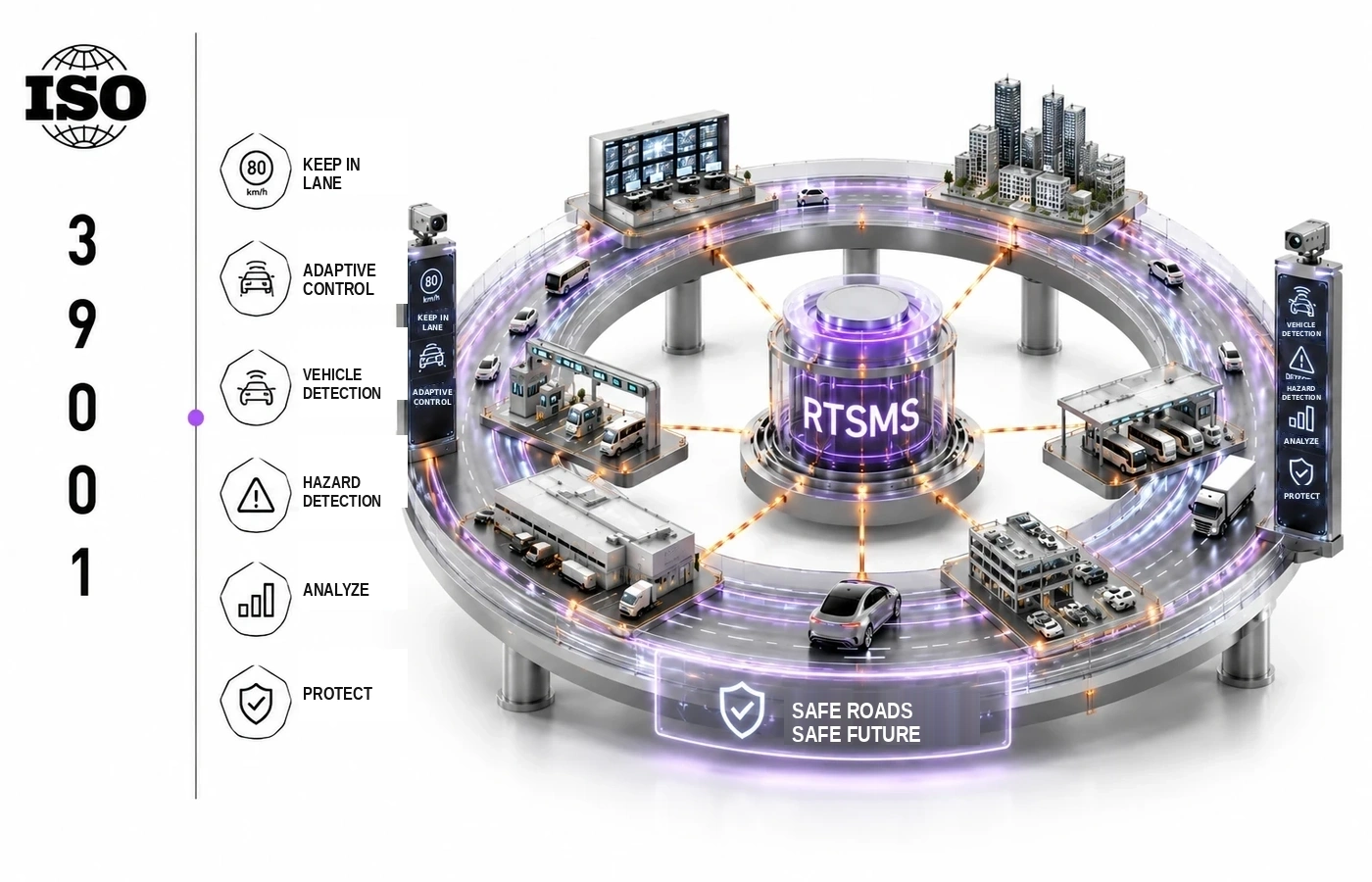
Road safety for organizations with fleets, transport, logistics, risk indicators, driving behaviour and operational control.
Learn more →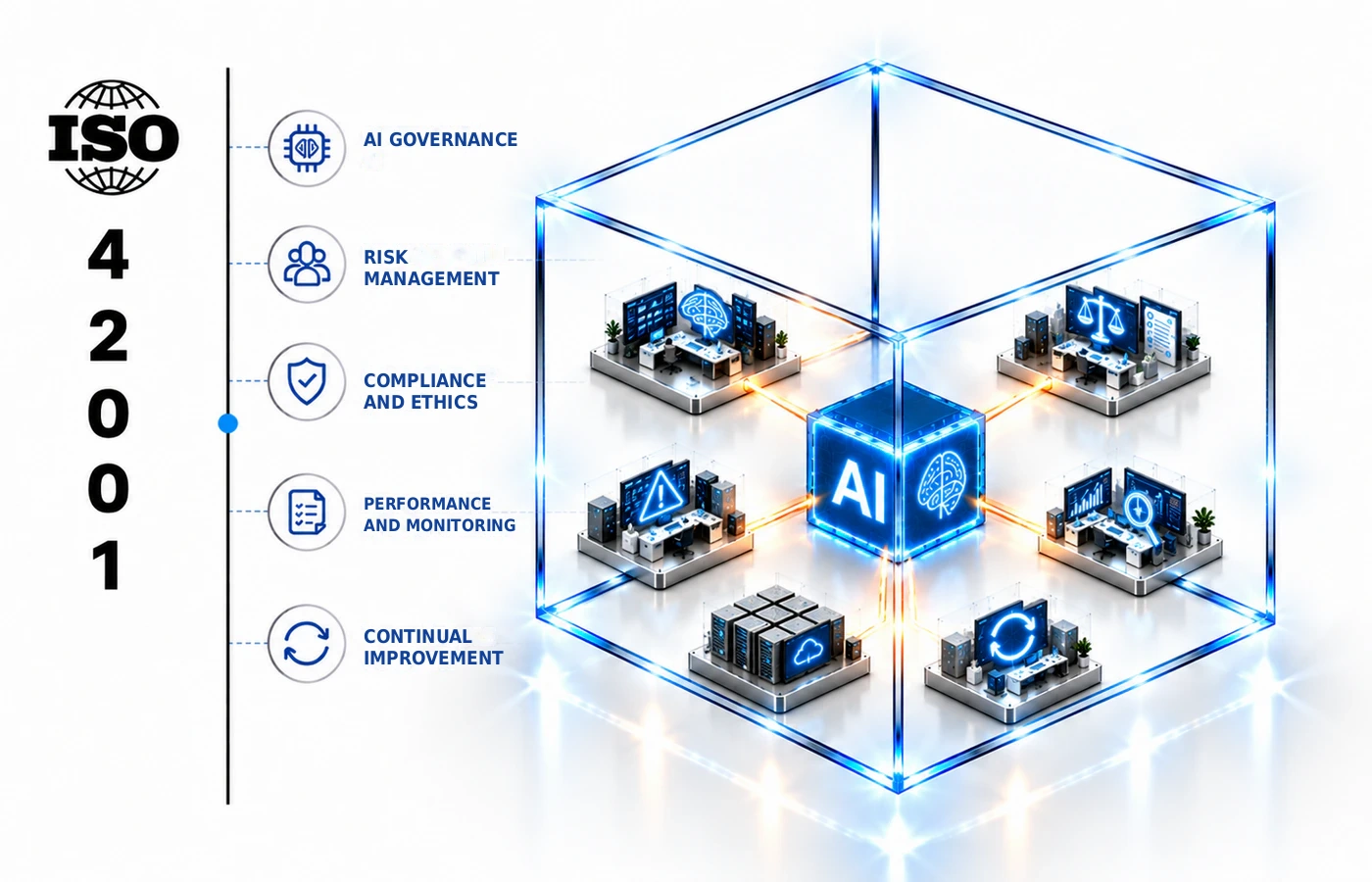
Artificial intelligence management: governance, AI risk assessment, transparency and responsible use.
Learn more →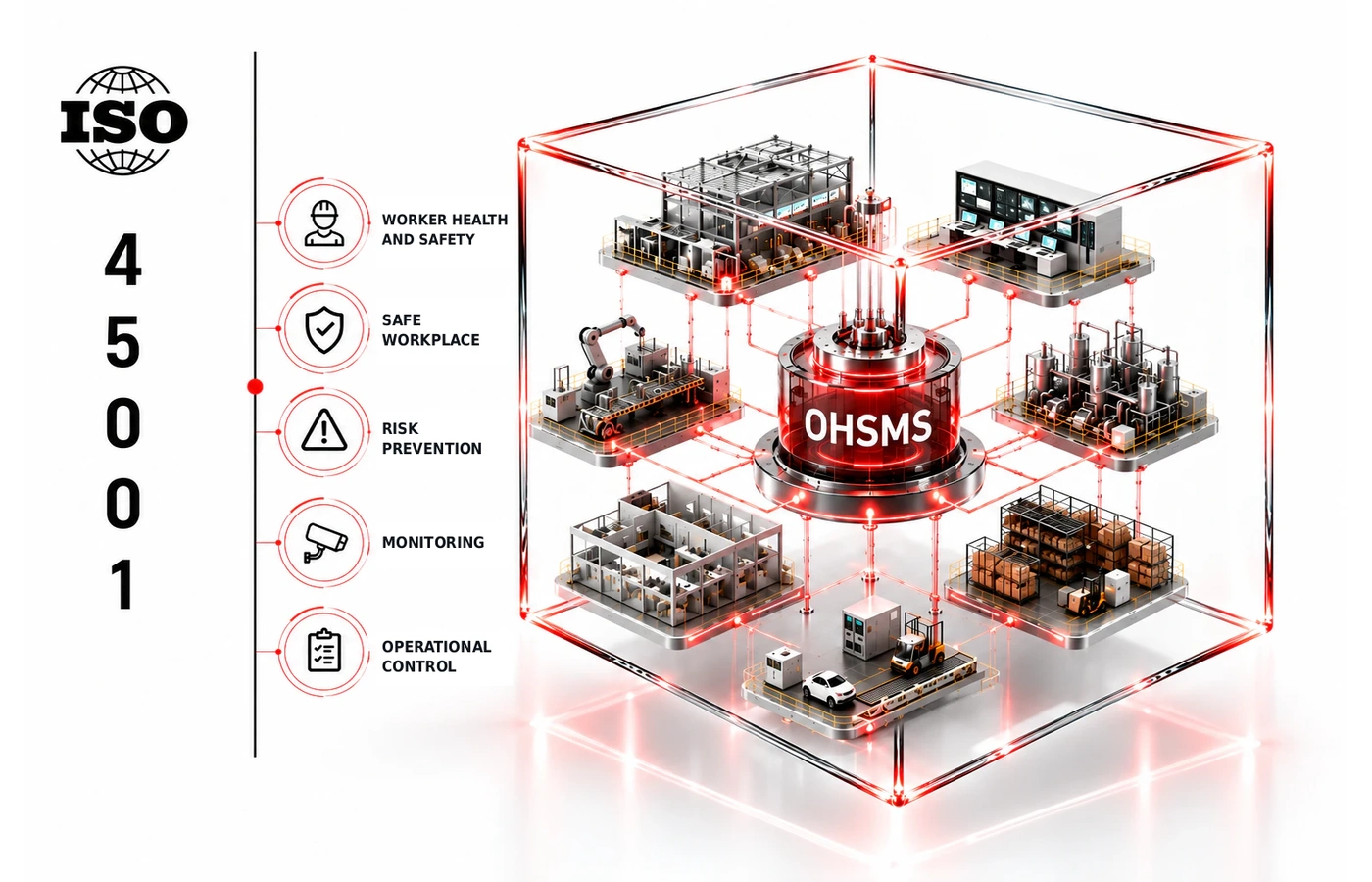
Occupational health and safety for hazards, OH&S risks, worker consultation, operational control and incident prevention.
Learn more →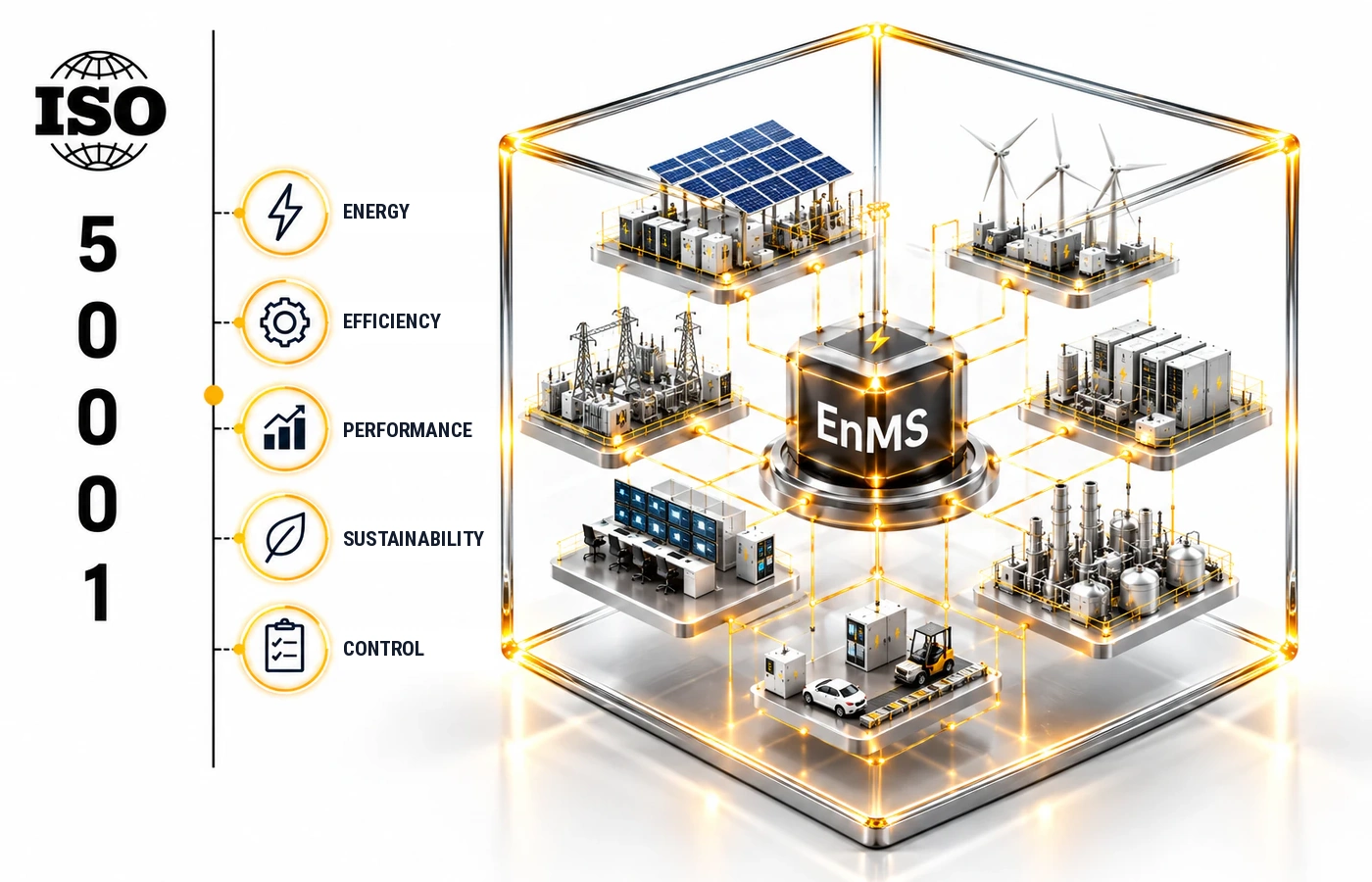
Energy management for energy review, EnPIs, the energy baseline, objectives, consumption monitoring and energy efficiency.
Learn more →The project is built to deliver an auditable system, not just a set of files. Every deliverable must be understandable, applicable and sustainable for the organization.
The QMS methodology follows a logical path: we understand the organization, identify the gaps, design the system, implement it operationally, check it through an internal audit and prepare it for certification.
We set the target standard, the certification scope, the desired timeframe, the reason for the project and the current level of readiness.
We compare the current situation with the requirements of the standard and identify gaps, risks, necessary documents and priorities.
We define the processes, responsibilities, indicators, controls, risks, opportunities and the evidence needed for the audit.
We build policies, procedures, instructions, forms and registers adapted to the organization, not templates that are hard to use.
We help the team apply the system, collect evidence, track indicators and understand responsibilities.
We check whether the system is conforming, implemented and effective, then formulate evidence-based findings and recommendations.
We support the handling of nonconformities, root cause analysis, defining actions and verifying their effectiveness.
We review the system, prepare the team for the audit and check the availability of the relevant documents and evidence.
The same ISO requirements apply differently in an IT company, a factory, a laboratory, a logistics company or a medical organization. That is why implementation must start from real processes, legal requirements, suppliers, customers and operational risks.

Management systems for agricultural and forestry processes, traceability, suppliers, equipment, environmental requirements, safety and operational control.
Learn more →
ISO implementation for automotive manufacturers, suppliers, service centres and logistics, where quality, traceability, delivery and supplier control are critical.
Learn more →
ISO consulting for organizations with high requirements for safety, traceability, documentation, competence, maintenance and control of critical processes.
Learn more →
Management systems for financial services, internal control, information security, critical suppliers, continuity and auditable evidence.
Learn more →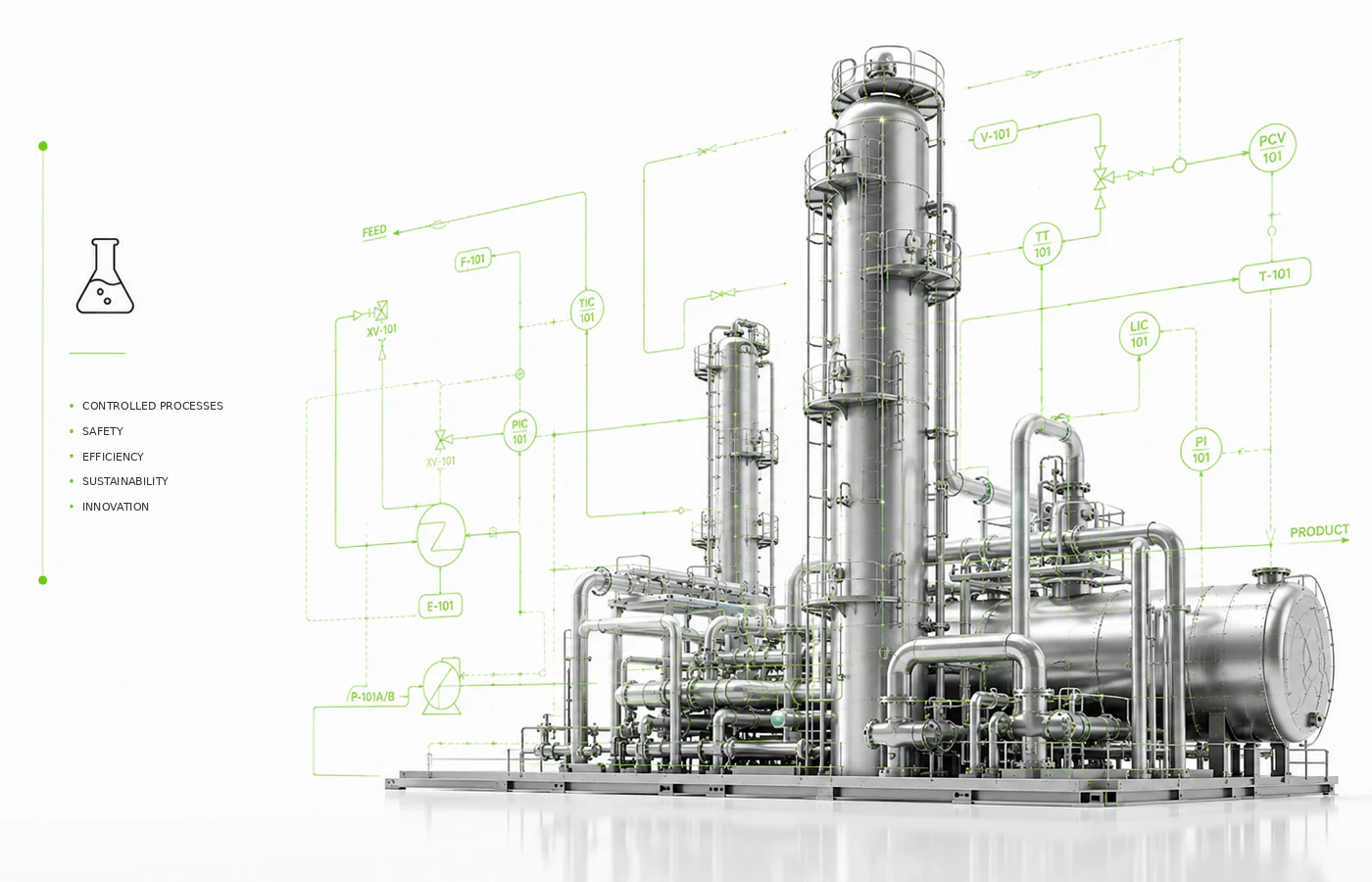
ISO implementation for chemical processes, operational control, environmental and OH&S risks, technical documentation, storage and traceability.
Learn more →
ISO systems for quality, subcontractors, technical documentation, OH&S, environment, procurement, acceptance and project or tender requirements.
Learn more →
ISO 22000:2018 and ISO 9001:2026 implementation for HACCP, PRPs, traceability, supplier control, hygiene, complaints and food safety.
Learn more →
ISO consulting for software, SaaS, infrastructure, IT services, information security, service management, SLAs and digital risks.
Learn more →
Management systems for laboratories, metrological traceability, competence, equipment, methods, records and control of results.
Learn more →
ISO implementation for transport, warehousing, fleets, deliveries, suppliers, cargo security, operational indicators and traffic risks.
Learn more →
ISO systems for maritime operators, maintenance, safety, environment, logistics, suppliers and processes with high operational risk.
Learn more →
ISO consulting for medical devices, healthcare services, traceability, documented control, complaints, risks and regulatory requirements.
Learn more →
Management systems for high-risk operations, OH&S, environment, maintenance, suppliers, technical documentation and operational control.
Learn more →
ISO implementation for hotels, restaurants, tourism services, food safety, customer satisfaction, suppliers and service processes.
Learn more →
ISO systems for energy, environment, OH&S, energy efficiency, operational control, consumption monitoring and compliance obligations.
Learn more →For many organizations, the most efficient model is an integrated management system, in which several ISO standards are managed through common processes.
For example, ISO 9001:2026, ISO 14001:2026 and ISO 45001:2018 can share integrated policies, objectives, internal audit procedures, corrective actions, management review and document control. Similarly, ISO 27001:2022 can be aligned with ISO 20000-1:2018 for IT organizations, and ISO 22000:2018 can be integrated with ISO 9001:2026 in the food industry.
Integration reduces duplication, lowers the administrative effort and allows management to see the system as one coherent mechanism rather than several separate files.
The weakest ISO projects are those treated as documentation projects. At the audit, the organization must show that the system is applied, not just that it has procedures.
Copied procedures do not reflect real activity and are hard for staff to explain at the audit.
Without resources, objectives and decisions from management, the system remains a formality.
Risks must be linked to processes, objectives and controls, not filled in generically in a register.
The internal audit must check the effectiveness of the system and generate useful actions, not just close off a requirement.
Indicators must help management understand performance, not exist only for the audit.
A corrective action must be checked for effectiveness, not just recorded as completed.
ISO consulting is useful when the organization needs a working system, not just documents. The most important results are clear processes, a lower audit risk and objective evidence that is ready.
The organization does not yet have a formal system and needs a scope, processes, risks, documentation, training, an internal audit and certification preparation.
The documents exist, but they are not applied consistently, the indicators do not help management and the internal audit does not produce useful conclusions.
Customers, authorities or partners require ISO certification, and the organization needs a clear path to the audit.
ISO 9001:2026, ISO 14001:2026, ISO 45001:2018, ISO 27001:2022 or other standards can be managed through a common system, with less duplication.
The cost depends on the target standard, the number of processes, the size of the organization, the number of sites, existing documentation and the level of support needed up to certification.
A simple project may involve a GAP analysis, essential documentation, training, an internal audit and certification preparation. A complex project may include integrated systems, several sites, high-risk operational processes, critical suppliers and extended support for corrective actions.
A realistic estimate is made after an initial discussion or a GAP analysis. What matters is that the budget is weighed against the risk of nonconformities, customer requirements and the commercial value of certification.
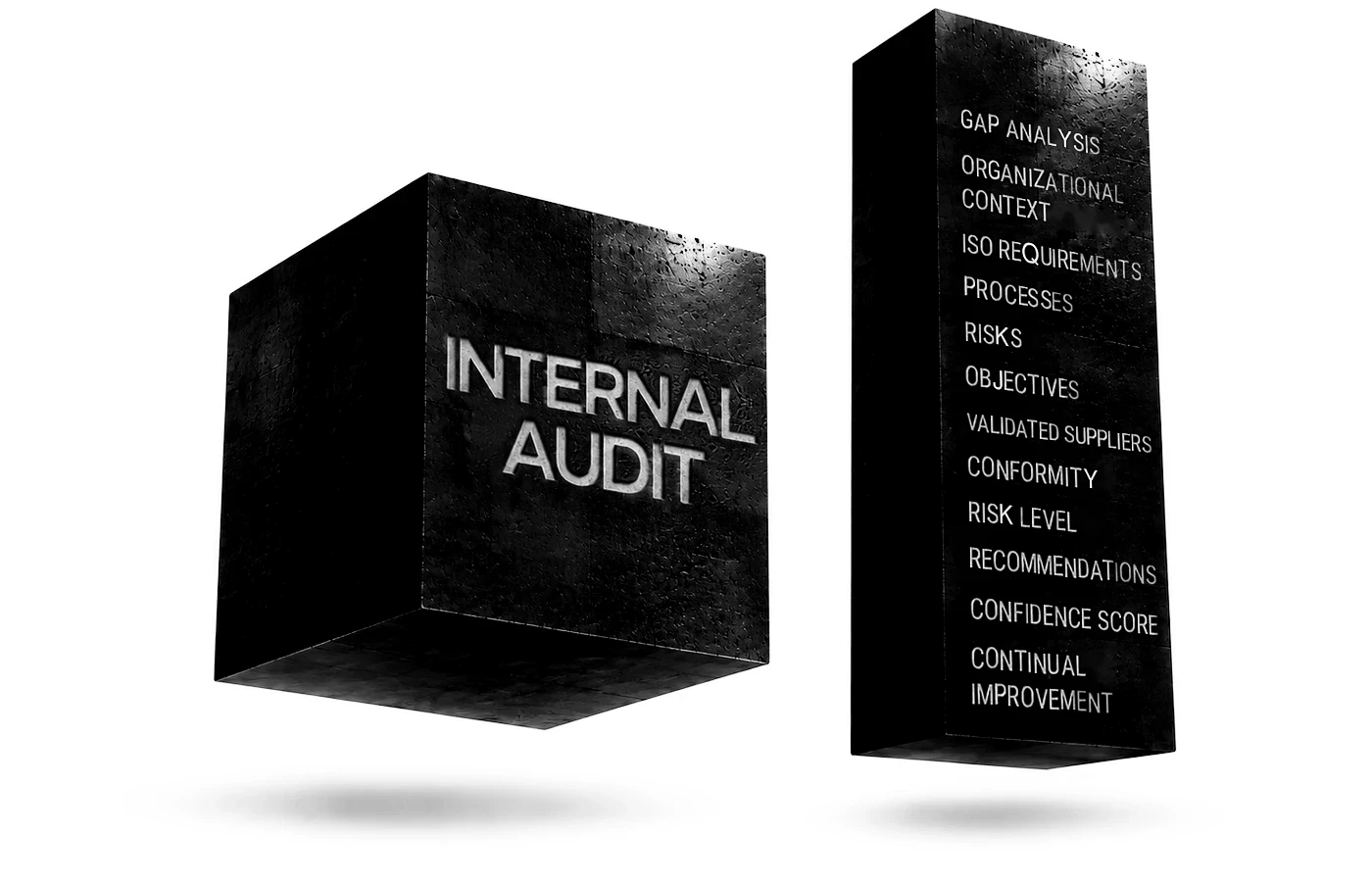
Checking the conformity and effectiveness of the system before certification, surveillance or recertification.
Learn more →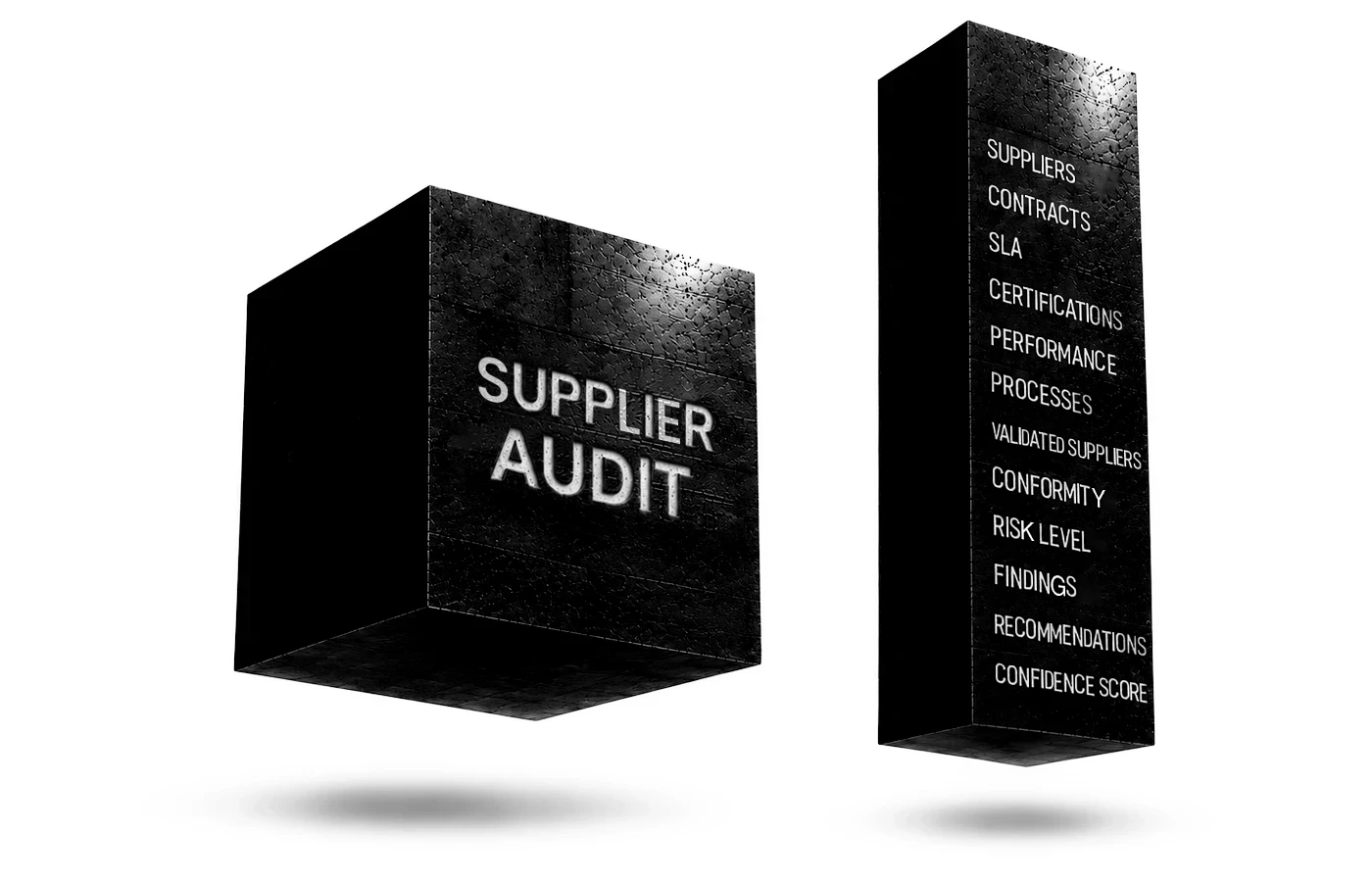
Evaluating suppliers and subcontractors to reduce supply chain risks.
Learn more →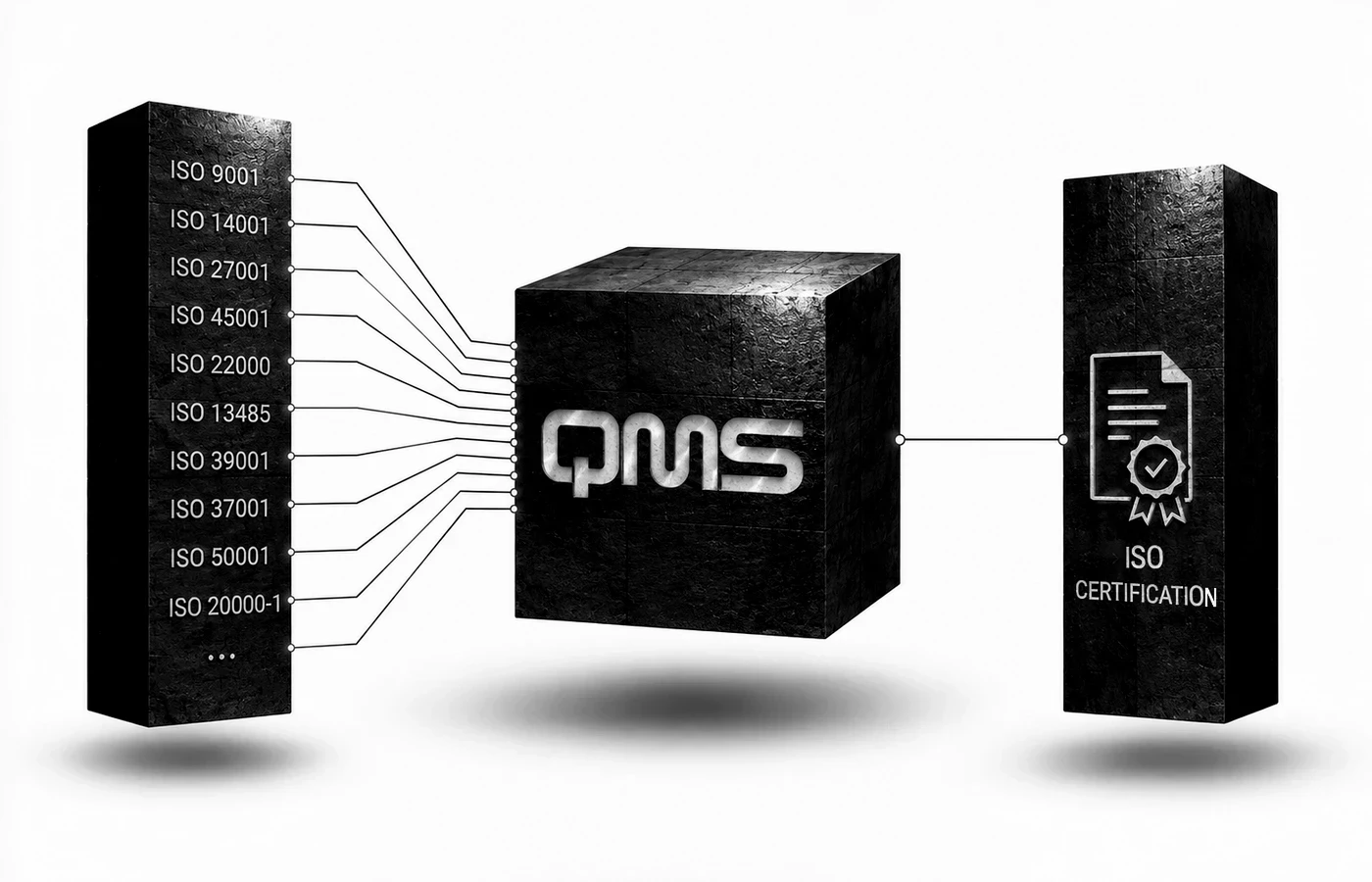
Reviewing the system, documents and evidence before the certification body's audit.
Learn more →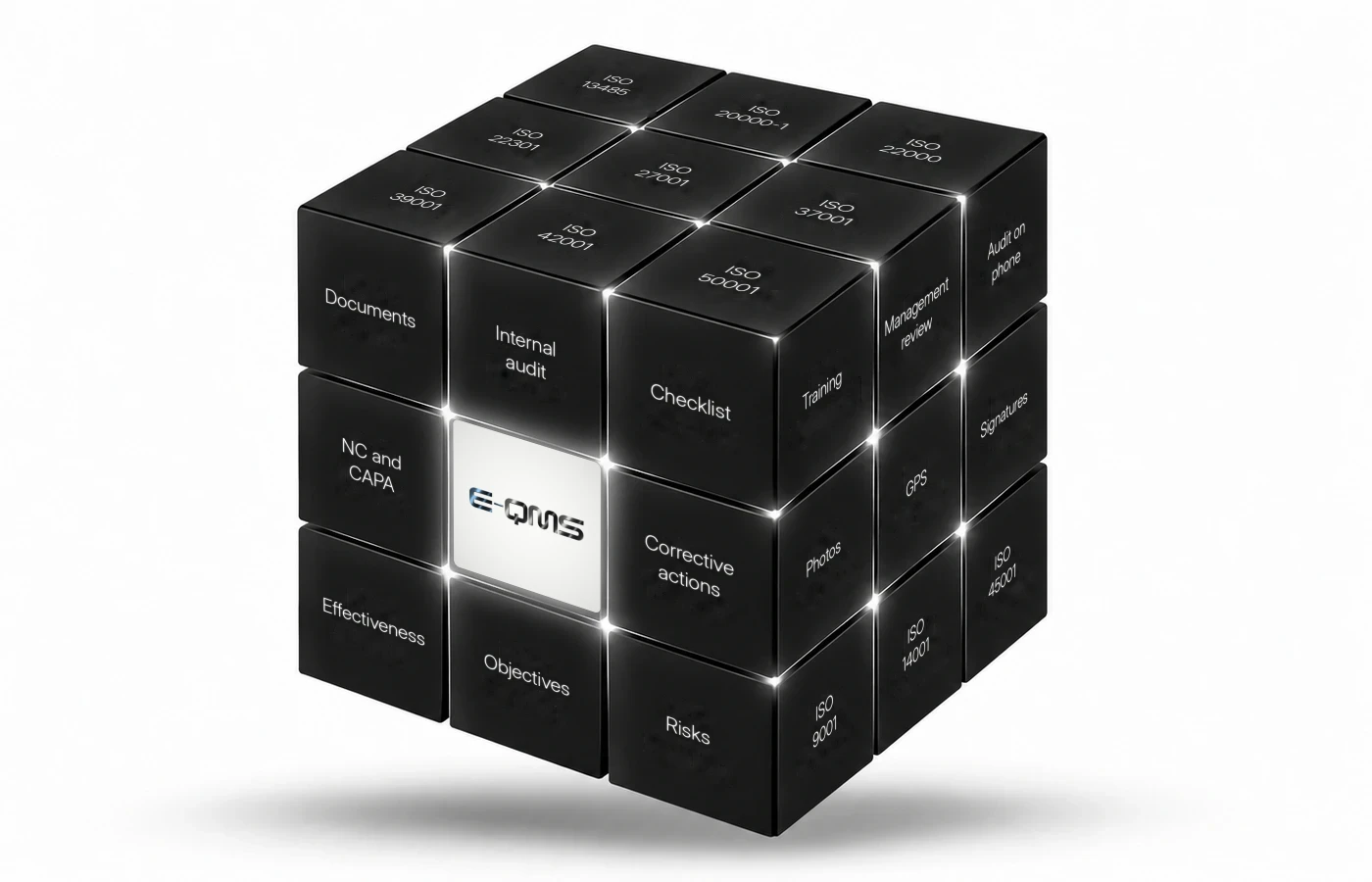
Documents, internal audit, nonconformities, corrective actions and management review, with alerts and reports generated automatically.
Learn more →
Training for internal auditors: planning, objective evidence, interviews, findings and reporting.
Learn more →Implementing an ISO management system means turning the requirements of the standard into processes, responsibilities, documents, indicators, controls and evidence that apply to the real activity. The goal is for the organization to be able to demonstrate conformity and better manage its risks and performance.
ISO consulting is the specialist support provided to the organization, while ISO implementation is the concrete process through which the system is built, documented, applied, audited and prepared for certification.
No. ISO certificates are issued by independent certification bodies. QMS Consulting provides consulting, implementation, GAP analysis, internal audit and certification preparation.
The duration depends on the standard, the size of the organization, the number of processes, the maturity of the documentation, the involvement of the internal team and the desired certification date.
The cost depends on the target standard, the complexity of the organization, the number of sites, existing documentation, the level of readiness and whether the project includes an internal audit, training and certification support.
The GAP analysis compares the current situation with the requirements of the standard and identifies what exists, what is missing, what must be corrected, what evidence must be prepared and what risks must be addressed.
The documents depend on the standard and the organization, but may include policies, objectives, a process map, procedures, instructions, risk registers, forms, audit reports, the management review and corrective actions.
Yes. The internal audit is an essential stage for ISO management systems, because it checks whether the system is implemented, conforming and effective before the external audit.
Yes. Implementation can start from scratch by clarifying the scope, processes, responsibilities, risks, documents and evidence needed.
Yes. Several standards can be integrated into a common system, especially when they have similar requirements on context, leadership, risks, documentation, internal audit and improvement.
An integrated management system combines the requirements of several ISO standards in a common structure, reducing duplication and making the system easier to audit and maintain.
Yes. For small companies, the system must be proportionate, simple and practical, with sufficient documents and clear processes, not unnecessary bureaucracy.
Management sets the objectives, resources, responsibilities and direction of the system. Without management involvement, implementation risks becoming a formality.
Objective evidence is verifiable information that demonstrates that a requirement is met: a document, report, register, indicator, interview, observation or record.
ISO 9001:2026 focuses on quality management, while other standards cover specific areas such as environment, information security, OH&S, energy, IT services or food safety.
The standard is chosen according to the goal: quality, environment, information security, OH&S, energy, food safety, medical devices, IT services or contractual requirements.
After implementation, the system must be maintained through monitoring, internal audits, management review, updating documents and handling nonconformities.
The certification decision belongs to the certification body. Consulting reduces the risks and prepares the system, but certification depends on the independent audit.
Yes, many activities can be done remotely, but on-site checks may be needed for operational processes, production, warehouses, laboratories or high-risk activities.
Documentation must be backed up by real application. The audit checks processes, responsibilities, evidence, results, corrective actions and people's involvement.
The most common mistakes are generic documentation, lack of management involvement, a formal internal audit, objectives without indicators and unclear responsibilities.
Deliverables may include a GAP analysis, implementation plan, process map, policies, objectives, procedures, registers, forms, internal audit, report and corrective action plan.
The certification body checks whether the system meets the requirements of the standard, is implemented, produces evidence, is internally audited and is reviewed by management.
Consulting is recommended at the start of implementation, before certification, when extending the system, after nonconformities or when the existing system is not working effectively.
Information about your field of activity, the target standard, number of employees, main processes, sites, existing documents and the desired certification date is useful.
The ISO consultant helps the organization implement the management system and prepare the documentation, internal audit and evidence. The certification body independently assesses the system and decides whether to issue the certificate.
A GAP analysis is useful at the start of the project, before certification, after major changes or when the existing system no longer reflects the organization's real processes.
A quote request is useful when the organization has a concrete goal: initial certification, surveillance, recertification, a customer request, a tender, a supplier audit or an internal need to control processes.
For a realistic estimate, we need the target standard, number of employees, sites, main processes, the organization's activity, existing documentation and the desired deadline.
A work plan, clear deliverables, practical recommendations, documents proportionate to the organization and support focused on management system implementation, GAP analysis, documentation, training and audit preparation.
We work with organizations in Romania and the Republic of Moldova. A significant part of projects can be run online, with on-site sessions when the process requires it.
Send us details about your organization, the target standard, the desired timeframe and the current status of your system. We will point you to the right steps for GAP analysis, implementation, internal audit and certification preparation.
Phone: +40 722 773 446
Email: contact@qms.ro
Address: 12 Petru Rareș Street, Bucharest
Send an emailChoose whether to allow visitor statistics. You can change your choice at any time from the site footer.