Standard
ISO 9001:2026
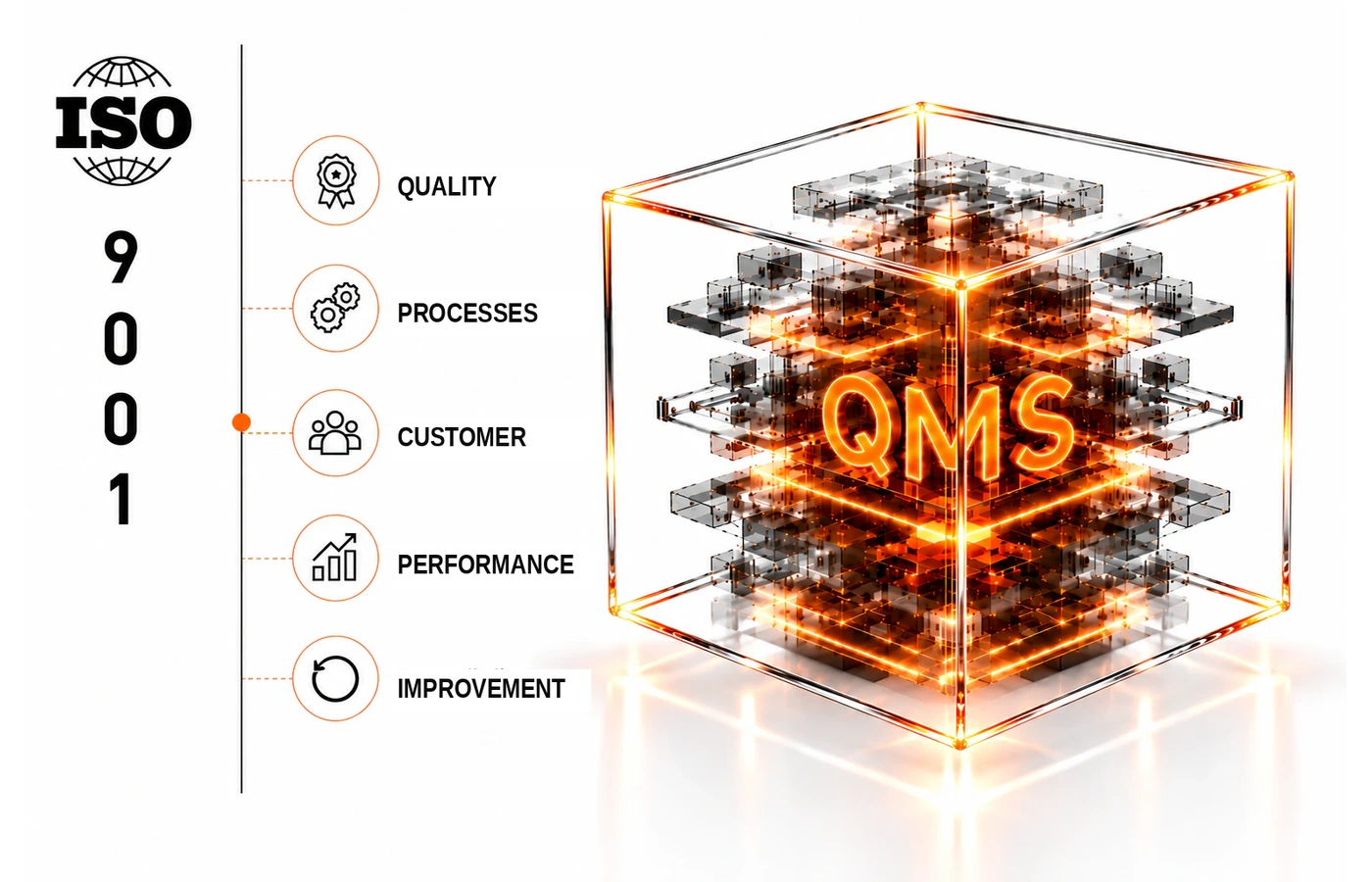
Coordinating audits of processes, objectives, indicators, customer satisfaction, nonconformities and improvement.
Learn more →
Advanced training for auditors, system managers and managers who need to lead complex audits, integrated audits, supplier audits and audit programmes that are useful for decision-making.

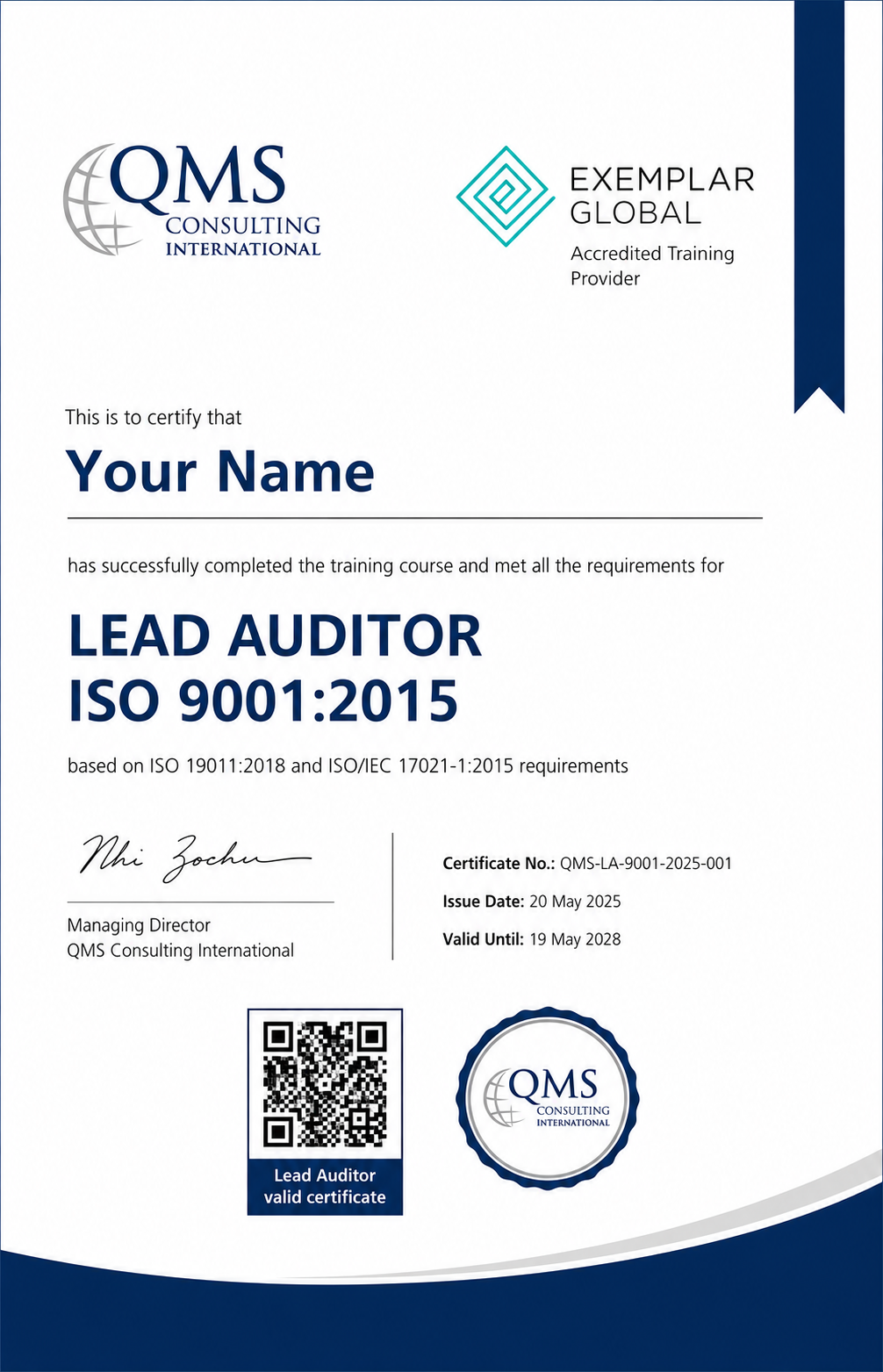
The ISO Lead Auditor training is a training programme accredited by Exemplar Global, focused on advanced audit competences, team coordination, audit programme planning and executive reporting.
QMS Consulting is the exclusive representative of Exemplar Global in Romania, giving organizations and professionals access to training programmes aligned with international requirements for auditing management systems.
This differentiator matters for companies that need lead auditors capable of coordinating internal audits, integrated audits, second-party audits and complex assessments in local or international contexts.
ISO Lead Auditor training develops advanced competences for planning, coordinating and reporting audits. The focus is not just on checking requirements, but on leading the entire audit process: objectives, criteria, team, evidence, findings, conclusions and corrective actions.
An effective, well-trained ISO Lead Auditor understands not only the standard, but also the context of the organization, process risks, the dynamics of the audit team and how conclusions must be communicated to management.
QMS Consulting builds the training on practical situations, audit scenarios, example documents and applied exercises. Participants learn to coordinate internal audits, integrated audits, multi-site audits and second-party audits.
In international practice, the term Lead Auditor is commonly used, while in Romanian the role is known as Auditor Șef. We use both names for the same role: the person who leads the audit, coordinates the team and is responsible for the final conclusions.
An ISO Lead Auditor must combine an auditor's technical competences with leadership, communication, planning and risk assessment skills. The difference from an ordinary internal auditor is not just the level of knowledge, but the responsibility for ensuring the consistency of the entire audit.
A well-trained Lead Auditor raises the quality of the audit programme and reduces the risk of the audit being treated as a formality. The result is a more coherent assessment of the system and conclusions that are more useful to management.
Participants learn to plan audits with several processes, sites, standards and auditors, without losing control of the objectives and criteria.
Conclusions are worded so that management understands the impact, risk, evidence and actions needed.
The Lead Auditor knows how to assign responsibilities, track progress and ensure consistent findings.
The training helps coordinate audits for several ISO standards, checking both the common and the specific requirements.
Participants practise communication in cases of conflict, insufficient evidence, refusal to cooperate or disputed findings.
The audit is planned according to the importance of processes, previous results, changes, risks and performance.
The training can be built for an individual standard or for integrated systems, depending on the organization's needs, the participants' roles and the type of audits they must coordinate.
Coordinating audits of processes, objectives, indicators, customer satisfaction, nonconformities and improvement.
Learn more →
Audits of environmental aspects, compliance obligations, operational control, emergency situations and environmental performance.
Learn more →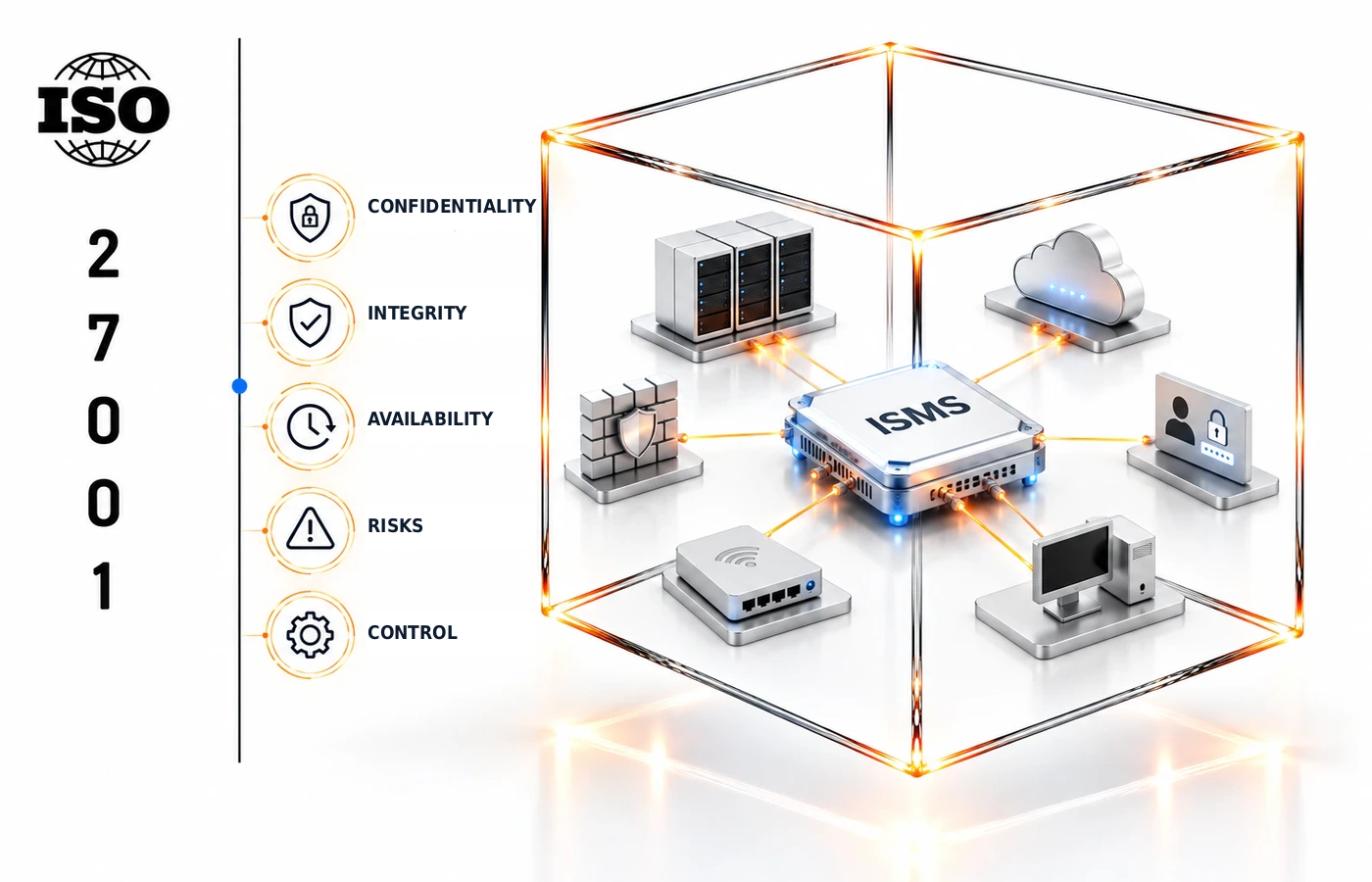
ISMS audits of information risks, controls, assets, access, incidents, suppliers and data protection.
Learn more →
Coordinating audits of hazards, OH&S risks, worker consultation, incidents and operational control.
Learn more →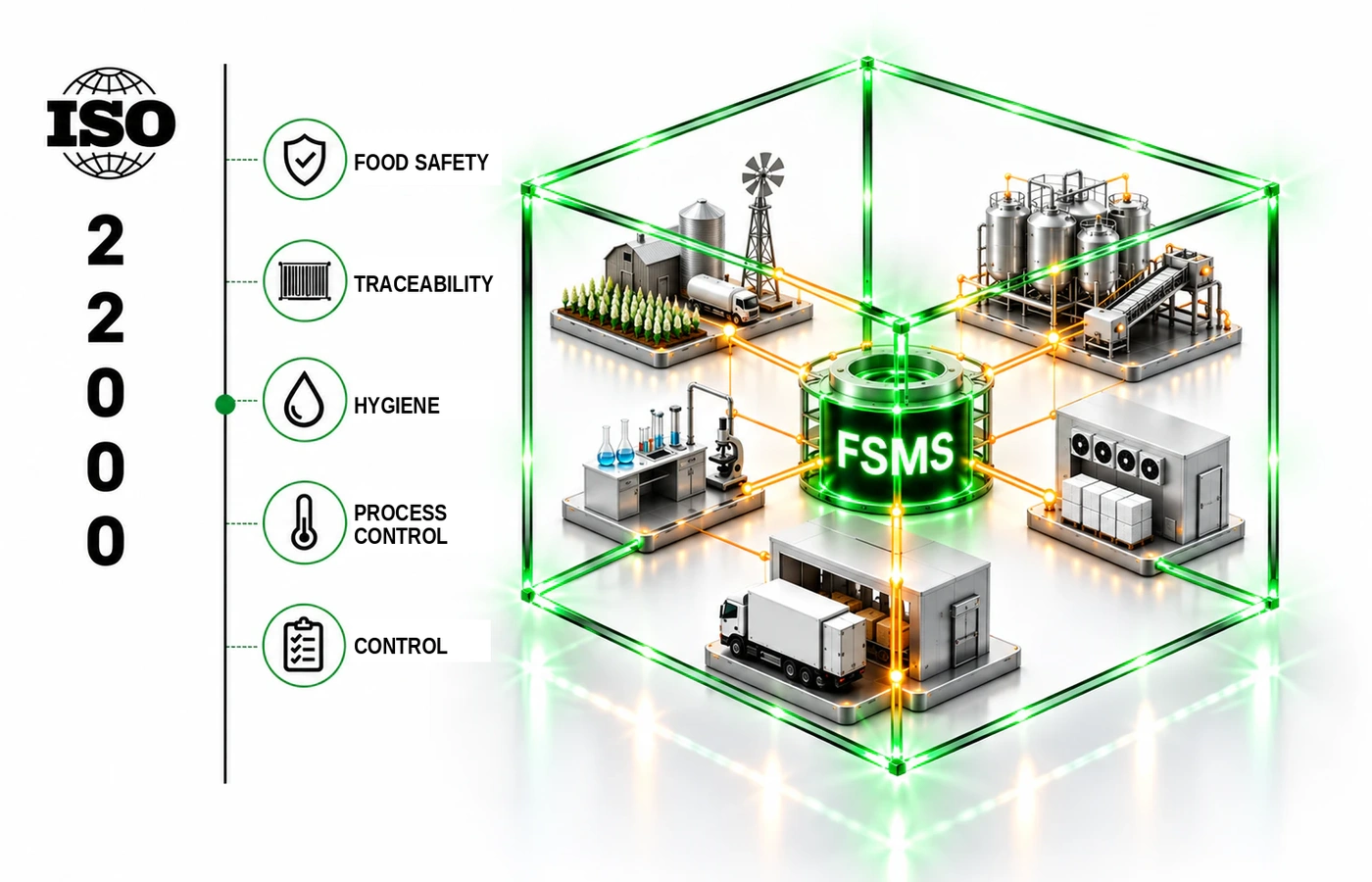
Audits of HACCP, PRPs, traceability, food hazards, supplier control and product safety.
Learn more →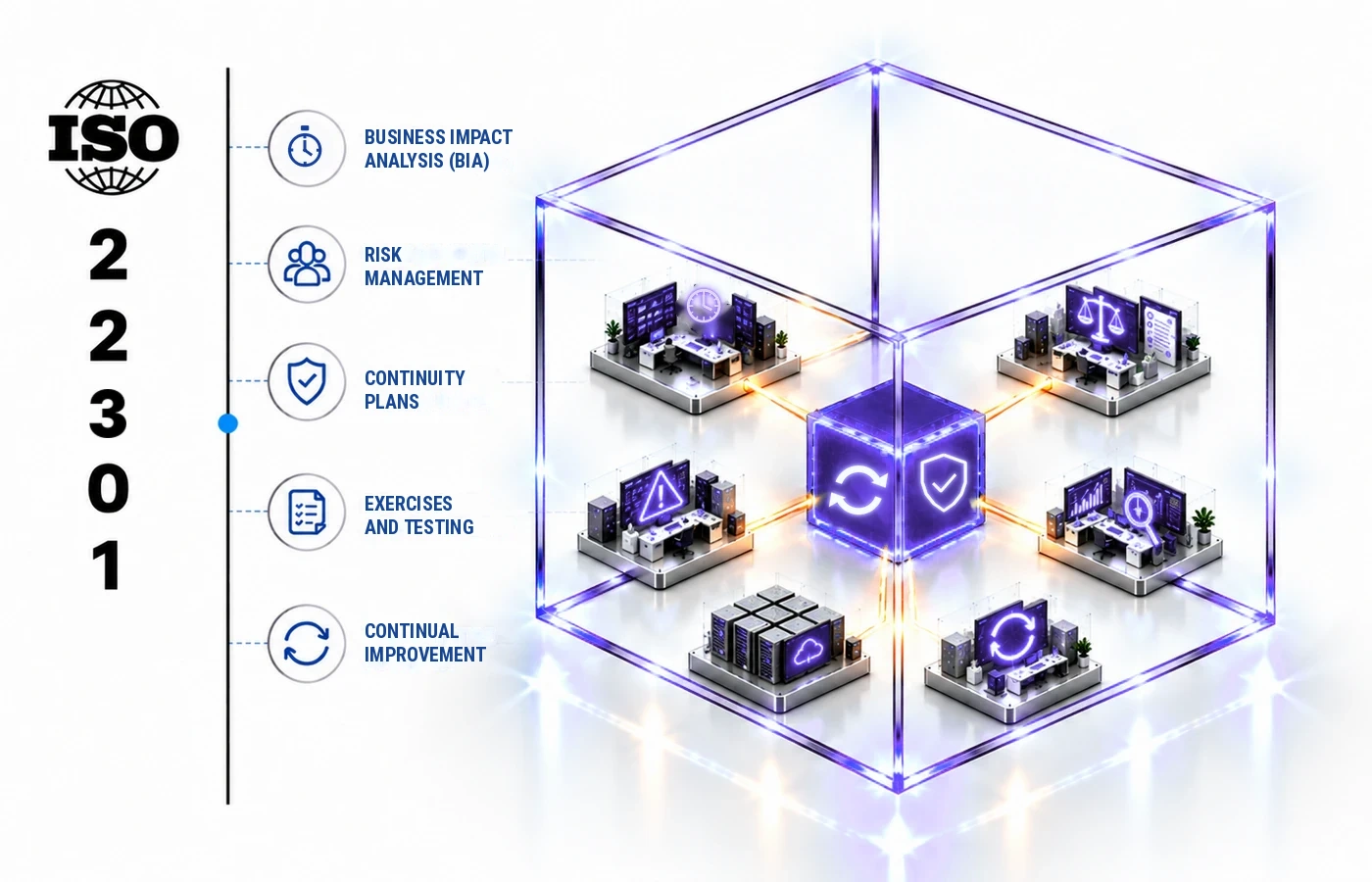
Audits of business continuity, resilience, tested plans and critical dependencies.
Learn more →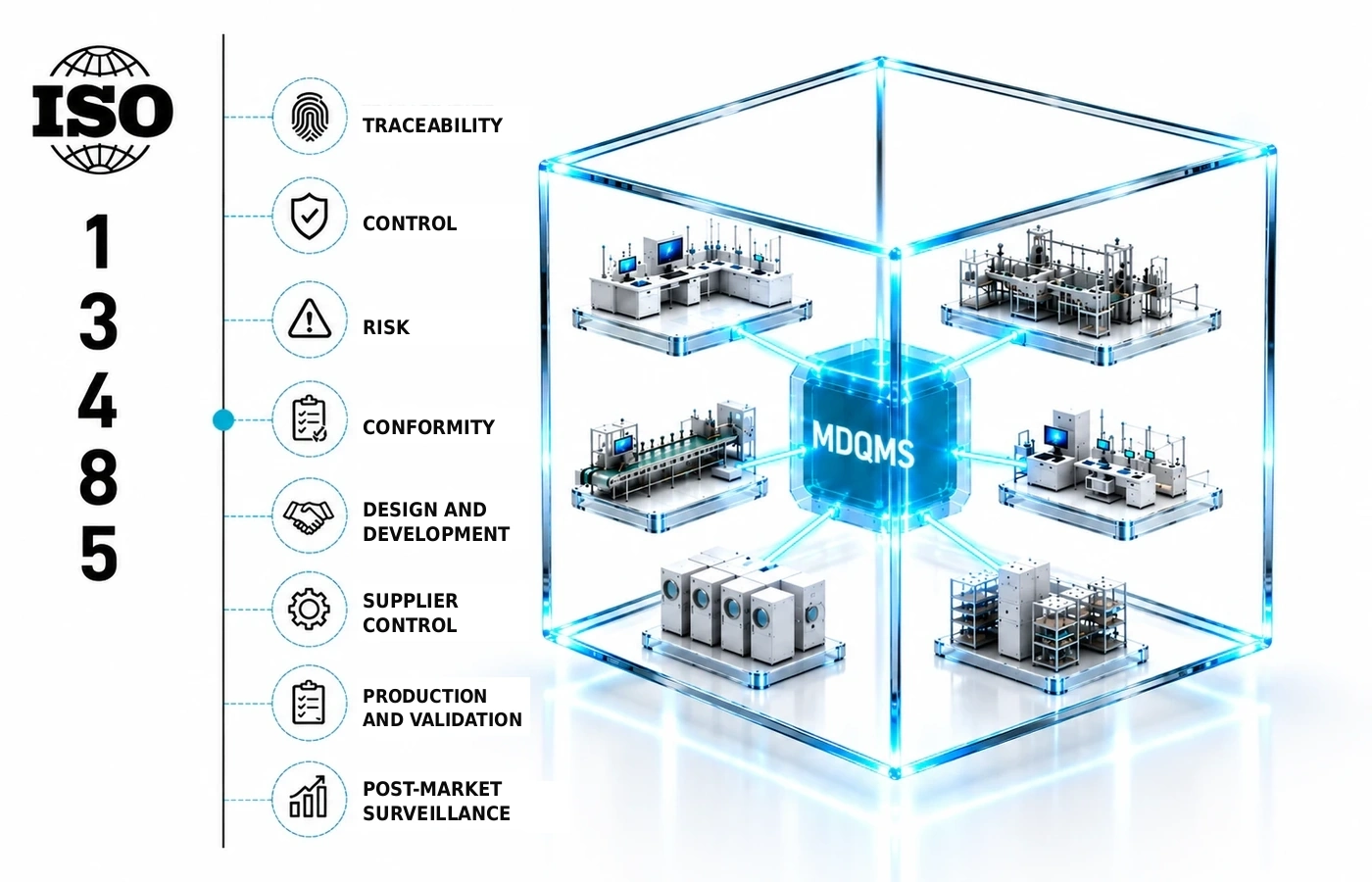
Audits of traceability, documented control, regulatory requirements, complaints, risks and validations.
Learn more →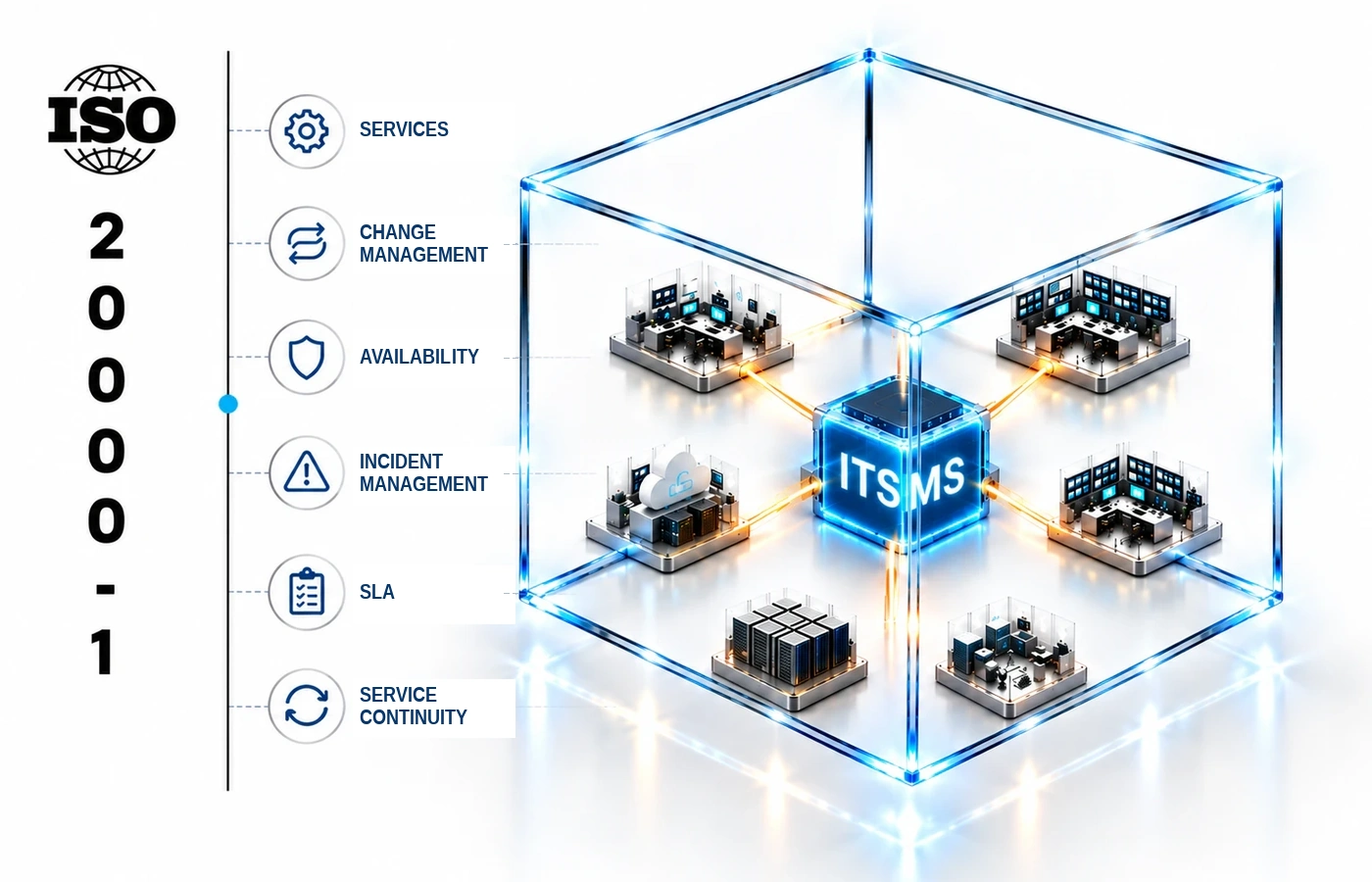
Audits of IT service management, SLAs, incidents, changes, availability and IT suppliers.
Learn more →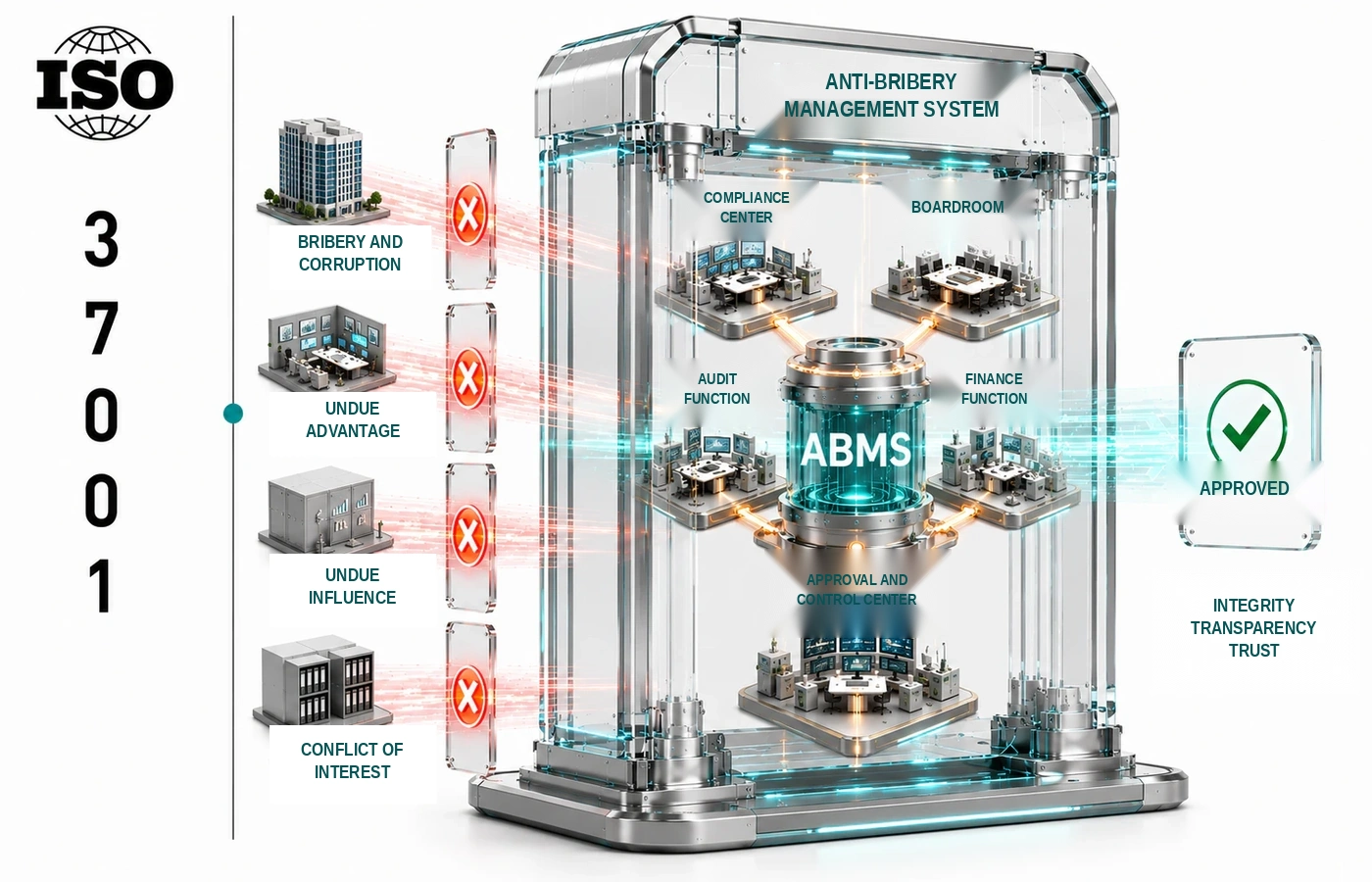
Audits of integrity, due diligence, conflicts of interest, financial controls and third-party relationships.
Learn more →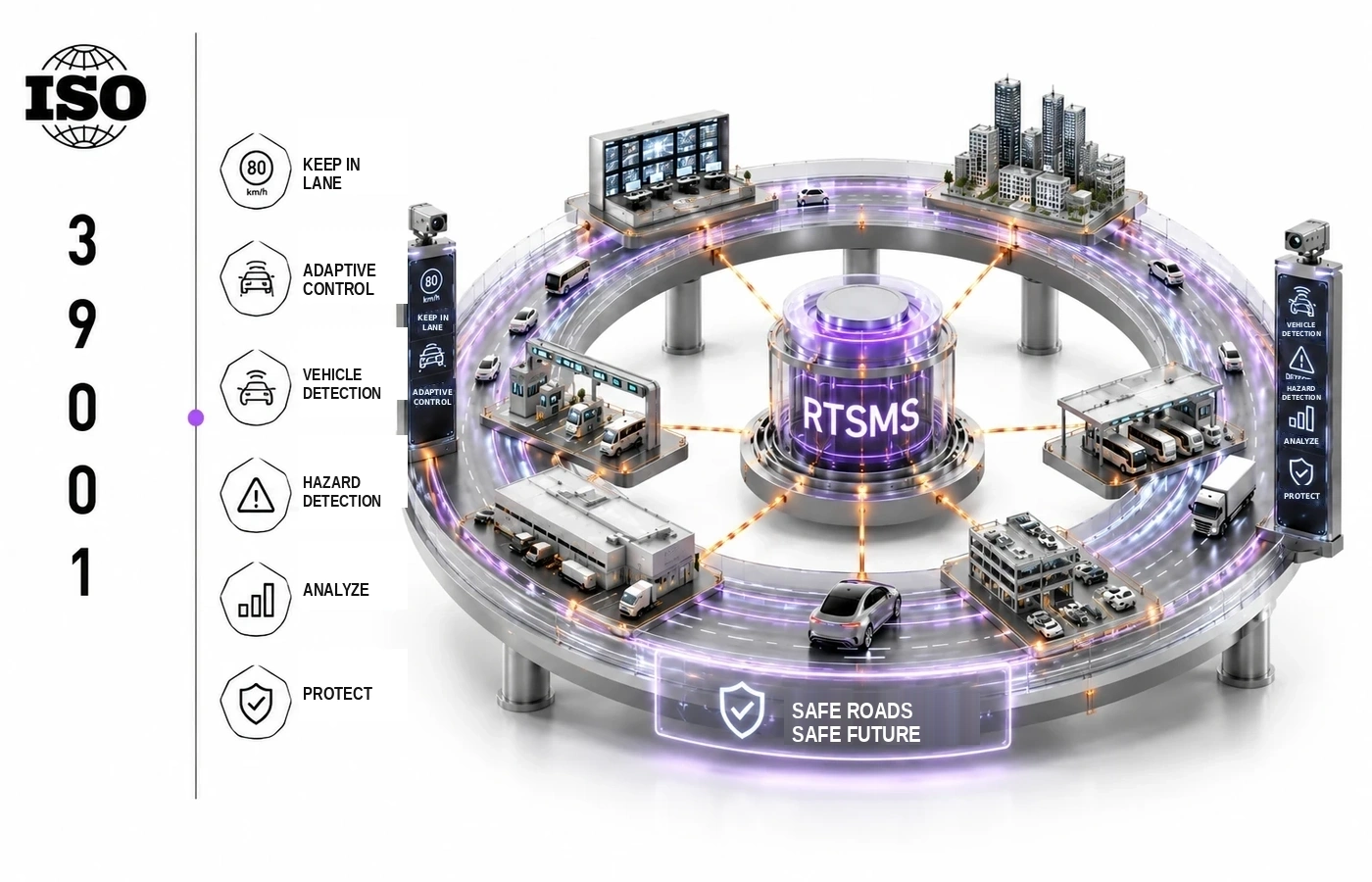
Audits of fleets, transport, road safety indicators, driving behaviour and traffic risks.
Learn more →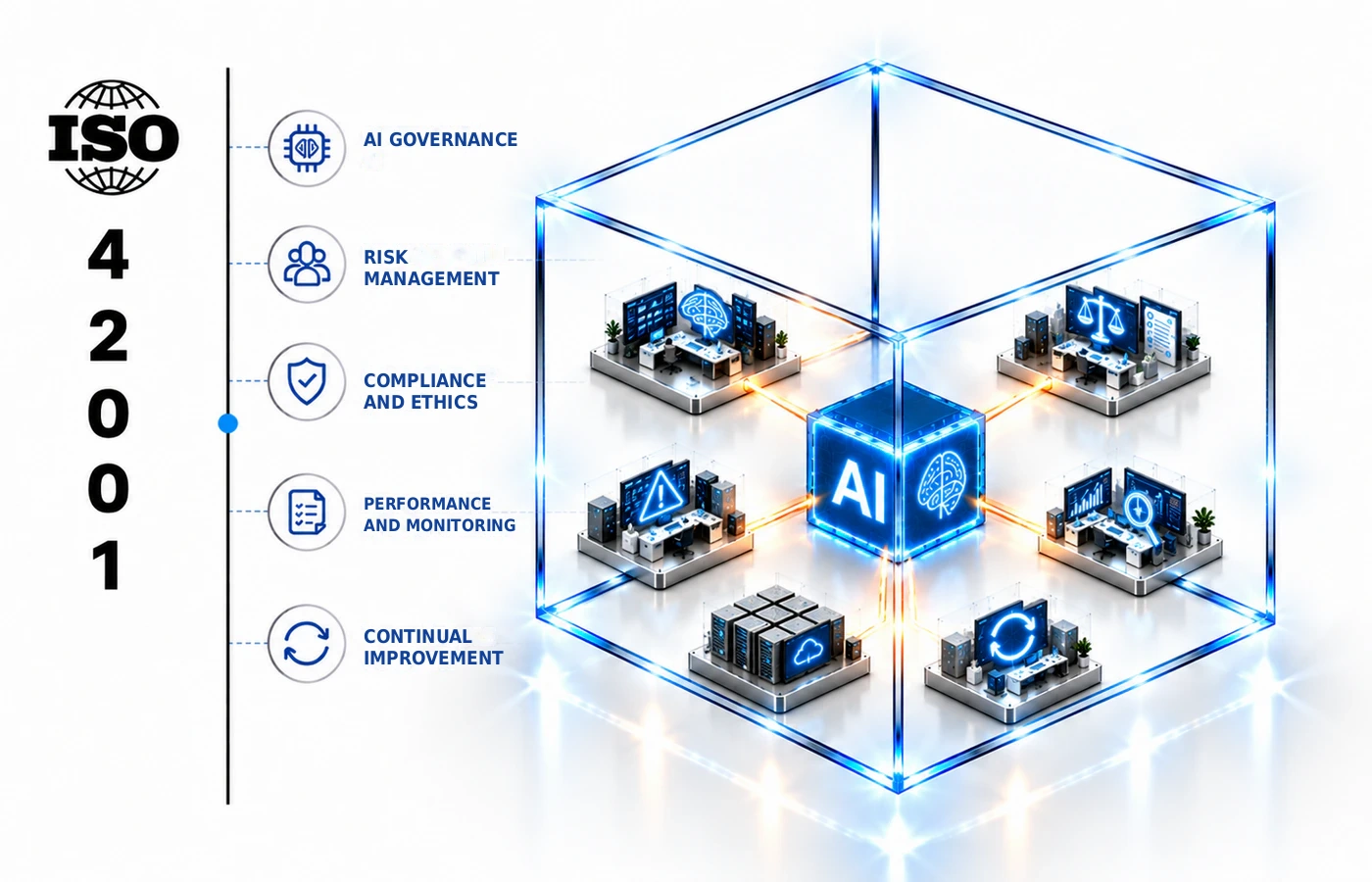
Audits of AI management systems, governance, risks and responsible use.
Learn more →
Audits of energy performance, EnPIs, the baseline, consumption, improvement opportunities and operational control.
Learn more →The training is structured so that participants move from auditing a single process to fully coordinating an audit: planning, team, execution, conclusions, reporting and follow-up.
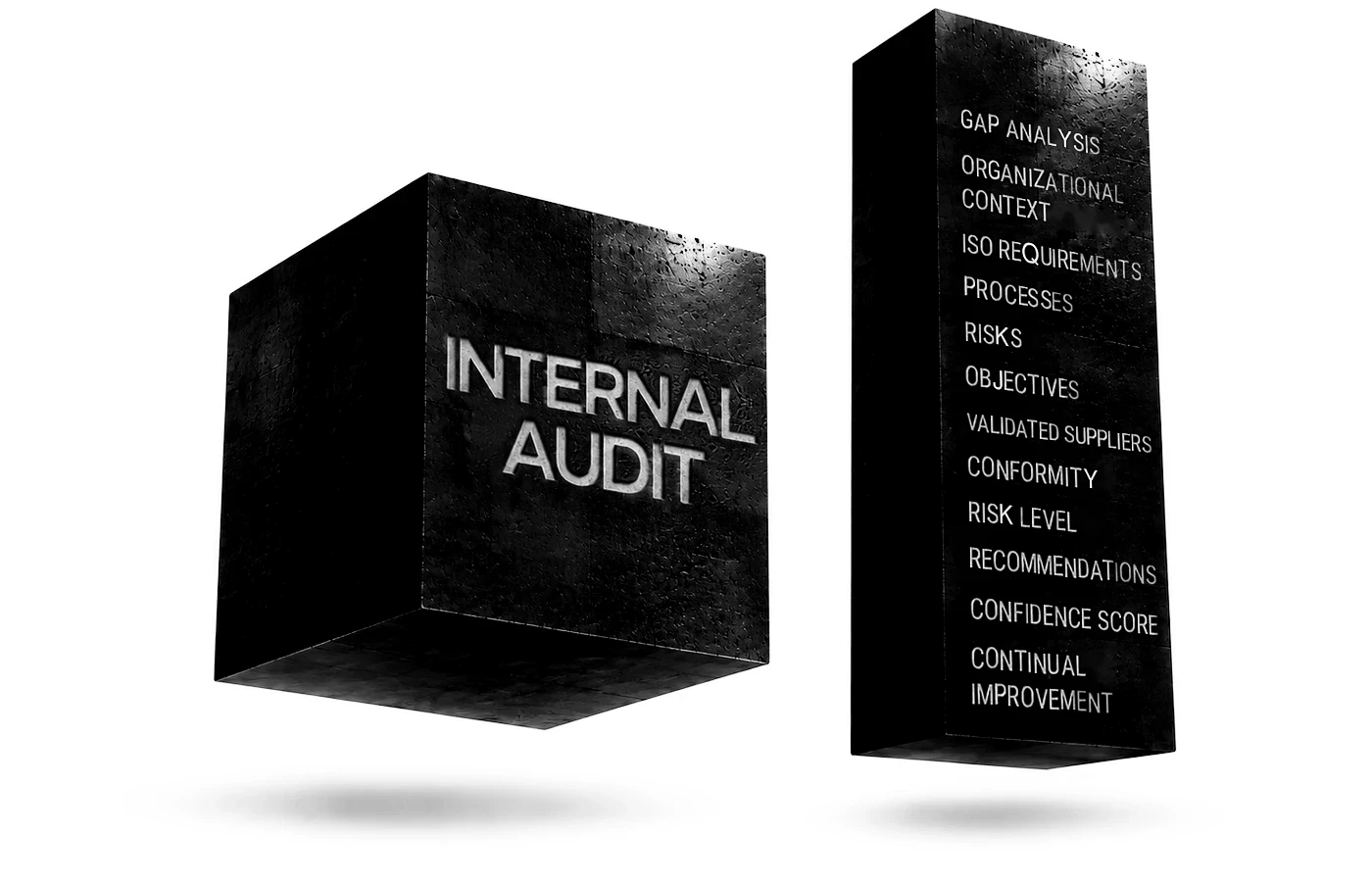
The methodology focuses on practice, real scenarios and audit decisions. Participants do not just receive explanations; they work with situations they may encounter in internal, integrated or second-party audits.
We establish the participants' audit experience, the target standards, their roles and the type of audits they must coordinate.
We discuss the Lead Auditor's responsibilities, the limits of the role, communication with auditees, team management and the audit objectives.
We work on an annual or multi-site programme, using criteria such as risk, importance, performance, changes and previous results.
We practise the audit plan, agenda, checklist, allocation of auditors, sampling and preparing interviews.
We work with examples of evidence, nonconformities, observations, disputed conclusions and the reporting of findings.
We prepare reporting to management, the follow-up plan and the verification of the effectiveness of corrective actions.
Advanced training must give participants not just concepts but also tools they can use immediately in their organization. That is why the training is built around the documents and decisions of a real audit.
Audit coordination differs by industry. In manufacturing, the focus may be on traceability and operational control; in IT on security and continuity; in the medical field on regulation and traceability; in construction on subcontractors, OH&S and technical documentation.

Audits of seasonal processes, traceability, environment, suppliers and operational control in highly variable activities.
Learn more →
Coordinating audits of suppliers, critical processes, traceability, quality, complaints and supply chains.
Learn more →
Audits where safety, documentation, competences, traceability and change control must be checked rigorously.
Learn more →
Audits of information security, suppliers, continuity, controlled processes, evidence and reporting to management.
Learn more →
Coordinating audits of operational risks, environment, OH&S, storage, traceability and legal requirements.
Learn more →
Audits of construction sites, subcontractors, quality, OH&S, environment, technical documentation and change control.
Learn more →
Audits of HACCP, traceability, PRPs, supplier control, hygiene, product recall and food safety.
Learn more →
Coordinating audits of the ISMS, IT services, software development, incidents, access, continuity and cloud suppliers.
Learn more →
Audits of competences, equipment, traceability, methods, records, quality control and technical evidence.
Learn more →
Audits of warehousing, transport, fleets, suppliers, road safety, SLAs and operational indicators.
Learn more →
Audits of operations, safety, environment, maintenance, documentation and the requirements specific to the maritime logistics chain.
Learn more →
Audits of regulation, traceability, complaints, risks, documented control and processes with an impact on safety.
Learn more →
Audits of high-risk processes, environment, OH&S, maintenance, critical suppliers and operational control.
Learn more →
Audits of services, customer satisfaction, food safety, hygiene, suppliers and the operational experience.
Learn more →
Audits of energy performance, environment, OH&S, operational control, maintenance and compliance obligations.
Learn more →Participants learn how to support a finding with a criterion, evidence and objective wording, without turning the audit into a personal dispute.
We discuss how to extend sampling, how to verify information and how to avoid unsupported conclusions.
We analyze how to audit common requirements such as context, leadership, risks, documents, internal audit and corrective actions at the same time.
We practise second-party audits in which the conclusions influence procurement decisions, supplier qualification or additional monitoring.
After the training, participants should be able to lead audits in a structured, balanced way that is useful to management. The focus is on evidence-based decisions, communication and team coordination.
A poorly coordinated audit can produce unclear conclusions, conflicts, wasted time and reports that do not help management. The Lead Auditor's role is to avoid these problems.
Too many processes in too little time lead to superficial checks and insufficient evidence.
When auditors do not have clear roles, overlaps, gaps and inconsistently worded findings appear.
A finding must have a criterion, evidence and verifiable wording, not be a general impression.
Management needs clear conclusions, impact, risk and priorities, not just long lists of observations.
Closing actions without verifying their effectiveness does not demonstrate that the problem has really been addressed.
A Lead Auditor must manage the relationship with auditees, the team and management without compromising objectivity.
Checking the conformity and effectiveness of the management system before certification or surveillance.
Learn more →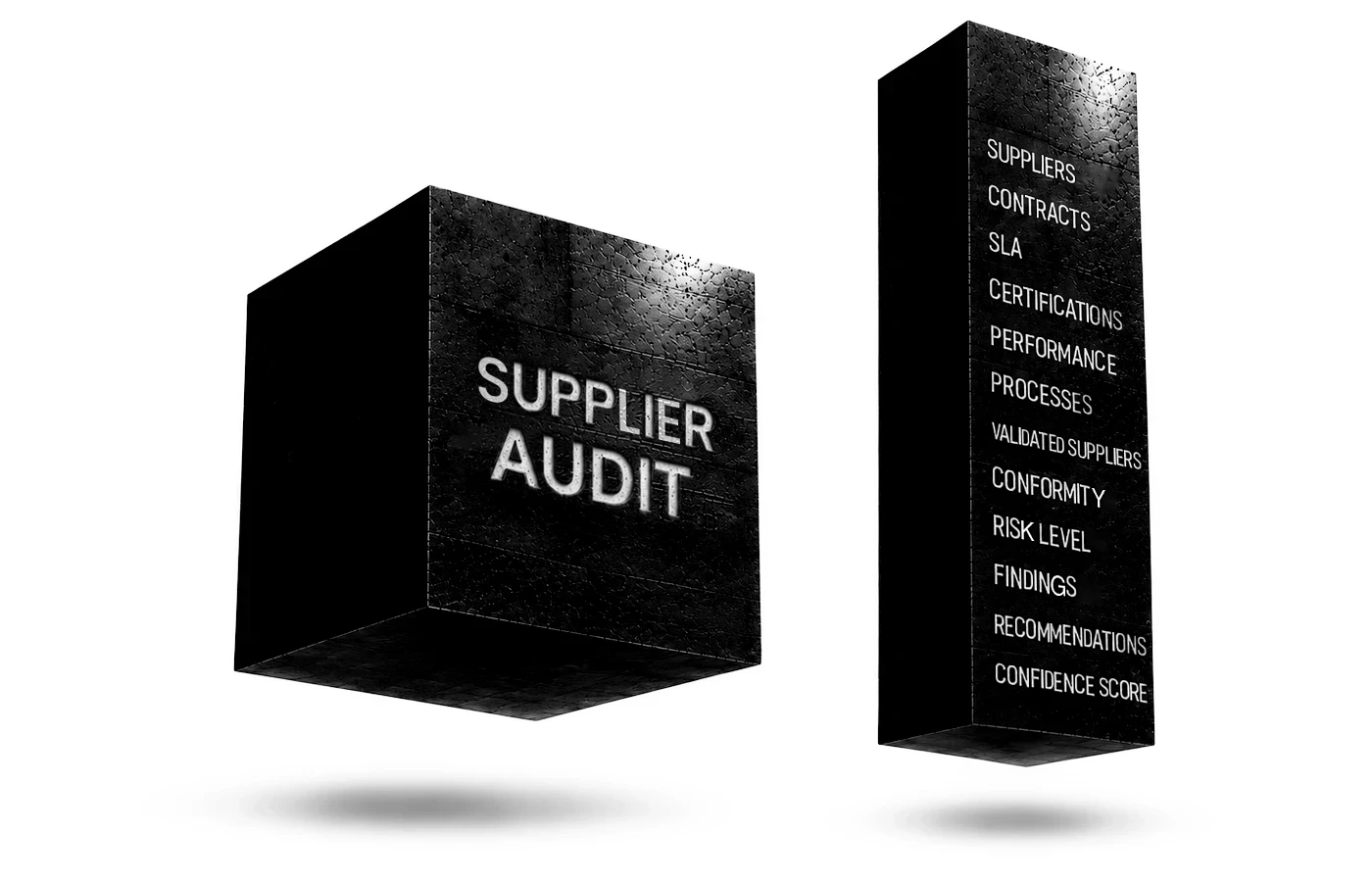
Evaluating suppliers, subcontractors and partners to control supply chain risks.
Learn more →
ISO system implementation: GAP analysis, processes, documentation, training and audit preparation.
Learn more →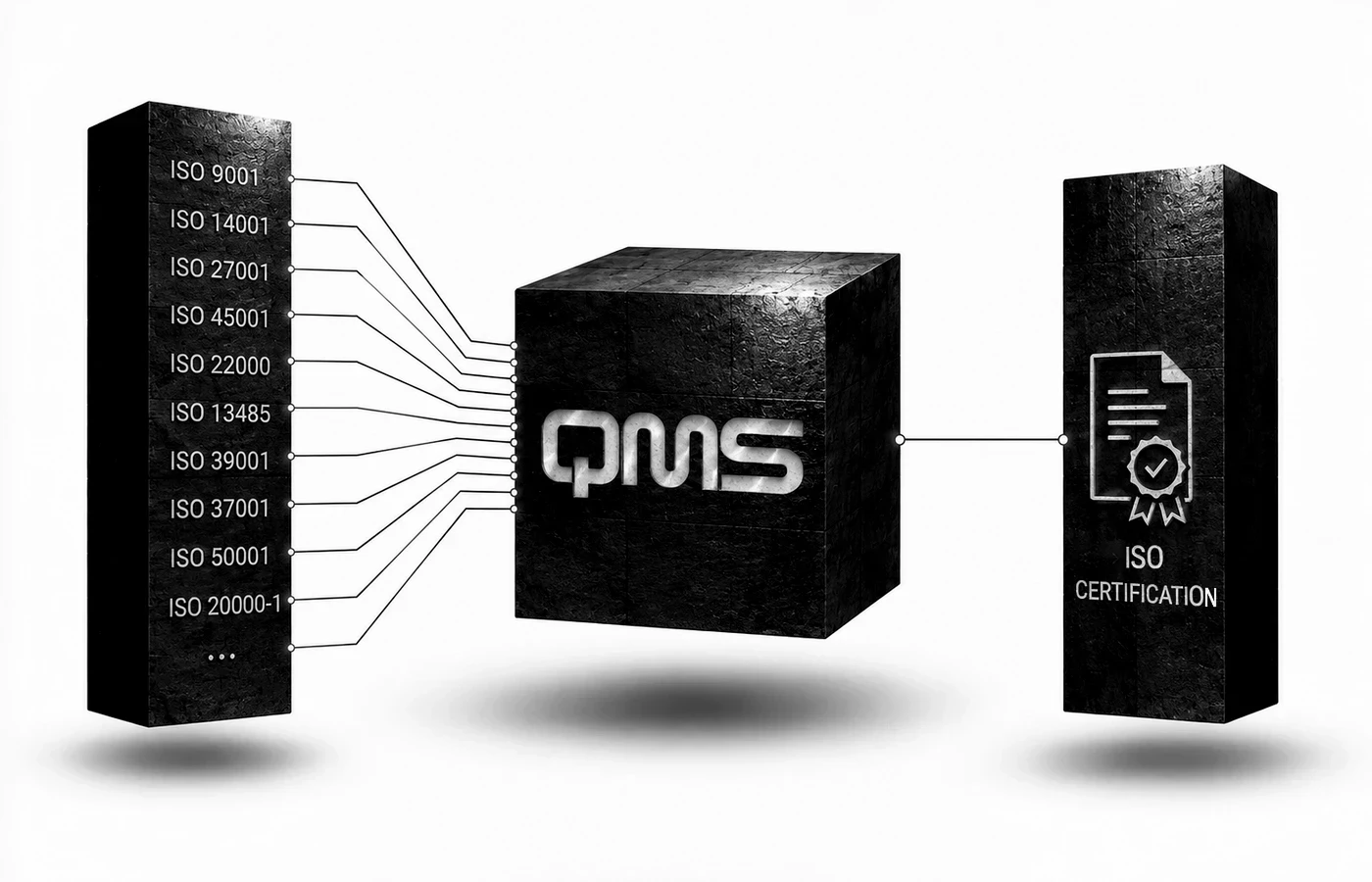
Preparing the organization for the certification body's audit, stage 1, stage 2 and surveillance.
Learn more →
Documents, internal audit, nonconformities, corrective actions and management review, with alerts and reports generated automatically.
Learn more →
Training for internal auditors: planning, interviews, objective evidence, reporting and corrective actions.
Learn more →It is advanced training for people who coordinate audits, audit teams, audit programmes or complex assessments of management systems. "Lead Auditor" is the international term, while "Auditor Șef" is the equivalent used in Romanian.
The internal auditor audits processes or takes part in audits. The Lead Auditor coordinates the audit, the team, the planning, the conclusions and communication with management.
Experienced internal auditors, system managers, consultants, quality, environment, OH&S, information security and compliance managers, and people involved in complex audits.
Previous experience, or at least knowledge of the standard being audited, is recommended, because the training is at a more advanced level than internal auditor training.
Yes. It can focus on ISO 9001:2026, ISO 14001:2026, ISO 27001:2022, ISO 45001:2018, ISO 22000:2018, ISO 13485:2016, ISO 20000-1:2018, ISO 37001:2025, ISO 39001:2012, ISO 50001:2018 or integrated systems.
Yes. The training can include audit planning, team management, disputed findings, insufficient evidence, executive reporting and following up corrective actions.
Yes. Lead Auditor competences are very useful in supplier and subcontractor audits, where the conclusions must support commercial and risk decisions.
The audit programme, audit plan, checklists, audit reports, list of findings, nonconformities, competence matrix and corrective action plans.
An integrated audit checks several standards within one coherent programme, for example ISO 9001:2026, ISO 14001:2026 and ISO 45001:2018, using common and specific requirements.
It is a programme in which the frequency, duration and depth of the audit are set according to risks, the importance of processes, changes, performance and previous results.
They must be able to allocate processes, clarify responsibilities, coordinate interviews, manage time, validate findings and maintain consistent communication.
The duration depends on the participants' level, the standards included, the number of practical exercises and the organization's goal.
Yes. The training can be adapted in-house for an organization's team, using examples, processes and situations close to the real activity.
Participants can coordinate internal audits, integrated audits, multi-site audits or second-party audits more effectively.
Evidence of attendance or training can be issued, depending on the format agreed for the programme.
Yes. The programme is an Exemplar Global accredited ISO Lead Auditor training, with a focus on practical skills in coordinating audits, teams and audit programmes.
Yes. QMS Consulting is the exclusive representative of Exemplar Global in Romania, providing access to recognized training programmes aligned with international requirements for auditing management systems.
Exemplar Global accreditation supports the credibility of the training programme and helps participants and organizations demonstrate that the training is aligned with international requirements in auditing and management systems.
A quote request is useful when the organization has a concrete goal: initial certification, surveillance, recertification, a customer request, a tender, a supplier audit or an internal need to control processes.
For a realistic estimate, we need the target standard, number of employees, sites, main processes, the organization's activity, existing documentation and the desired deadline.
A work plan, clear deliverables, practical recommendations, documents proportionate to the organization and support focused on coordinating audits, teams, audit programmes and executive reporting.
We work with organizations in Romania and the Republic of Moldova. A significant part of projects can be run online, with on-site sessions when the process requires it.
Send us a few details about the target standards, the participants' level and the types of audits they must coordinate. We can propose a tailored training structure.
Phone: +40 722 773 446
Email: contact@qms.ro
Address: 12 Petru Rareș Street, Bucharest
Send an emailChoose whether to allow visitor statistics. You can change your choice at any time from the site footer.