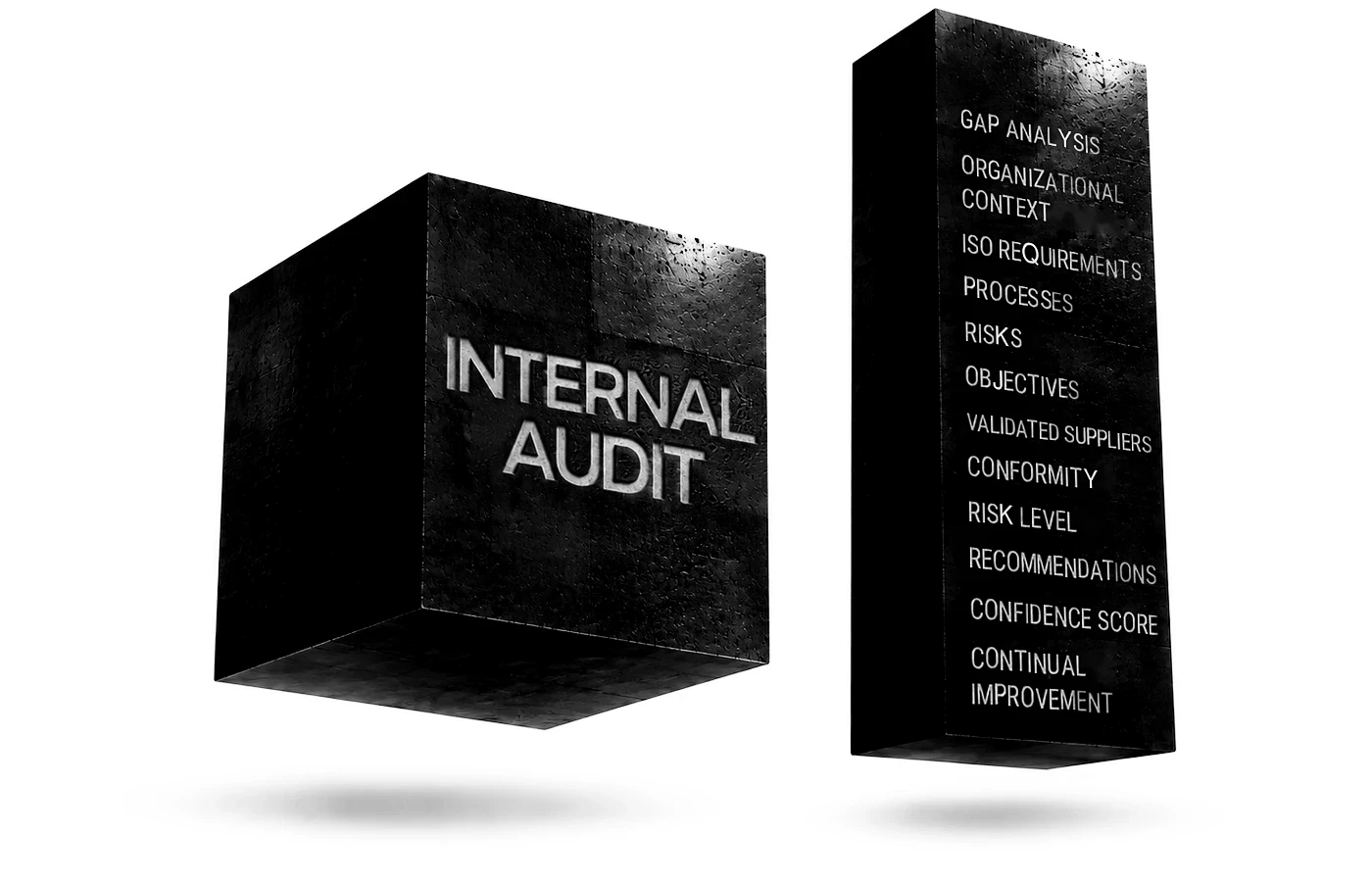
What you will find in this article
A guide to the role of the ISO internal audit, preparing the audit programme, evaluating evidence and using the results for improvement.
The role of the internal audit in the management system
The internal audit checks whether the management system is conforming, applied and effective. It is not a formality before certification but a management control tool. Through the audit, the organization confirms whether processes work, whether evidence is available and whether responsibilities are understood.
Planning the internal audit
An effective audit programme covers the relevant processes, the requirements of the standard, the significant risks and areas with recent changes. Planning must include the criteria, scope, auditors, audit methods and schedule.
Auditor competence
Internal auditors must understand the requirements of the standard, audit techniques, sampling, interviewing and the reporting of findings. In mature organizations, auditor competence is developed through training and participation in real audits.
Nonconformities and corrective actions
A good nonconformity statement is based on a requirement, the evidence observed and the impact on the system. Corrective actions must address the cause, not just the effect observed during the audit.
The link with the certification audit
The internal audit prepares the organization for the external audit, but its purpose is not to make the system look good. Its purpose is to identify vulnerabilities realistically before they become problems in the certification audit or in operations.
Related resources
To apply these recommendations, also see the services and courses related to internal audit:
Frequently asked questions
Does QMS Consulting issue ISO certificates?
No. ISO certificates are issued by independent certification bodies. QMS Consulting provides consulting, audit, training and certification preparation.
How often must the ISO internal audit be carried out?
ISO standards require internal audits at planned intervals. In practice, most organizations audit the entire system at least once a year, and high-risk processes or those with recent changes may be audited more often.
What to check before the internal audit
A useful internal audit starts with proper preparation. The auditor must know which criteria apply, which processes have had problems or recent changes and what evidence should exist for each requirement.
Before the audit, it is worth reviewing the audit programme, the results of the previous audit, the status of corrective actions and the availability of the people to be interviewed. This way, audit time is focused on risks rather than on searching for documents.
Quick checklist
- process objectives and relevant indicators
- evidence of staff competence and training
- handling of nonconformities and effectiveness of actions
- risks and opportunities relevant to the system
Talk to an ISO consultant
Consulting, audit, training and certification preparation for organizations operating to international standards.
Direct contact
Phone: +40 722 773 446
Email: contact@qms.ro
Address: 12 Petru Rareș Street, Bucharest
Request a call